
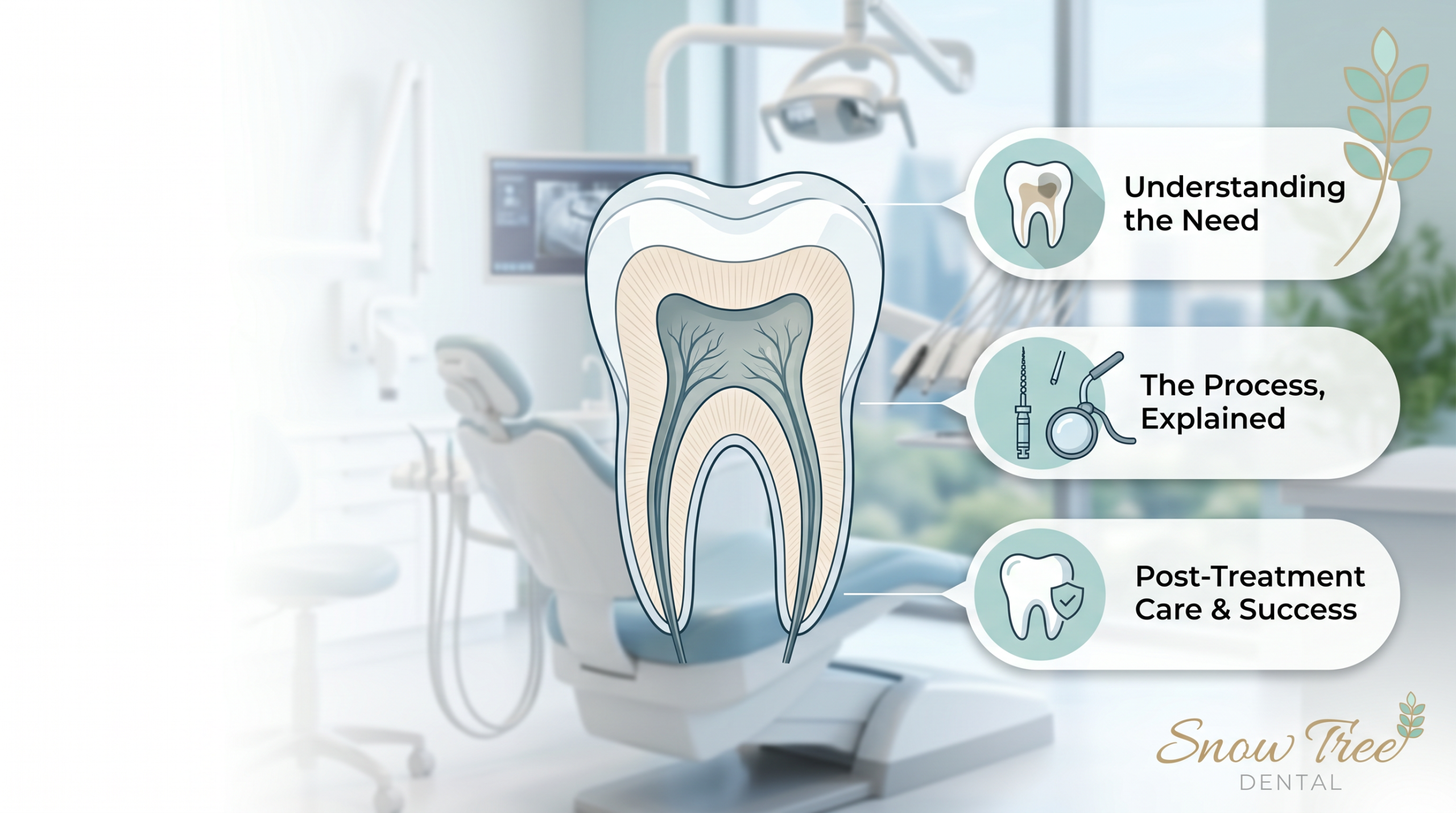
Hearing the words “root canal” can make almost anyone tense up a little. Many patients have heard outdated stories about the procedure, and those stories tend to travel faster than useful dental information, because apparently teeth needed a public relations problem too.
The truth is much more reassuring. Modern root canal treatment is designed to remove infection or damaged tissue from inside a tooth, reduce discomfort, and help preserve the natural tooth whenever possible.
If you are dealing with ongoing tooth pain, sensitivity, swelling, or discomfort when chewing, it is understandable to wonder whether you may need a root canal. This guide explains what the treatment involves, which symptoms to watch for, what recovery may feel like, and when to contact a dentist in Houston.
At Snow Tree Dental, our goal is to help patients feel informed, comfortable, and confident before making decisions about care.
What Is a Root Canal?
A root canal is a dental procedure used to treat infection, inflammation, or damage inside a tooth. The soft tissue inside the tooth is called the pulp. It contains nerves, blood vessels, and connective tissue that help the tooth develop when it is young.
Once a mature tooth is fully developed, it can often continue functioning without the pulp, as long as the tooth is properly cleaned, sealed, and restored.
During root canal treatment, the damaged or infected pulp is removed. The inside of the tooth is then cleaned, shaped, and sealed to help protect it from further infection. In many cases, a crown is later recommended to restore strength and protect the tooth during normal chewing.
Why a Root Canal May Be Needed
A dentist may recommend a root canal when the inner part of the tooth has been affected by decay, trauma, or infection.
Common reasons include:
- A deep cavity that reaches the pulp
- A cracked or fractured tooth
- Dental trauma from an accident or injury
- Infection inside the tooth
- Repeated dental work on the same tooth
Not every painful tooth needs a root canal, and not every infected tooth feels painful at first. That is why an examination is important. Symptoms can point toward a problem, but a diagnosis should come from a dentist after reviewing the tooth carefully.
How a Root Canal Helps Save a Tooth
The main purpose of root canal treatment is to preserve the natural tooth when possible. Keeping your own tooth can help maintain normal chewing, support nearby teeth, and reduce the need for more involved replacement options.
When a tooth can be saved, a root canal may allow it to remain in place and continue functioning. The best treatment depends on the condition of the tooth, the amount of remaining healthy structure, and your overall oral health.
Signs You May Need a Root Canal

Tooth pain can happen for many reasons. A cavity, gum irritation, a cracked filling, clenching, sinus pressure, or bite problems can all cause discomfort. Still, certain symptoms may suggest that the pulp inside the tooth is inflamed or infected.
Persistent Tooth Pain
Pain that keeps coming back, becomes stronger, or does not improve should be evaluated. The discomfort may feel sharp, throbbing, dull, or deep within the jaw.
Some patients feel pain in one specific tooth. Others have discomfort that spreads to nearby teeth, the ear, or the side of the face. Because dental pain can be misleading, it is better not to guess your way through it like the mouth is a mystery escape room.
If your symptoms include severe tooth pain, swelling, or discomfort that keeps getting worse, it may be time to contact an emergency dentist in Houston for an evaluation.
Sensitivity to Hot or Cold
Brief sensitivity can happen for many reasons. However, if sensitivity to hot coffee, cold water, or sweet foods lingers after the trigger is gone, the nerve inside the tooth may be irritated.
Prolonged sensitivity does not automatically mean you need a root canal, but it is a sign worth checking.
Swollen or Tender Gums
Swelling near one tooth can sometimes be related to infection. The gums may feel tender, appear puffy, or develop a small bump near the affected area.
A pimple-like bump on the gum may drain and then return. Even if it does not hurt much, it should be evaluated.
Pain When Chewing
If biting down causes pain or pressure, the tooth may be inflamed, cracked, or infected. Some patients notice discomfort only with certain foods or when chewing on one side.
This symptom can also happen with bite issues or cracked teeth, so an exam is needed to identify the cause.
Tooth Discoloration
A tooth that becomes darker than the surrounding teeth may have internal damage, especially after trauma. Discoloration alone does not confirm the need for a root canal, but it can be an important clue.
What Causes Tooth Pulp Infection?
The pulp is protected by the hard outer layers of the tooth. When bacteria or trauma reach the inner area, the pulp can become inflamed or infected.
Deep Cavities
Untreated tooth decay can gradually move through enamel and dentin until it reaches the pulp. At that point, a simple filling may no longer be enough to treat the tooth.
Cracked Teeth
A crack can create a pathway for bacteria. Some cracks are easy to see, while others are tiny and difficult to detect without a dental exam.
Cracked teeth can be especially frustrating because the pain may come and go. One day the tooth feels fine, and the next day chewing feels uncomfortable.
Dental Trauma
A fall, sports injury, car accident, or hard hit to the mouth can damage the pulp. Sometimes the tooth looks normal from the outside, but the tissue inside has been affected.
Repeated Dental Procedures
A tooth that has had multiple treatments over time may become more vulnerable to irritation. This does not mean previous care was wrong. It simply means the tooth has been through stress and may need additional support.
What Happens During a Root Canal Procedure?
Knowing what to expect can make the appointment feel less intimidating. Root canal treatment is usually more methodical than dramatic, which is terrible news for scary dental myths but good news for actual patients.
Examination and Diagnosis
The visit begins with an evaluation. Your dentist will ask about your symptoms, examine the tooth and surrounding gums, and may take X-rays to better understand what is happening below the surface.
The goal is to determine whether a root canal is appropriate or whether another treatment would better address the issue.
Local Anesthesia
Before treatment begins, the area is numbed to help keep you comfortable. If you are nervous, let the dental team know. Many patients feel better when they understand each step before it happens.
Removing the Damaged Tissue
Once the tooth is numb, the dentist creates a small opening to access the pulp chamber and canals. The infected or inflamed tissue is carefully removed.
Cleaning and Shaping the Canals
The inside of the tooth is cleaned and shaped. This step helps prepare the canals for sealing.
Sealing the Tooth
After cleaning, the canals are filled with a dental material designed for root canal treatment. The tooth is then sealed to help reduce the risk of reinfection.
Final Restoration
Many teeth need a crown after a root canal, especially back teeth that handle heavy chewing forces. A crown helps protect the tooth and restore function. Your dentist will explain whether dental crown treatment is recommended for your specific case.
Does a Root Canal Hurt?
This is one of the first questions patients ask, and it is a fair one.
Modern root canal treatment is typically performed with local anesthesia. The goal is to keep the tooth and surrounding area numb during the procedure. Many patients are surprised that the appointment feels more manageable than they expected.
The pain people associate with root canals often comes from the infection before treatment, not the procedure itself. After treatment, some soreness or tenderness can happen as the area heals. This is usually different from the deeper pain that brought the patient in.
If discomfort worsens or swelling increases, contact your dentist.
What We Commonly See in Practice
Many patients come in for a root canal feeling nervous because they have heard stories from friends, family, or the internet. Once we explain what is happening inside the tooth and walk them through the process, the fear often becomes much easier to manage. A common reaction after treatment is relief, especially when the patient realizes the procedure was more straightforward than expected and the source of pain is finally being addressed.
Root Canal Recovery and Aftercare
Recovery after a root canal is usually manageable, but it is still important to follow your dentist’s instructions.
What to Expect After Treatment
You may notice:
- Mild soreness around the treated tooth
- Temporary tenderness when chewing
- Some sensitivity in the surrounding gum area
- A feeling that the tooth needs time to settle
These symptoms should gradually improve. Your dental team may give you specific instructions based on your tooth, restoration, and overall treatment plan.
Eating After a Root Canal
Until your dentist says the tooth is fully restored, it is often best to be cautious.
Helpful tips may include:
- Avoid chewing hard foods on the treated tooth
- Choose softer foods if the area feels tender
- Wait until numbness wears off before eating
- Follow instructions about temporary fillings or crowns
Chewing while numb can lead to biting your cheek or tongue, because the human body apparently enjoys adding side quests during recovery.
When to Contact Your Dentist
Call your dental office if you notice:
- Pain that gets worse instead of better
- Significant swelling
- Fever
- A temporary filling or crown that feels loose
- Trouble biting normally
- Symptoms that return after improving
It is always better to ask than to ignore a change that may need attention.
What Happens If You Delay Treatment?
Many patients wait to see if tooth pain will go away. Sometimes pain does become less noticeable for a while, but that does not always mean the problem has resolved.
If the pulp is infected, delaying care may allow the infection to spread or damage more of the tooth. Waiting can also reduce the chance of saving the tooth, depending on how much structure remains and how advanced the infection becomes.
Possible consequences of delaying treatment may include:
- Increased pain
- Swelling or infection around the tooth
- Damage to surrounding bone or gum tissue
- Tooth loss
- Need for more complex treatment
If you are experiencing symptoms that may point to infection, scheduling an evaluation is the safest next step.
Root Canal vs. Tooth Extraction
Some patients ask whether it is better to remove the tooth instead of treating it. The answer depends on the tooth.
When a tooth can be saved, preserving it may help maintain natural chewing function and keep surrounding teeth stable. Removing a tooth may solve one problem, but it can create another if the missing tooth needs replacement later.
A dentist will consider:
- How much healthy tooth structure remains
- Whether the tooth has cracks or fractures
- The location of the tooth
- Gum and bone support
- Your overall oral health
- Long-term restoration options
Extraction may be necessary in some situations. In others, a root canal and final restoration may be the better path. The right answer should be based on diagnosis, not fear.
Myth vs. Fact
Myth: Root canals are extremely painful.
Fact: Modern root canal treatment is typically performed with local anesthesia. Many patients find that the procedure is more comfortable than they expected.
Myth: It is always better to pull the tooth.
Fact: If a tooth can be predictably saved, keeping the natural tooth may offer important benefits for chewing and stability.
Myth: If the pain goes away, the tooth is fine.
Fact: Dental infections can change over time. A decrease in pain does not always mean the problem has healed.
Myth: A root canal means the tooth will never need care again.
Fact: A treated tooth still needs proper restoration, daily care, and regular dental checkups.
Choosing a Trusted Dentist in Houston
When searching for root canal Houston care, it helps to choose a dental team that explains your options clearly and makes you feel comfortable asking questions.
A trusted dentist Houston patients can rely on should offer:
- A careful examination
- Clear diagnosis and treatment recommendations
- Patient-friendly explanations
- Attention to comfort
- Guidance on restoration and aftercare
- Honest discussion of alternatives when appropriate
Local care also matters when you are dealing with tooth pain. If symptoms worsen or you need follow-up, having a dental team nearby in Houston can make the process easier.
Helpful Resources
For patients who want to learn more, the American Dental Association root canal treatment guide offers reliable educational information about root canal treatment and oral health.
Frequently Asked Questions About Root Canal Treatment
How do I know if I need a root canal?
Short answer: You may need a root canal if you have ongoing tooth pain, lingering sensitivity, swelling near a tooth, or pain when chewing.
A root canal may be recommended when the soft tissue inside a tooth becomes infected, inflamed, or damaged. Common warning signs include persistent tooth pain, sensitivity that lingers after hot or cold foods, gum swelling, a pimple-like bump near the tooth, or discomfort when biting down. These symptoms do not always mean you need a root canal, because tooth pain can have several causes. A dental exam is the only way to know for sure.
Does a root canal hurt?
Short answer: Modern root canal treatment is usually performed with local anesthesia to help keep patients comfortable.
Many patients worry that a root canal will be painful because of old stories they have heard. In reality, the pain often comes from the infection before treatment, not from the procedure itself. During treatment, the area is numbed. Afterward, some soreness or tenderness is possible as the tooth and surrounding tissue heal.
What happens during a root canal?
Short answer: The dentist removes infected or damaged tissue from inside the tooth, cleans the canals, seals the tooth, and restores it.
The process usually begins with an exam and X-rays. Once the tooth is numb, the dentist creates a small opening, removes the infected or inflamed pulp, cleans and shapes the inside of the tooth, and seals the canals. In many cases, a crown may be recommended afterward to help protect the tooth during normal chewing. Teeth, annoyingly, do not fix themselves with optimism.
How long does root canal recovery take?
Short answer: Most patients have mild soreness for a short time, but recovery varies depending on the tooth and the condition being treated.
After a root canal, it is common to feel some tenderness when chewing or mild soreness around the treated tooth. Your dentist may recommend avoiding hard foods on that side until the tooth is fully restored. If pain gets worse, swelling increases, or symptoms return after improving, call your dental office for guidance.
Will I need a crown after a root canal?
Short answer: Many teeth, especially back teeth, benefit from a crown after root canal treatment.
A crown can help restore strength and protect the tooth from normal chewing pressure. Molars and premolars often need more protection because they handle heavier biting forces. Your dentist will consider the tooth’s location, remaining structure, and overall condition before recommending a crown.
Can a root canal save my natural tooth?
Short answer: In many cases, yes. Root canal treatment is designed to help preserve a natural tooth when the inner tissue is infected or damaged.
Saving a natural tooth can help maintain chewing function and keep surrounding teeth stable. However, not every tooth can be saved. If the tooth has severe cracks, too little remaining structure, or poor support, another treatment may be needed. A dentist can explain your options after examining the tooth.
Is it better to get a root canal or remove the tooth?
Short answer: It depends on the condition of the tooth. When a tooth can be saved, a root canal may be the preferred option.
Extraction may be necessary in some cases, but removing a tooth can lead to future replacement needs. A root canal may help keep the natural tooth in place when the tooth is restorable. The best choice should be based on a clear diagnosis, not fear of the procedure.
Can I wait if my tooth pain improves?
Short answer: It is not a good idea to ignore tooth pain just because it temporarily improves.
Sometimes a tooth infection can become less painful while the underlying problem continues. If the same tooth keeps bothering you, or if pain comes and goes, schedule an exam. Waiting too long may reduce treatment options and increase the chance that the tooth becomes harder to save.
When should I call a dentist in Houston about tooth pain?
Short answer: Call a dentist in Houston if tooth pain is persistent, worsening, or linked with swelling, fever, sensitivity, or pain when chewing.
Tooth pain that interrupts sleep, makes chewing difficult, or comes with swelling should be evaluated promptly. If you are in Houston and unsure whether your symptoms are urgent, Snow Tree Dental can examine the tooth, identify the cause, and explain whether a root canal or another treatment may be needed.
What should I eat after a root canal?
Short answer: Soft foods are usually easier after treatment, especially while the tooth feels tender or has a temporary restoration.
Avoid chewing hard or sticky foods on the treated tooth until your dentist says it is safe. Also wait until numbness wears off before eating so you do not accidentally bite your cheek or tongue, because apparently the mouth enjoys creating bonus problems. Follow the specific aftercare instructions your dentist gives you.
Practice Experience Note
Many patients come in worried because they have heard root canal stories from friends, family, or the internet. In practice, once patients understand what is happening inside the tooth and how treatment works, the appointment often feels less intimidating. A common reaction after treatment is relief, especially when the source of the pain has finally been addressed.
When to Schedule an Evaluation
If you have ongoing tooth pain, lingering sensitivity, swelling, or pain when chewing, it is best not to wait and hope the problem disappears. Teeth are useful, but they are not known for sending polite calendar reminders before things get worse.
A root canal may help save an infected or damaged tooth, but the only way to know what you need is through a proper dental exam. At Snow Tree Dental, we take time to evaluate your symptoms, explain your options, and help you feel comfortable with your next step.
For patients in Houston dealing with tooth pain, sensitivity, or swelling, Snow Tree Dental provides careful evaluations, clear treatment guidance, and support for long-term oral health through preventive dental care.
If you are looking for a dentist in Houston and think you may need a root canal, Snow Tree Dental is here to provide calm, clear, and compassionate care.
Image Alt Text: Patient learning about root canal treatment in a modern Houston dental office