
If your dentist has told you that you need deep cleaning, it’s completely normal to have questions. What does it involve? Is it necessary? And what should you expect?
Deep cleaning is a common and effective treatment used to manage gum disease before it becomes more serious. At Snow Tree Dental, we regularly see patients in Houston who notice bleeding gums or sensitivity and assume it’s minor. Once evaluated, it often becomes clear that a deeper level of care is needed. The encouraging part is that early treatment can help stabilize your gums and prevent more complex procedures later.
What Is Deep Cleaning?
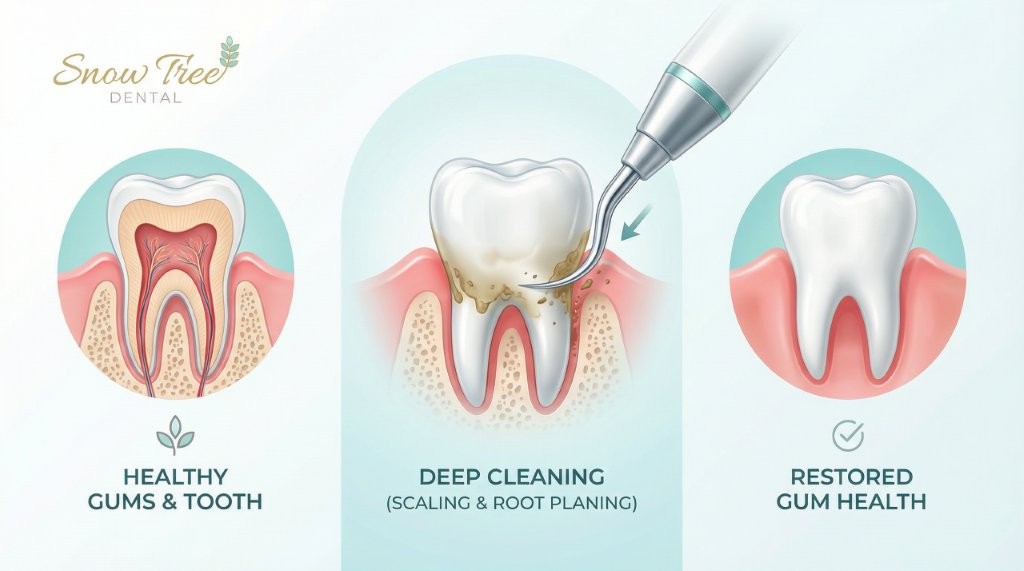
Deep cleaning, also called scaling and root planing, is a non-surgical treatment designed to remove plaque and bacteria from below the gum line.
- Scaling: Removes plaque and tartar above and below the gums
- Root planing: Smooths the root surfaces so gums can heal and reattach
This process reduces inflammation and helps restore gum health.
Why a Dentist May Recommend Deep Cleaning
Deep cleaning is recommended when gum disease has progressed beyond what a regular cleaning can manage.
- Bleeding gums during brushing or flossing
- Persistent bad breath
- Swollen or tender gums
- Gum recession
- Buildup below the gum line
In simple terms, it’s used when bacteria have moved below the surface and need targeted treatment.
Deep Cleaning vs Regular Cleaning
A regular cleaning helps maintain healthy gums. Deep cleaning is used to treat infection below the gum line.
- Regular cleaning: Preventive care
- Deep cleaning: Treatment for gum disease
What to Expect During Treatment
Deep cleaning is typically completed in one or two visits, depending on your needs.
- Initial exam and gum measurements
- Local numbing for comfort
- Cleaning below the gum line
- Root smoothing for healing
- Aftercare instructions
Recovery and Aftercare
After deep cleaning, mild soreness or sensitivity is normal.
- Brush gently and consistently
- Floss as directed
- Avoid hard or spicy foods briefly
- Follow your dentist’s guidance
Most patients recover quickly when they follow simple aftercare steps.
Practice Insight
In everyday practice, patients rarely come in asking for deep cleaning directly. Instead, they mention bleeding gums or discomfort. Once we explain what’s happening and walk through the process step by step, most feel reassured and more comfortable moving forward with treatment.
When to See a Dentist
If you notice bleeding gums, bad breath, or gum discomfort, it’s best to schedule a visit early. Addressing the issue sooner can help avoid more complex treatment.
You can explore gum disease treatment options or visit our Dentist in Houston page to learn more.
For general dental information, refer to the American Dental Association.
Final Thoughts
If you’ve been told you need deep cleaning, it’s worth addressing sooner rather than later. This treatment helps protect your gums and supports long-term oral health.
At Snow Tree Dental, we take a calm, clear approach to care. If you’re looking for a trusted dentist in Houston, our team is here to guide you and help you feel comfortable every step of the way.
Ready to take care of your gum health? Contact Snow Tree Dental to schedule a consultation and get clear, professional guidance tailored to you.
FAQ
What is deep cleaning?
Deep cleaning removes plaque and bacteria below the gum line to treat gum disease.
Is deep cleaning painful?
Most patients feel minimal discomfort due to local numbing during the procedure.
How long does deep cleaning take?
It is usually completed in one or two visits depending on the condition of your gums.
What happens after deep cleaning?
You may experience mild soreness or sensitivity for a few days, which typically improves quickly.
Can deep cleaning cure gum disease?
It helps control gum disease and reduce inflammation, especially in early stages.
What if I delay treatment?
Delaying treatment can allow gum disease to progress and may lead to more complex dental issues.