
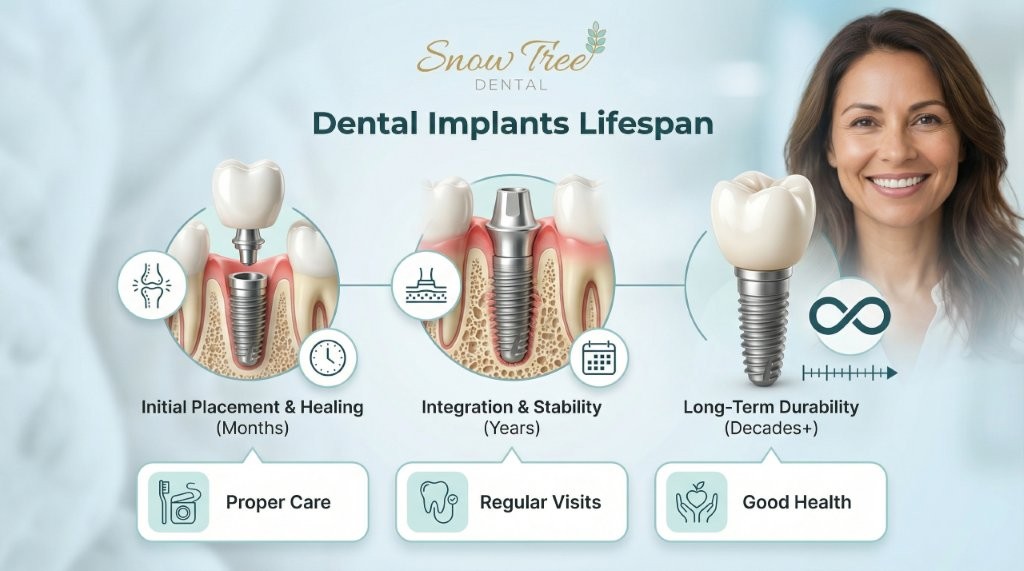
If you’re considering dental implants, one of the first questions that comes up is how long they’ll last. When we talk about dental implants lifespan, the answer is encouraging—implants are designed to last many years, often decades, with proper care.
The implant itself is built for long-term stability, while the visible crown may need replacement over time. Understanding what affects longevity can help you protect your investment and feel confident moving forward.
What Is the Average Dental Implants Lifespan?
Dental implants are intended to be a long-term solution, not a temporary fix.
- Implant post: Can last 20+ years and often a lifetime
- Crown: Typically lasts 10–15 years before needing replacement
This difference is important. When people say implants last forever, they’re usually referring to the implant post, not the crown.
Implant Post vs Crown: What Lasts Longer?
Implant post: Placed into the jawbone and designed for long-term stability.
Crown: The visible part that handles daily chewing and may wear over time.
Think of it as a strong foundation with a surface that experiences daily use.
Factors That Affect Dental Implants Lifespan and Durability
Even a well-placed implant depends on what happens after treatment. These factors influence implant durability:
- Oral hygiene: Consistent brushing and flossing prevent inflammation
- Gum health: Healthy gums support long-term stability
- Smoking: Can impact healing and maintenance
- Teeth grinding: Excess pressure can wear down the crown
- Bone quality: Strong bone supports the implant
- Placement technique: Careful planning matters
- Regular dental visits: Help catch small issues early
How Long Do Dental Implants Last Compared to Other Options?
- Dental Implants: Often decades with proper care
- Bridges: Around 10–15 years
- Dentures: May need more frequent adjustments
Implants offer long-term stability and do not rely on neighboring teeth.
Learn more about restorative options like Crowns and Bridges and how they compare.
Signs Your Dental Implant May Need Attention
- Pain or discomfort
- Movement or looseness
- Swelling or bleeding gums
- Gum recession
- Changes in bite
If something feels off, early evaluation can prevent more serious issues. You can also explore related concerns like tooth pain when biting or swollen gum around one tooth.
How to Extend the Lifespan of Your Dental Implants
At home:
- Brush twice daily
- Clean between teeth
- Avoid chewing hard objects
With your dentist:
- Regular checkups and cleanings
- Night guard if needed
- Early treatment of gum issues
What We See in Real Patients
In real patient care, those who treat their implants like natural teeth—keeping up with hygiene and regular visits—tend to do well long term. When issues arise, it’s often due to small problems building over time rather than one major event.
Are Dental Implants Worth It Long Term?
For many patients in Houston, dental implants provide a reliable and long-lasting solution that supports comfort, function, and confidence.
They are designed to feel natural and remain stable with proper care.
Conclusion
Understanding dental implants lifespan helps you make informed decisions and maintain long-term results. With consistent care and professional follow-up, implants can remain a dependable solution for many years.
If you’re considering treatment, learn more about dental implants in Houston and your options.
Ready to Take the Next Step?
If you’re thinking about dental implants or want to check an existing one, Snow Tree Dental is here to help. Our approach focuses on clear guidance and long-term outcomes so you can feel confident in your care.
FAQ
How long do dental implants last?
Most dental implants last 20 years or more, and often a lifetime with proper care. The crown may need replacement after several years.
What affects dental implants lifespan the most?
Oral hygiene, gum health, lifestyle habits, and regular dental visits all play a major role in long-term success.
Can dental implants last a lifetime?
Yes, the implant itself often can, while the crown may need replacement over time.
Do dental implants require special care?
No. Regular brushing, flossing, and dental visits are usually enough.
Can implants fail?
They can, but it’s uncommon and usually related to maintenance or gum health.
How do I know if my implant has a problem?
Signs include discomfort, swelling, or movement. If anything feels different, it’s best to have it checked.
Is it normal to replace the crown?
Yes, crowns naturally wear over time and may need replacement.
Are implants better than bridges?
In many cases, implants offer better long-term stability and do not affect neighboring teeth.