
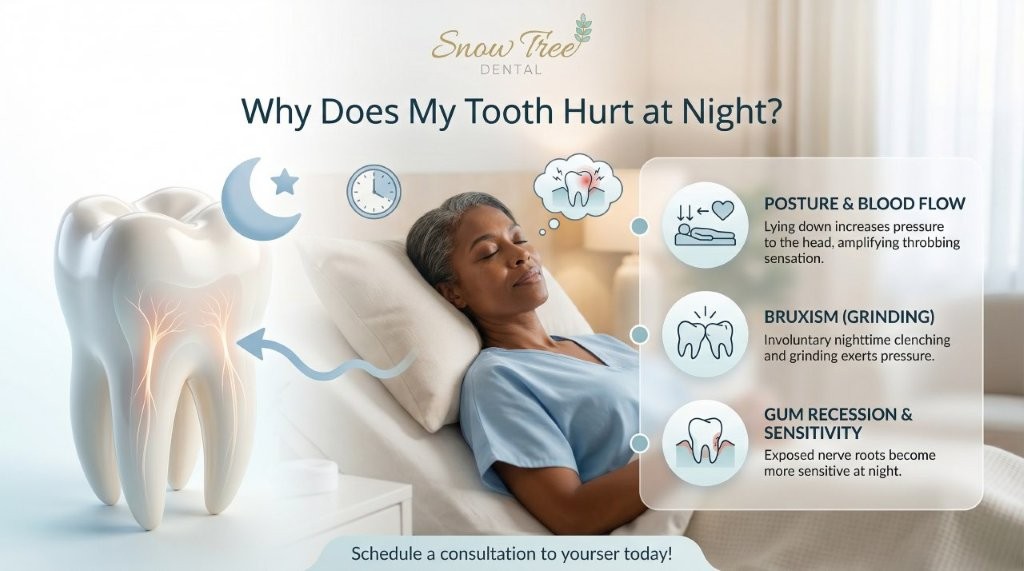
If you’ve experienced tooth pain at night, you already know how much more intense it can feel once you’re trying to rest. What seemed manageable during the day can suddenly become sharp, throbbing, and hard to ignore.
This happens for a reason. When you lie down, blood flow to your head increases slightly, which can put pressure on an irritated tooth nerve. With fewer distractions, the discomfort becomes more noticeable and often more persistent.
Why Tooth Pain at Night Feels Worse
Nighttime tends to amplify symptoms your body has been dealing with throughout the day.
- Increased blood flow creates pressure in the head and jaw
- Inflammation builds up and peaks in the evening
- Quiet surroundings make pain more noticeable
- Teeth grinding during sleep adds extra stress
If pain is keeping you awake or waking you up, it’s usually a sign your tooth needs attention.
Common Causes of Tooth Pain at Night
Tooth decay reaching the nerve: When a cavity progresses deeper, it can affect the inner part of the tooth, leading to lingering sensitivity and discomfort.
Dental infection or abscess: Infection can cause throbbing pain, swelling, and pressure that worsens when lying down.
Teeth grinding (bruxism): Nighttime clenching can create soreness and sensitivity, especially by morning.
Gum inflammation: Swollen or irritated gums can lead to localized discomfort that becomes more noticeable at night.
Cracked or damaged tooth: Small cracks can expose sensitive areas, causing pain when biting or changing temperature.
When Tooth Pain at Night May Be Urgent
Some symptoms should not be ignored:
- Severe, constant throbbing pain
- Swelling in the face or jaw
- Fever or bad taste
- Pain that repeatedly disrupts sleep
If these occur, consider seeking emergency dental care in Houston as soon as possible.
What You Can Do for Relief at Night
While waiting to be seen, these steps may help:
- Keep your head elevated while lying down
- Rinse gently with warm saltwater
- Avoid hot, cold, or sugary foods
- Use over-the-counter pain relief as directed
- Apply a cold compress to the outside of your cheek
These can reduce discomfort temporarily, but they do not address the underlying cause.
When to See a Dentist in Houston
You should schedule a visit if:
- Pain lasts more than one or two days
- The discomfort is increasing
- You notice swelling or infection signs
- The pain keeps returning at night
Tooth pain rarely improves on its own without proper care.
How Dentists Treat Nighttime Tooth Pain
Treatment depends on the cause but may include:
- Dental fillings for cavities
- Root canal treatment for nerve involvement
- Care for infection or inflammation
- Night guards for grinding
- Repair of cracked teeth
The focus is always on relieving discomfort and addressing the underlying issue.
What We See in Real Patients
Many patients reach out after a difficult night when the pain becomes impossible to ignore. In our experience, what feels like sudden pain is often something that has been developing gradually and becomes more noticeable once the body is at rest.
Final Thoughts on Tooth Pain at Night
Tooth pain at night is often a sign that something needs attention. Whether it’s decay, irritation, or infection, the problem usually does not resolve without proper care.
Addressing it early can help prevent more serious complications and make treatment simpler.
Snow Tree Dental – Here to Help
If you’re dealing with tooth pain at night, getting a clear diagnosis can make a big difference. The team at Snow Tree Dental in Houston focuses on identifying the cause and helping you feel comfortable again with thoughtful, patient-centered care.
Frequently Asked Questions
Why is tooth pain at night worse?
It often feels worse because lying down increases pressure in the head, which can intensify inflammation and sensitivity.
Is tooth pain at night serious?
It can be. Persistent or severe pain may indicate infection or nerve involvement that needs evaluation.
How can I relieve tooth pain at night?
Elevating your head, rinsing with warm saltwater, and avoiding triggers may help temporarily.
Can a cavity cause pain only at night?
Yes. Early symptoms may be mild during the day but more noticeable at night.
Should I see a dentist right away?
If the pain is severe, worsening, or includes swelling, it’s best to seek care promptly.