
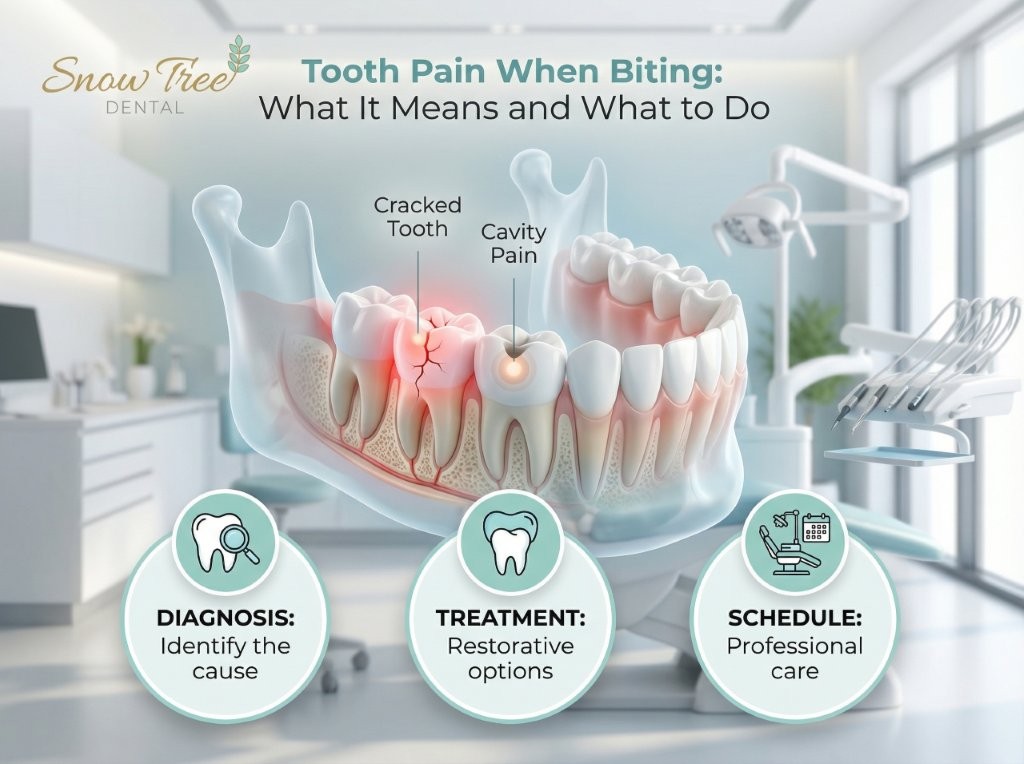
If you’re feeling tooth pain when biting, it’s usually not random. This type of discomfort tends to point to something that needs attention rather than something that will simply go away on its own.
In most cases, the cause can be treated effectively, especially when it’s caught early. The key is understanding what your tooth is trying to tell you.
Quick answer: Tooth pain when biting usually means there is pressure-related damage inside the tooth, such as a cracked tooth, deep cavity, loose filling, or infection. It is not considered normal and should be evaluated if it lasts more than a couple of days or gets worse.
Why Does My Tooth Hurt When I Bite Down? What Does Tooth Pain When Biting Usually Mean?
When you bite, your teeth absorb pressure and transfer it through the root and surrounding bone. If everything is healthy, you won’t notice anything unusual. But when there’s damage, inflammation, or instability, that pressure can trigger pain.
- The structure of the tooth has been compromised
- The inner nerve is irritated
- The supporting tissues are inflamed
Even mild pain is worth checking before it turns into something more involved.
Common Causes of Tooth Pain When Biting
Cracked Tooth
A cracked tooth is one of the most frequent causes we see.
- Pain when biting down or releasing pressure
- Discomfort that comes and goes
- Sensitivity that’s hard to pinpoint
Cracks tend to worsen over time if they’re left untreated. Learn more about dental crowns for cracked teeth.
Cavity or Tooth Decay
Tooth decay doesn’t always cause obvious pain at first. But as it progresses deeper, it can start to affect how the tooth responds to pressure.
- Early stages may feel like sensitivity
- Deeper decay can lead to more defined cavity pain
- Chewing often makes the discomfort more noticeable
Loose or Damaged Filling
Fillings can wear down or shift slightly over time. Even a small change can affect how your bite lands and create pressure-related discomfort.
Dental Infection or Abscess
An infection inside the tooth can create pressure from within.
- Pain with chewing
- Swelling or tenderness
- A bad taste or drainage
This should be evaluated promptly. Read about root canal treatment.
Gum Inflammation or Periodontal Issues
- Tenderness when chewing
- Localized soreness
- Bleeding or swelling
How to Tell If It’s Something More Serious
- Sharp pain when releasing your bite
- Pain that lingers after chewing
- Swelling in the gums or face
- A persistent bad taste
- Pain that’s getting worse
What You Can Do at Home (Short-Term Relief)
- Avoid chewing on that side
- Stick to softer foods
- Avoid hot or cold triggers
- Use over-the-counter pain relief as directed
When to See a Dentist in Houston
You should schedule a visit if:
- Pain lasts more than a few days
- It keeps returning
- It gets worse
- You notice swelling
Waiting too long can turn a small issue into a more complex one. Schedule a dental exam or contact an emergency dentist in Houston.
How Dentists Treat Tooth Pain When Biting
- Filling repair or replacement
- Dental crown for protection
- Root canal treatment if needed
- Bite adjustment
What We Often See in Practice
In everyday care at Snow Tree Dental, many patients describe this as “just sensitivity,” especially when the pain comes and goes. But after a closer exam, it’s often a small crack or deeper decay that only reacts under pressure. When it’s caught early, treatment is usually simpler and more comfortable than expected.
Myth vs Fact
Myth: If pain comes and goes, it’s nothing serious.
Fact: The issue may still be progressing.
Myth: It’s just sensitivity.
Fact: Pain when biting usually points to a structural issue.
How to Prevent Tooth Pain When Biting
- Regular dental checkups
- Treat cavities early
- Wear a night guard if needed
- Avoid chewing hard objects
Frequently Asked Questions
What causes tooth pain when biting?
Short answer: Pressure on a damaged or irritated tooth.
This often includes a cracked tooth, cavity, loose filling, or infection.
Is tooth pain when biting serious?
Short answer: Not always, but it should not be ignored.
It can signal a problem that may worsen if untreated.
How do I know if it’s a cracked tooth or cavity?
Short answer: Cracks hurt with pressure, cavities often with temperature.
Can it go away on its own?
Short answer: Usually not.
Should I avoid chewing on that side?
Short answer: Yes.
Can a filling cause this?
Short answer: Yes.
When should I see a dentist?
Short answer: If it lasts more than a few days or worsens.
Is it an emergency?
Short answer: Sometimes, especially with swelling or severe pain.
What treatments are used?
Short answer: Fillings, crowns, or root canals.
Why does it hurt when I release my bite?
Short answer: Often a cracked tooth.
Final Thoughts
Tooth pain when biting is a sign something needs attention. Addressing it early can prevent more complex treatment.
CTA
If you’re experiencing tooth pain when biting, getting a clear diagnosis early can help you avoid more complex treatment later. At Snow Tree Dental, we care for patients throughout Houston and focus on identifying the cause in a calm, straightforward way—so you can move forward with confidence and comfort. Request an appointment.