
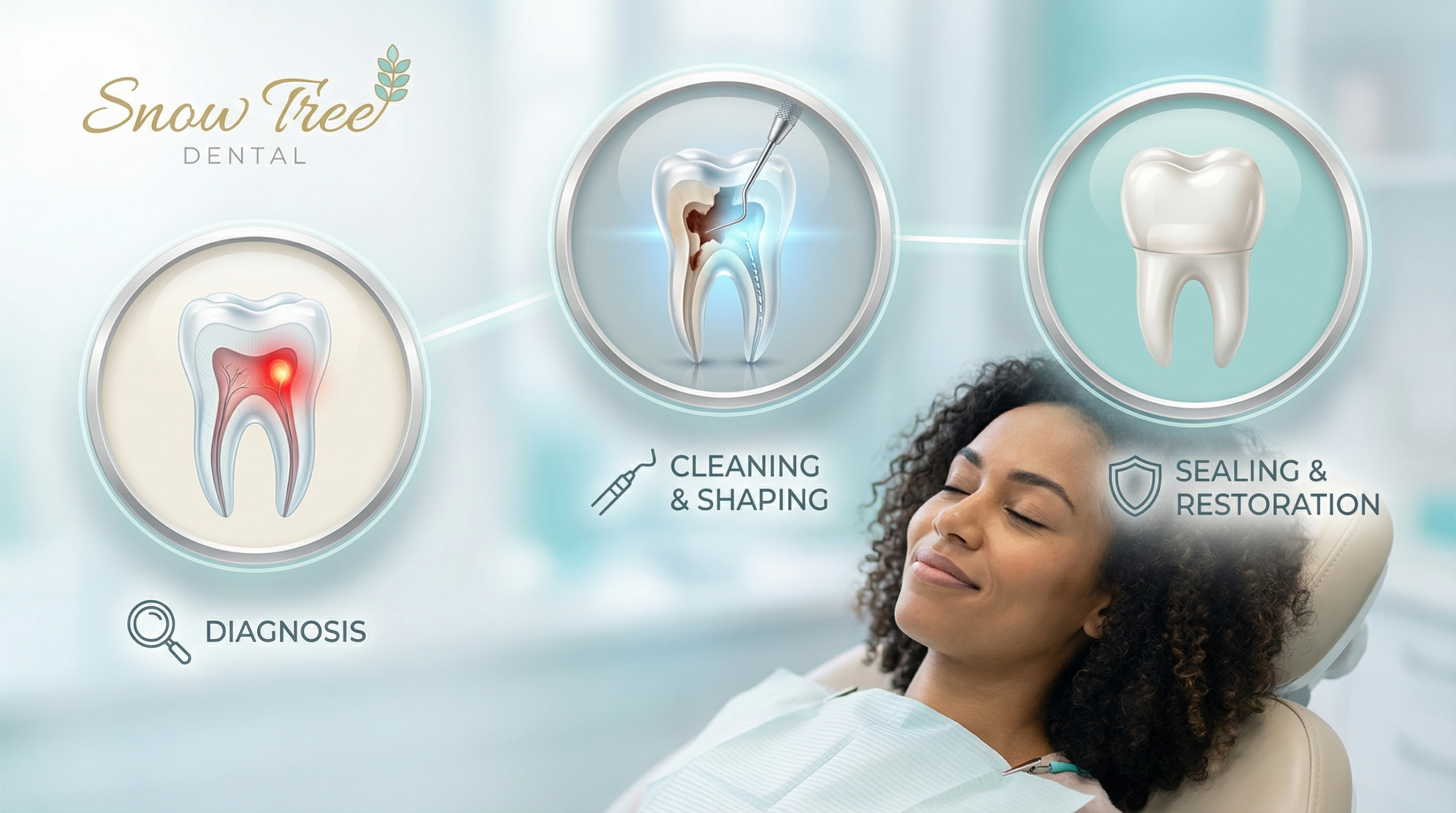
Tooth pain can affect everything from eating to sleeping. If you have been told you may need a root canal, it is normal to feel uncertain about what comes next.
A root canal is a common way to treat infection inside a tooth, relieve pain, and help preserve your natural tooth. At Snow Tree Dental, we help patients in Houston understand what is happening, what their options are, and what to expect at each step.
What Is a Root Canal?
A root canal treats infection inside a tooth by removing the damaged tissue, cleaning the inside of the tooth, and sealing the space to help prevent further problems.
Inside each tooth is soft tissue called the pulp. When that area becomes irritated or infected, it can lead to ongoing discomfort, sensitivity, swelling, or pain when chewing. Root canal treatment is designed to address the source of the problem while keeping the tooth in place whenever possible.
Signs You May Need a Root Canal
Not every toothache means you need a root canal, but some symptoms are worth paying attention to.
- Persistent or sharp tooth pain
- Sensitivity to hot or cold that lingers
- Swelling or tenderness in the gums
- Pain when biting or chewing
- A tooth that looks darker than the surrounding teeth
If these symptoms sound familiar, it is a good idea to schedule an evaluation with a dentist in Houston before the problem gets worse.
What Causes the Need for Root Canal Treatment?
In many cases, bacteria reach the inner part of the tooth because of a deeper dental problem.
Common causes: deep decay, a cracked or chipped tooth, repeated dental work on the same tooth, or an injury that affects the nerve inside the tooth.
When the pulp becomes infected, the issue will not usually resolve on its own. That is why early treatment matters.
What Happens During a Root Canal?
A lot of the worry around root canal treatment comes from not knowing what will actually happen. The process is usually more straightforward than people expect.
Step 1: The area is numbed so you stay comfortable during treatment.
Step 2: The infected tissue is carefully removed from inside the tooth.
Step 3: The inside of the tooth is cleaned and shaped.
Step 4: The canal is sealed to help protect the tooth from reinfection.
Step 5: In many cases, the tooth is restored with a crown for long-term strength and protection. You can learn more about dental crowns and bridges if that is recommended as part of your treatment plan.
Does a Root Canal Hurt?
This is one of the most common questions patients ask.
With modern techniques and proper numbing, most people feel very little during the procedure. In many cases, a root canal feels similar to getting a filling. The pain that brought you in is often worse than the treatment itself.
For patients who are dealing with significant discomfort, pressure, or swelling, timely care from an emergency dentist in Houston can make a big difference.
Recovery, Aftercare, and Why Saving the Tooth Matters
Recovery is usually straightforward, and many patients feel relief once the infection has been treated.
Aftercare tips:
- Wait until numbness wears off before eating
- Avoid chewing on the treated side until the tooth is fully restored
- Take any recommended medication as directed
- Keep up with brushing, flossing, and follow-up visits
It is also common to ask whether it would be easier to remove the tooth instead. In many situations, saving your natural tooth is the better long-term option because it helps maintain your bite and reduces the need for additional replacement treatment.
If you are comparing treatment options, related topics such as the difference between a root canal and a filling or why tooth pain gets worse at night can also be helpful.
What We See in Real Patients
Many patients come in expecting a root canal to be overwhelming. Once the tooth is numb and the procedure begins, the experience often feels much more manageable than they expected. What people usually notice most afterward is the relief that comes when the pressure and discomfort finally settle down.

Root Canal Myths, When to Call, and What to Do Next
Myth: Root canals are extremely painful.
Fact: With modern dental care, most patients are comfortable during treatment.
Myth: If the pain fades, the problem is gone.
Fact: The infection may still be present even if symptoms change for a while.
You should call a dentist if you have severe pain, swelling, pain that keeps getting worse, or trouble chewing on one side. Waiting can allow the infection to progress and may make treatment more complicated.
For additional general information, the American Dental Association offers helpful patient education about root canal treatment and oral health.
If you are dealing with tooth pain or have been told you may need a root canal, Snow Tree Dental is here to help you understand your options and move forward with calm, clear guidance.
Schedule a Visit with Snow Tree Dental
If you have questions about a root canal or want a careful evaluation of tooth pain, Snow Tree Dental can help you take the next step with confidence.
Frequently Asked Questions
What is a root canal?
A root canal is a procedure that removes infection from inside a tooth, cleans the area, and seals it to help prevent further damage. It is often recommended when the inner tissue of the tooth becomes inflamed or infected.
Does a root canal hurt?
Most patients feel little to no pain during a root canal because the area is numbed before treatment begins. In many cases, the discomfort from the infection is worse than the procedure itself.
How do I know if I need a root canal?
You may need a root canal if you have persistent tooth pain, sensitivity to hot or cold, swelling in the gums, or pain when chewing. A dental exam and X-rays help confirm the cause.
How long does a root canal take?
Many root canals can be completed in one or two visits. The exact timing depends on the tooth involved and how much infection or inflammation is present.
Will I need a crown after a root canal?
In many cases, yes. A crown is often recommended to strengthen and protect the treated tooth, especially if it is a back tooth that handles more chewing pressure.
Is it better to pull the tooth instead of getting a root canal?
Saving your natural tooth is usually the preferred option when possible. A root canal can preserve function and help prevent nearby teeth from shifting.
What happens if I delay a root canal?
Delaying treatment can allow the infection to worsen. That may lead to more pain, swelling, and a more complicated dental problem over time.
How long does a root canal last?
With good oral hygiene, regular dental care, and proper restoration, a tooth treated with a root canal can last for many years.
Can I eat after a root canal?
Yes, but it is best to wait until the numbness wears off. Soft foods are usually the most comfortable at first, and it is wise to avoid chewing on the treated side until your dentist says it is ready.
When should I see a dentist in Houston for tooth pain?
If tooth pain lasts more than a day, gets worse, or is accompanied by swelling or sensitivity that does not go away, it is a good idea to schedule an evaluation as soon as possible.