
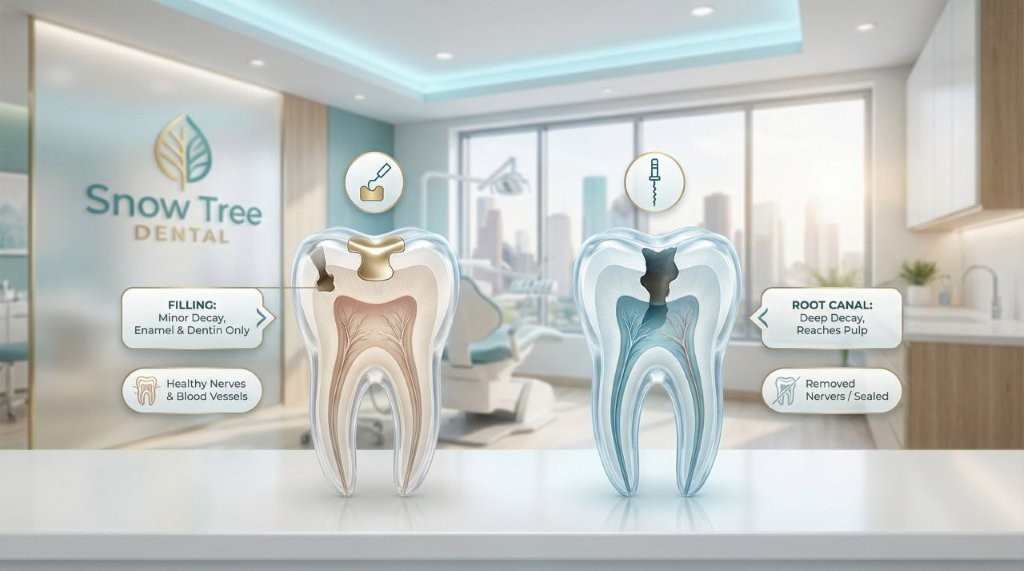
If you are dealing with tooth sensitivity or pain, it is completely normal to wonder about root canal vs filling. Most patients do not know which one they need, and the symptoms can feel confusing at first.
In simple terms, a filling is usually used for early decay, while a root canal is needed when the inside of the tooth becomes infected. The challenge is knowing where your situation falls. That is why an in-person evaluation matters, especially when discomfort is not going away.
Quick answer: A filling is used for small cavities and early tooth decay treatment. A root canal is usually needed when decay reaches the inner pulp of the tooth and causes deeper inflammation or infection.
If you are looking for answers in Houston, this guide explains what signs to watch for, what each treatment does, and when it is time to call a Dentist in Houston.
Understanding Tooth Decay Treatment
Tooth decay usually starts small and gets worse over time. It does not jump straight into a major dental problem. In many cases, the difference between a filling and a root canal comes down to how early the issue is found.
- Early stage: minor enamel damage or a small cavity
- Middle stage: decay moves deeper and may cause sensitivity
- Advanced stage: the inner pulp becomes irritated or infected
Different stages call for different kinds of tooth decay treatment. Treating the problem early usually keeps things simpler and more conservative.
If you want to learn more about treatment choices for damaged teeth, visit our tooth decay treatment options page.
Root Canal vs Filling: What Is the Difference?
Dental filling: A filling is typically used when a cavity is caught early. The damaged area is removed, the tooth is sealed, and most of the natural tooth structure is preserved. In many cases, this is a quick and straightforward treatment.
Root canal: A root canal is used when the decay or infection has reached the inner part of the tooth. The infected tissue is removed, the inside of the tooth is cleaned, and the canals are sealed to help protect the tooth.
Put simply, a filling repairs a smaller problem. A root canal treats a deeper one and aims to save the tooth when the inside has been affected.
- Filling: early decay, smaller area, simpler repair
- Root canal: deeper damage, infected pulp, more involved treatment
Signs You May Need a Filling or a Root Canal
Symptoms can overlap, which is why patients often feel unsure about what they need. Still, there are some common patterns.
Signs you may need a filling:
- Mild sensitivity to sweets or cold
- A small visible cavity or dark spot
- Occasional discomfort that fades quickly
- No swelling or pressure around the tooth
Signs you may need a root canal:
- Pain that lingers or keeps returning
- Sensitivity to hot or cold that does not fade
- Discomfort when biting or chewing
- Swelling near the gums
- A feeling of pressure or throbbing in the tooth
If you are dealing with ongoing discomfort, our emergency dentist in Houston can evaluate the tooth and help determine the right next step.
You may also find it helpful to read about common causes of tooth pain if you are trying to understand what your symptoms might mean.
Can a Filling Turn Into a Root Canal Later?
Yes, it can. In many cases, the issue is timing.
If bacteria continue moving deeper into the tooth, what started as a small cavity can eventually affect the nerve. At that point, a simple filling may no longer be enough.
This is one reason early treatment matters. It is not about fear. It is about avoiding a more involved procedure when possible.
We often see patients who come in expecting the worst after a few days of discomfort. Sometimes the tooth can still be treated with a simple filling. Other times, a tooth that did not seem severe on the surface has deeper involvement than expected. The common pattern is timing. The earlier we see it, the more options we usually have.
If you have been putting off treatment, you may also want to read what happens if you ignore a cavity.

How Dentists Decide Which Treatment You Need
At Snow Tree Dental, the decision is not based on one symptom alone. We look at the full picture so the recommendation makes sense for your tooth, not just for a checklist.
- Digital X-rays
- Clinical exam
- Your symptoms and how long they have been present
- How the tooth responds during evaluation
Two patients can describe similar pain and still need different treatment. That is why self-diagnosing can be misleading. A proper exam usually makes the answer much clearer.
For additional patient-friendly information about cavities and treatment, the American Dental Association is a helpful external resource.
When to Call a Dentist in Houston
You do not need to wait for severe pain before scheduling a visit. In fact, it is better not to.
- Sensitivity keeps coming back
- You feel pain when chewing
- Hot or cold bothers the tooth more than usual
- You notice swelling, pressure, or a change that does not feel normal
If you are in Houston and something feels off, getting it checked early may help keep treatment simpler and more predictable.
Root Canal vs Filling: Final Thoughts
When it comes to root canal vs filling, the real difference is how far the damage has gone. A filling usually treats early decay. A root canal is used when the problem has moved deeper into the tooth.
If something does not feel right, it is worth having it evaluated instead of guessing. Clear answers early on can make a big difference.
At Snow Tree Dental, we focus on calm, honest guidance and practical treatment plans. If you are dealing with tooth pain or sensitivity, schedule a visit and our team will walk you through the next steps clearly and comfortably.
If you are experiencing tooth pain or sensitivity, the team at Snow Tree Dental in Houston is here to help you understand what is happening and what your options are. We focus on clear communication and practical treatment plans so you can feel confident in your decision. Schedule a visit and we will guide you step by step.
Frequently Asked Questions
Do I need a root canal or just a filling?
It depends on how deep the decay is. If the damage is limited to the outer part of the tooth, a filling is usually enough. If the decay or infection has reached the inner pulp, a root canal may be needed to remove the infection and preserve the tooth.
How can I tell if my cavity is serious?
Lingering pain, sensitivity that does not go away, discomfort when chewing, or swelling near the tooth can all point to a deeper problem. A dentist can confirm how far the decay has progressed with an exam and X-rays.
Is a root canal more painful than a filling?
Most patients find that modern root canal treatment is manageable and is designed to relieve pain, not create it. A root canal is more involved than a filling, but comfort is still a priority throughout the visit.
Can a filling turn into a root canal later?
Yes. If decay continues to spread deeper into the tooth after a filling, the inner pulp can become affected. That may make a root canal necessary later.
What happens if I delay treatment?
A small cavity can grow larger and eventually reach the nerve of the tooth. As the problem progresses, treatment often becomes more involved than it would have been earlier.
Can tooth pain go away without treatment?
Sometimes pain fades temporarily, but that does not necessarily mean the tooth has healed. The underlying issue can still be there, so it is best to have the tooth checked.
How long does each treatment take?
Fillings are usually quicker and often completed in a single short visit. A root canal may take longer depending on the tooth and the amount of damage involved.
Is it better to save the tooth or remove it?
Whenever possible, preserving your natural tooth is usually preferred. Treatments like root canals are designed to keep the tooth in place and functioning.
When should I see a dentist in Houston for this issue?
You should schedule a visit if you have ongoing sensitivity, pain, swelling, or discomfort when eating or drinking. Early care often leads to simpler treatment.
Can a dentist tell the difference in one visit?
In most cases, yes. An exam and X-rays usually allow a dentist to determine whether a filling or root canal is the more appropriate treatment.