
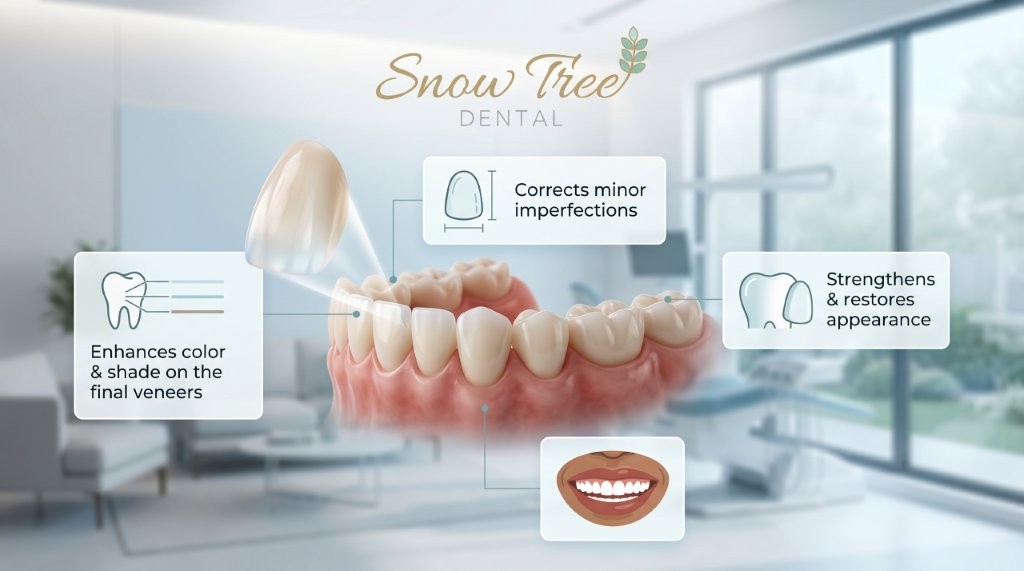
If you have been thinking about improving the shape, color, or overall appearance of your smile, veneers may be one option worth discussing with a dentist. For many Houston patients, the goal is not to create a dramatic or artificial-looking smile. It is usually more personal than that: a cleaner, more balanced smile that still feels natural.
Veneers are often considered for front teeth that look chipped, stained, uneven, slightly spaced, worn down, or different in size. They can be a helpful cosmetic dental treatment, but they are not the right choice for every person or every tooth. A careful consultation matters because your teeth, gums, bite, enamel, and long-term oral health all need to be evaluated before treatment begins.
At Snow Tree Dental in Houston, the goal is to help patients understand their options clearly before making a decision. A beautiful result starts with the right plan, not with rushing into treatment because the internet made veneers sound simple.
Quick Answer: What Are Veneers?
Veneers are thin custom restorations placed on the front surface of teeth to improve the appearance of chips, stains, gaps, uneven edges, or worn-looking front teeth. They may be a good option for some patients, but a dentist should first evaluate your teeth, gums, bite, enamel, and cosmetic goals.
What Are Veneers?
Veneers are thin custom restorations placed over the front surface of teeth to improve how they look. They are most often used on visible front teeth and are designed to improve concerns related to color, shape, size, spacing, or minor surface damage.
A veneer does not replace the whole tooth. Instead, it covers the visible front portion of the tooth. Depending on the case, veneers may be made from porcelain or composite material. The right option depends on your smile goals, tooth condition, bite, cosmetic expectations, and the dentist’s clinical recommendation.
Although veneers are considered cosmetic, they should still be planned carefully. The best results come from healthy gums, stable teeth, realistic expectations, and a design that fits your face, not a copied smile that looks disconnected from you. Patients can also review the American Dental Association guide to veneers for additional patient-friendly information.
What Can Veneers Help Improve?
Patients often ask about veneers when they feel self-conscious about one or more visible teeth. Sometimes it is one chipped tooth that stands out in photos. Sometimes it is discoloration that no longer improves with whitening. Other times, the concern is the overall shape or balance of the smile.
Veneers may help improve the appearance of:
- Stubborn tooth discoloration
- Small chips or worn edges
- Minor gaps between teeth
- Uneven tooth shape
- Teeth that look too small or narrow
- Mild cosmetic misalignment
- Front teeth that appear aged or unbalanced
- Surface imperfections that do not respond well to whitening
For example, if a front tooth has a small chip and the surrounding teeth are also uneven in color or shape, veneers may be part of a broader cosmetic solution. But if a tooth has active decay, gum disease, severe crowding, or heavy bite stress, other treatments may need to come first.
That is an important difference. Veneers can improve appearance, but they should not be used to cover up problems that need dental treatment first.
Who May Be a Good Candidate for Veneers?

A good candidate for veneers usually has healthy teeth and gums, enough enamel to support the restoration, and realistic expectations about what veneers can and cannot do.
Veneers may be a good fit if you:
- Want to improve the appearance of visible front teeth
- Have minor chips, stains, gaps, or uneven edges
- Have healthy gums
- Do not have untreated cavities
- Understand that veneers are a long-term cosmetic decision
- Want a natural-looking improvement rather than an overly artificial result
- Are willing to maintain regular dental care
Choosing a dentist in Houston patients can trust is important because veneers require both cosmetic judgment and clinical planning. A good dentist should look beyond tooth color and consider your facial features, gum line, bite, smile shape, and overall oral health.
The best veneer cases are not just about making teeth whiter. They are about creating a smile that looks balanced, healthy, and believable.
When Veneers May Not Be the Best First Option
Veneers can be useful in many cosmetic cases, but they should not be used to hide dental problems that need treatment first. If there are underlying issues, those should be treated first.
Veneers may not be the first recommendation if you have:
- Active tooth decay
- Gum disease
- Severe tooth crowding
- Heavy grinding or clenching
- Not enough healthy enamel
- Large existing fillings or weakened teeth
- Bite problems that could place too much force on veneers
- Cosmetic concerns that can be handled more conservatively
In some cases, teeth whitening, bonding, orthodontics, crowns, or gum treatment may be more appropriate. A responsible dentist should explain the options clearly and recommend what is best for your mouth, not push every patient into the same treatment.
What to Expect During a Veneers Consultation in Houston
A veneers consultation should feel thoughtful and personal. Your dentist will usually begin by asking what you want to change about your smile. Some patients want whiter teeth. Others want to fix one chipped tooth, close a small gap, or make the front teeth look more even.
During your visit, your dentist may also discuss whether cosmetic dentistry in Houston options such as whitening, bonding, crowns, or veneers best match your goals.
During the visit, your dental team may review:
- Your smile goals
- Tooth color, shape, and size
- Gum health
- Bite and jaw movement
- Signs of grinding or clenching
- Existing dental work
- Whether whitening, bonding, crowns, or orthodontics should be considered
- Whether veneers are appropriate for your long-term oral health
Photos, digital scans, or impressions may also be used depending on the case. These tools help the dentist evaluate your smile more carefully and plan the treatment with better detail.
The goal is to create a plan that fits your smile instead of forcing your smile into a trend. Cosmetic dentistry should feel personal, especially when treatment involves the teeth people see when you smile, speak, or laugh.
A Realistic Look at Patient Concerns
In everyday patient conversations, many people do not come in asking for a “perfect” smile. They often point to one or two specific concerns, such as a chipped front tooth, uneven edges, or discoloration that no longer responds the way they hoped.
A good veneers consultation should slow that conversation down. It should look at the whole smile, not just one tooth. The right plan should match the patient’s comfort level, facial features, and long-term oral health.
Sometimes veneers are a strong option. Other times, a simpler treatment may make more sense. That kind of honest guidance matters, especially with cosmetic dental care, because the goal is not only to improve how the smile looks today. It is also to protect the health and function of the teeth over time.
The Veneers Process: Step by Step
The exact process can vary depending on the type of veneers and the patient’s needs, but most veneer treatments follow a similar path.
Step 1: Consultation and Smile Planning
The first step is a consultation. This is where you explain what bothers you about your smile and what kind of result you want. Your dentist evaluates your teeth, gums, bite, and enamel to determine whether veneers are appropriate.
This is also the time to discuss shade, tooth shape, smile balance, and possible alternatives. If another treatment would be better for your goals, your dentist should explain that before any treatment begins.
Step 2: Tooth Preparation, If Needed
Some veneers require a small amount of enamel to be adjusted so the veneer can fit naturally over the tooth. The amount depends on the case and the type of veneer being used.
Not every patient is a candidate for minimal-prep or no-prep veneers, and those terms should not be treated like magic words. Your dentist should explain what your specific teeth need and why.
Step 3: Impressions or Digital Scans
After planning and preparation, impressions or digital scans may be taken. These help create veneers that fit your teeth and match the planned smile design.
The dentist may also work with a dental lab for custom porcelain veneers, depending on the treatment plan. Details like shade, shape, length, and symmetry are considered carefully so the final result feels natural.
Step 4: Temporary Veneers, When Appropriate
Temporary veneers may be placed in some cases while the final veneers are being made. These can help protect prepared teeth and give patients a preview of the planned changes.
Not every case requires temporaries, so this step depends on the type of treatment and the condition of the teeth.
Step 5: Final Placement
When the final veneers are ready, your dentist checks the fit, color, shape, and bite. Adjustments may be made before the veneers are bonded.
Once everything looks and feels right, the veneers are attached to the teeth using dental bonding materials. Your dentist will also give you care instructions after placement so you know how to protect your new restorations.
Do Veneers Look Natural?
Veneers can look natural when they are planned carefully. Natural-looking results depend on several details, including tooth shape, shade, translucency, gum line, facial balance, and how the veneers match the surrounding teeth.
Many patients do not want teeth that look overly white or identical. They want a smile that looks refreshed, clean, and believable. That is a smart goal. Teeth should look natural, not overly white, flat, or artificial.
A natural result often comes from choosing the right shade and shape for the individual patient rather than copying someone else’s smile. The best veneer design should work with your face, lips, gums, and natural tooth proportions.
Veneers vs. Other Cosmetic Dental Options
Veneers are only one option in cosmetic dentistry. Depending on your goals, another treatment may be better.
Veneers vs. Teeth Whitening
Teeth whitening changes the color of natural enamel. It may be helpful for patients whose main concern is staining or yellowing.
Veneers can change the appearance of color, shape, size, and minor spacing. They may be considered when whitening alone cannot address the concern.
For example, whitening may be enough if your teeth are healthy and you mainly want a brighter smile. If your main concern is tooth color, your dentist may recommend reviewing teeth whitening options before deciding whether veneers are necessary.
Veneers vs. Bonding
Dental bonding may be used for small chips, minor gaps, or small cosmetic repairs. It is often more conservative, but it may not be the best choice for broader smile changes.
Veneers may be better suited when multiple front teeth need changes in shape, color, or proportion. Your dentist can explain which option fits your goals and how each choice may affect maintenance over time.
Veneers vs. Crowns
A crown covers more of the tooth than a veneer. Crowns are often used when a tooth needs more structural support, while veneers are generally used for cosmetic changes on the front surface of teeth.
If a tooth is weak, cracked, heavily filled, or damaged, a crown may be more appropriate than a veneer. This is why the condition of the tooth matters so much before cosmetic treatment begins.
How to Care for Veneers
Caring for veneers is similar to caring for natural teeth. The basics still matter: daily brushing, flossing, regular checkups, and avoiding habits that can damage the veneers or natural teeth.
To help protect veneers:
- Brush twice daily
- Floss every day
- Keep regular dental checkups
- Avoid biting hard objects like ice, pens, or fingernails
- Do not use your teeth as tools
- Wear a nightguard if your dentist recommends one
- Address grinding or clenching
- Keep your gums healthy
Veneers are strong, but they are not indestructible. Good habits help protect both the veneers and the natural teeth underneath. If something feels rough, loose, sensitive, or uncomfortable, it is better to call the dentist instead of waiting for the problem to get worse.
Signs You Should Call a Dentist About Veneers
You may want to schedule a consultation if you are unhappy with the appearance of your front teeth and want to understand your options.
Call a dentist if you notice:
- A chipped or cracked front tooth
- Stains that do not improve with whitening
- Uneven or worn tooth edges
- Small gaps that bother you cosmetically
- Old bonding that no longer looks natural
- A veneer that feels loose, rough, or uncomfortable
- Gum irritation around cosmetic dental work
- Bite discomfort after previous dental treatment
You should also call a dentist before making cosmetic decisions if you grind your teeth, have gum bleeding, or have untreated cavities. Cosmetic treatment works best on a healthy foundation.
Myth vs. Fact About Veneers
Myth: Veneers are only for celebrities.
Fact: Veneers can be considered by everyday patients who want to improve specific cosmetic concerns. The goal does not have to be a dramatic smile makeover.
Myth: Veneers are right for everyone.
Fact: Veneers are not ideal for every patient. Teeth, gums, enamel, bite, and oral habits all matter.
Myth: Veneers always look fake.
Fact: Veneers can look natural when the shape, shade, and overall design are carefully planned.
Myth: Veneers replace regular dental care.
Fact: Veneers still require brushing, flossing, checkups, and healthy habits. The natural teeth underneath and around them still need care.
Choosing a Dentist in Houston for Veneers
When choosing a dentist for veneers in Houston, patients should look for someone who takes time to explain the process and evaluate the whole mouth, not just the visible teeth.
A good veneers consultation should include:
- A clear explanation of treatment options
- Honest discussion of limits and alternatives
- Attention to gum health and bite
- Natural-looking smile design
- Comfort with patient questions
- No pressure to choose veneers if another option is better
Snow Tree Dental focuses on helping patients understand what makes sense for their smile, their health, and their long-term comfort. Veneers can be a meaningful cosmetic treatment, but the decision should feel informed and comfortable, not rushed.
Frequently Asked Questions About Veneers
What are veneers?
Short answer: Veneers are thin custom restorations placed on the front surface of teeth to improve how they look.
Expanded answer: Veneers are often used to improve the appearance of teeth that look chipped, stained, uneven, slightly spaced, worn, or different in size. They are usually placed on visible front teeth and are designed to blend with the patient’s smile. Before recommending veneers, a dentist should evaluate your teeth, gums, bite, enamel, and cosmetic goals.
Who is a good candidate for veneers?
Short answer: A good candidate usually has healthy teeth and gums, enough enamel, and realistic expectations about the final result.
Expanded answer: Veneers may be a good option if you want to improve the appearance of visible front teeth and have concerns such as small chips, stains, gaps, uneven edges, or mild cosmetic misalignment. They may not be the best first choice if you have untreated cavities, gum disease, heavy grinding, severe crowding, or teeth that need stronger restorative treatment.
Are veneers permanent?
Short answer: Veneers should be considered a long-term cosmetic treatment.
Expanded answer: Many veneer treatments involve changing the surface of the natural tooth so the veneer can fit properly. Because of that, patients should think of veneers as a long-term decision, not a temporary cosmetic change. During a consultation, your dentist can explain what the process would involve for your specific teeth.
Do veneers hurt?
Short answer: Most patients tolerate veneer treatment well, but comfort depends on the case.
Expanded answer: Some veneers require little or no tooth preparation, while others may need a small amount of enamel adjustment. If preparation is needed, your dental team can discuss numbing and comfort options. If you already have sensitivity, tooth damage, or gum issues, your dentist should evaluate those concerns before cosmetic treatment begins.
Can veneers fix crooked teeth?
Short answer: Veneers may improve the appearance of mild cosmetic misalignment, but they do not move teeth.
Expanded answer: If teeth are only slightly uneven or mildly out of line, veneers may help the smile look more balanced. However, veneers are not a replacement for orthodontic treatment. If teeth are significantly crowded, rotated, or misaligned, your dentist may recommend orthodontic options before considering veneers.
Can veneers fix gaps between teeth?
Short answer: Veneers may help close or reduce the appearance of small gaps in some cases.
Expanded answer: Small spaces between front teeth can sometimes be improved with veneers, depending on the size of the gap, tooth shape, bite, and overall smile design. Larger spacing or bite-related issues may require another approach. A dentist can help determine whether veneers, bonding, orthodontics, or another option makes the most sense.
Can veneers be whitened?
Short answer: No, veneers do not whiten the same way natural tooth enamel does.
Expanded answer: This is why shade planning matters before veneers are placed. If nearby natural teeth are stained or yellowed, your dentist may discuss whitening those teeth first so the veneer shade can be matched more carefully. Once veneers are placed, their color does not respond to whitening products the way natural teeth do.
How long do veneers last?
Short answer: The lifespan of veneers depends on the material, bite, oral hygiene, habits, and regular dental care.
Expanded answer: Veneers are designed as a long-term cosmetic treatment, but they still need care. Brushing, flossing, routine dental visits, avoiding hard biting habits, and wearing a nightguard if recommended can all help protect veneers and the natural teeth underneath. Your dentist can give a more personalized expectation after examining your mouth.
What is the difference between veneers and bonding?
Short answer: Veneers are custom restorations, while bonding uses tooth-colored resin to repair or reshape smaller areas.
Expanded answer: Bonding may be a more conservative option for small chips, minor gaps, or limited cosmetic repairs. Veneers may be considered when several front teeth need changes in color, shape, size, or overall balance. The better option depends on your tooth condition, goals, bite, and how much change is needed.
When should I call a dentist about veneers?
Short answer: Call a dentist if you are unhappy with visible chips, stains, gaps, worn edges, or old cosmetic dental work.
Expanded answer: You should also call if an existing veneer feels loose, rough, sensitive, or uncomfortable. Cosmetic treatment works best when the teeth and gums are healthy, so it is important to address cavities, gum bleeding, grinding, or bite discomfort before moving forward with veneers.
What happens during a veneers consultation in Houston?
Short answer: A veneers consultation usually includes a discussion of your smile goals and an exam of your teeth, gums, bite, and enamel.
Expanded answer: At Snow Tree Dental, a consultation may include reviewing your concerns, looking at tooth color and shape, checking gum health, evaluating bite pressure, and discussing whether veneers or another cosmetic option is the better fit. Many patients come in focused on one concern, such as a chipped edge or a front tooth that looks darker than the others. A careful consultation helps connect that concern to a treatment plan that fits the whole smile, not just one tooth.
Are veneers right for me?
Short answer: Veneers may be right for you if your teeth and gums are healthy and you want to improve the look of visible front teeth.
Expanded answer: The best way to know is to schedule a consultation. A dentist can evaluate your oral health, bite, enamel, smile goals, and treatment options. For some patients, veneers are a strong cosmetic choice. For others, whitening, bonding, crowns, orthodontics, or gum care may be a better first step.
Conclusion: Are Veneers Right for Your Smile?
Veneers can be a meaningful option for patients who want to improve the appearance of chipped, stained, uneven, spaced, or worn-looking front teeth. They can help create a smile that looks more balanced and natural, but they should be planned carefully.
The right treatment depends on your oral health, goals, enamel, bite, and expectations. For some patients, veneers are a strong cosmetic choice. For others, whitening, bonding, crowns, orthodontics, or gum care may be the better first step.
If you are considering veneers in Houston, Snow Tree Dental can help you understand your options in a calm, patient-focused setting. Schedule a dental consultation to discuss your smile goals, ask questions, and find out whether veneers or another cosmetic option is the right fit for you.