
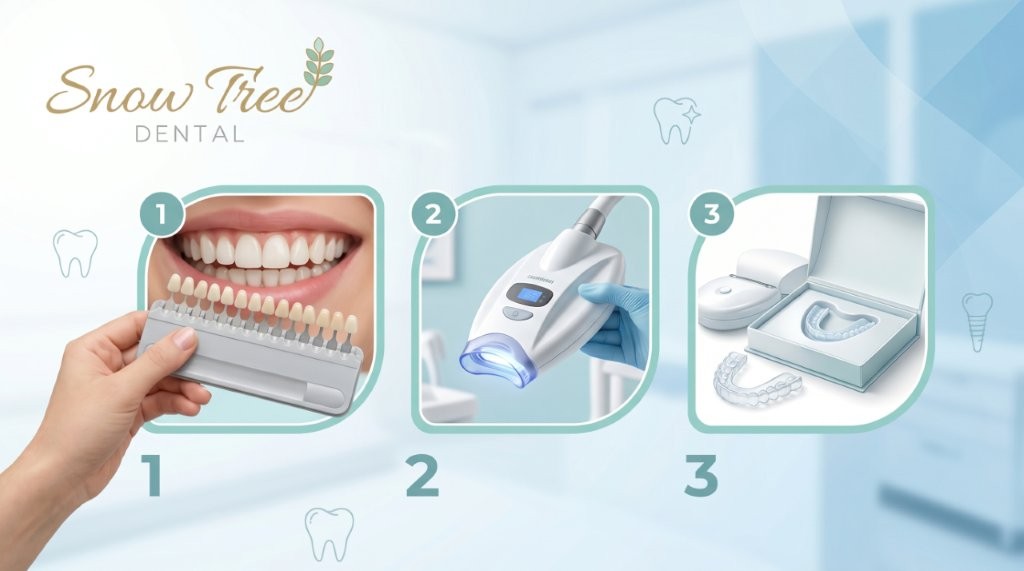
A brighter smile can make a real difference in how you feel, especially before a wedding, job interview, family photo session, or any moment when you want to look more refreshed. For many people, teeth whitening feels like a simple way to improve their smile. Still, before starting any whitening treatment, it helps to understand what whitening can do, what it cannot do, and when it makes sense to talk with a dentist first.
Whitening is common, but it is not one-size-fits-all. Tooth sensitivity, gum irritation, cavities, crowns, veneers, old fillings, and the type of staining can all affect which option is safest and most effective for your mouth. Because, unfortunately, teeth do not come with a simple brightness setting. Human design remains suspiciously inefficient.
At Snow Tree Dental in Houston, we often meet patients who are interested in whitening because their teeth look dull, yellow, or uneven in color. Many mention coffee, tea, aging, or an upcoming event. In real appointments, the most helpful first step is usually not choosing the strongest product. It is understanding why the teeth look darker, checking the gums and teeth for any concerns, and making sure whitening is a good fit for that patient.
What Is Teeth Whitening?
Teeth whitening is a cosmetic dental process that helps lighten stains and brighten the appearance of natural teeth. Many whitening products use peroxide-based ingredients that work by breaking down stains on or within the tooth structure.
One important point: whitening is designed mainly for natural tooth enamel. It usually does not change the color of crowns, veneers, fillings, bridges, implants, or bonding. This matters because whitening your natural teeth while visible dental work stays the same color can sometimes lead to an uneven or mismatched smile.
The American Dental Association notes that sensitivity and gum inflammation are among the most common side effects associated with vital tooth whitening. MouthHealthy also explains that overusing whitening products can harm enamel or gums, which is why following instructions and asking a dentist when needed is important.
Why Teeth Become Stained or Discolored
Teeth can darken for several reasons. Some stains sit closer to the surface and may respond well to whitening. Others are deeper and may need a different cosmetic approach.
Common causes of tooth discoloration include:
- Coffee, tea, red wine, and dark-colored drinks
- Tomato sauce, soy sauce, berries, and other staining foods
- Tobacco use
- Normal aging
- Plaque and tartar buildup
- Old dental restorations
- Tooth trauma
- Certain medications
- Enamel wear or thinning
Surface stains are often easier to improve. Deeper discoloration, especially discoloration related to trauma, internal tooth changes, or older dental work, may not respond the same way. That is one reason a dental visit can be helpful before you spend time and money on whitening products that may not match your situation.

Teeth Whitening Options Patients Commonly Consider
There are several ways patients try to whiten their teeth. The best choice depends on your goals, timeline, oral health, sensitivity level, and whether you have restorations in visible areas.
Professional Teeth Whitening
Professional whitening is performed or supervised by a dental team. This option may be helpful for patients who want a more guided approach, have sensitive teeth, or are unsure what kind of staining they have.
Before treatment, a dentist can check for cavities, gum inflammation, cracks, gum recession, exposed root surfaces, worn enamel, and older restorations. This step matters because whitening over untreated dental issues can make discomfort worse or lead to disappointing results.
Dentist-Guided Take-Home Whitening
Some patients prefer a slower, more gradual option. Dentist-guided take-home whitening may include custom trays or specific instructions based on your mouth and whitening goals.
This approach can be useful for patients who want more control over timing or who may need to whiten more gently because of sensitivity. It also gives the dentist a chance to adjust the plan if discomfort develops.
Over-the-Counter Whitening Products
Store-bought whitening strips, gels, rinses, and trays may help with some surface stains. They are convenient, easy to find, and often appealing to patients who want to start quickly.
The limitation is that these products are not customized for your teeth or gums. Poor fit, leaving the product on too long, or using multiple whitening products at the same time can increase the chance of sensitivity or gum irritation. Naturally, humans see three whitening products on a shelf and think, “What if I use all of them?” Dentistry then gets dragged into the aftermath.
Whitening Toothpaste
Whitening toothpaste may help remove surface stains and keep teeth looking brighter after whitening. It is usually better for maintenance than for major shade changes.
It is also important not to brush too aggressively. Pressing harder does not make teeth whiter faster. It can irritate gums and may contribute to enamel wear over time.
Is Teeth Whitening Safe?
For many patients, teeth whitening can be safe when products are used correctly and oral health is considered first. Safety depends on the product, the whitening ingredient concentration, how long it stays on the teeth, how often it is used, and whether there are existing dental problems.
Patients should be especially careful if they have:
- Active cavities
- Gum disease or bleeding gums
- Gum recession
- Cracked or worn teeth
- Existing tooth sensitivity
- Crowns, veneers, fillings, bonding, or implants
- Dark, gray, or uneven stains
A dental exam before whitening does not make the process complicated. It helps make the process more predictable. A dentist can let you know whether whitening is appropriate, whether a cleaning should come first, and whether another cosmetic option may work better.
Why Some People Feel Sensitivity After Teeth Whitening
Tooth sensitivity is one of the most common concerns people have about whitening. It may feel like a quick zing when you drink something cold, breathe in cool air, or brush your teeth.
Sensitivity can happen because whitening ingredients may pass through enamel and reach the dentin layer underneath. For some patients, this temporarily irritates the nerve inside the tooth. In many cases, the sensitivity improves after stopping or adjusting the whitening product.
You may be more likely to notice sensitivity if you already have:
- Gum recession
- Exposed root surfaces
- Thin or worn enamel
- Cracked teeth
- Untreated cavities
- A history of sensitive teeth
- Aggressive whitening habits
If sensitivity is mild, your dentist may suggest taking a break, whitening less often, shortening the wear time, using a lower-strength option, or trying a toothpaste made for sensitive teeth. If the discomfort is sharp, severe, or does not improve, it is time to call a dentist.
Can Whitening Irritate the Gums?
Yes, whitening can irritate the gums, especially if the gel touches soft tissue or if trays do not fit well. Gum irritation may feel like burning, soreness, tenderness, redness, or general discomfort.
This is where gum health matters. Healthy gums are usually better prepared for cosmetic treatment, while inflamed or receding gums may be more sensitive. A dentist can check for gum concerns before whitening and help you avoid unnecessary irritation.
Call a dentist if gum irritation:
- Feels painful
- Gets worse
- Does not improve after stopping the product
- Comes with swelling or bleeding
- Happens every time you whiten
Whitening should not feel like you are being punished for wanting a brighter smile. If it does, the product, timing, fit, or strength may need to be changed.
Who Should Talk to a Dentist Before Whitening?
Many patients can benefit from a quick conversation with a dentist before starting whitening. Some patients especially should avoid guessing their way through it.
Patients With Cavities or Gum Disease
If you have untreated cavities, gum disease, bleeding gums, or active inflammation, whitening may increase discomfort. In many cases, it is better to treat those problems first.
A dentist can check whether your teeth and gums are healthy enough for whitening and whether preventive or restorative care should come before cosmetic treatment.
Patients With Crowns, Veneers, Fillings, or Implants
Whitening products generally do not lighten crowns, veneers, fillings, bonding, bridges, or implants the way they lighten natural enamel.
This is especially important if you have visible dental work near the front of your mouth. Whitening the surrounding natural teeth may make older restorations look darker by comparison. A dentist can help you plan around this so the final result looks more balanced.
Patients With Sensitive Teeth
If you already avoid cold drinks or feel sharp sensitivity when brushing, do not start with the strongest whitening product you can find. That is not commitment. That is dental chaos in retail packaging.
A dentist can help identify possible causes of sensitivity and recommend a more comfortable whitening plan if whitening is appropriate.
Patients With Dark or Uneven Stains
Not all stains respond the same way. Yellowish surface stains may respond differently than gray, brown, or internal discoloration.
If your staining is uneven, dark, or related to old dental work, your dentist may discuss other cosmetic dentistry options, such as bonding, veneers, or replacing older restorations, depending on your needs.
Professional Whitening vs. Store-Bought Whitening
Professional whitening and store-bought whitening can both have a place. The difference is not only strength. It is also guidance, fit, comfort, and planning.
| Factor | Professional Whitening | Store-Bought Whitening |
|---|---|---|
| Supervision | Dentist-guided | Self-directed |
| Fit | Often more customized | One-size-fits-most |
| Sensitivity support | Personalized adjustments | Limited guidance |
| Best for | Patients wanting a planned approach | Mild stains and convenience |
| Restorations | Dentist can check shade concerns | Easy to overlook |
| Gum protection | Better controlled | Depends on product fit and use |
If you are unsure which option makes sense, a dentist Houston patients trust can help you compare choices without pressure.
How to Prepare Before Teeth Whitening
Good preparation can make whitening more comfortable and help you avoid common problems.
Before whitening, consider these steps:
- Schedule a dental exam if you have not had one recently.
- Ask whether you need a professional dental cleaning first.
- Tell your dentist about any sensitivity.
- Mention crowns, veneers, bonding, fillings, bridges, or implants.
- Avoid whitening over painful teeth or irritated gums.
- Follow product instructions exactly.
- Do not combine multiple whitening products unless your dentist recommends it.
If you want to read more from a trusted outside source, the American Dental Association teeth whitening guidance through MouthHealthy is a helpful patient resource.
Myth vs. Fact: Teeth Whitening
Myth: Whitening works the same for everyone.
Fact: Results vary depending on the type of stain, enamel condition, oral health, habits, and existing dental work.
Myth: Stronger whitening is always better.
Fact: Stronger products or longer use may increase sensitivity or gum irritation. The best whitening option is the one that fits your mouth safely.
Myth: Whitening changes the color of crowns and veneers.
Fact: Most dental restorations do not whiten like natural teeth. This is why shade planning matters before whitening.
Myth: Sensitivity means something went terribly wrong.
Fact: Sensitivity can happen and is often temporary. However, severe or lasting discomfort should be checked by a dentist.
How to Maintain Whitening Results
Whitening results do not last forever. Daily habits play a major role in how long your smile stays brighter.
To help maintain whitening results:
- Brush twice daily with a soft toothbrush.
- Floss every day.
- Keep regular dental cleanings.
- Rinse with water after coffee, tea, or dark drinks.
- Avoid tobacco.
- Use whitening maintenance products only as directed.
- Ask your dentist before frequent touch-ups.
Good oral hygiene is not flashy, but it works. Annoyingly, the boring advice is often the useful advice.
FAQ About Teeth Whitening
1. Is teeth whitening safe?
Short answer: Teeth whitening can be safe for many patients when it is used correctly and your teeth and gums are healthy enough for treatment.
Expanded answer: Whitening is not the same for every mouth. If you have cavities, gum disease, gum recession, sensitive teeth, or visible dental work, it is best to talk with a dentist before starting. A dental exam can help confirm whether whitening is a good option or whether something should be treated first. Because apparently teeth prefer planning over chaos. Rude, but fair.
2. Does teeth whitening cause sensitivity?
Short answer: Yes, teeth whitening can cause temporary sensitivity for some patients.
Expanded answer: Sensitivity may feel like a quick zing when drinking something cold, breathing in cool air, or brushing. It may happen more often if you already have sensitive teeth, gum recession, exposed root surfaces, worn enamel, or untreated cavities. If sensitivity is sharp, severe, or does not improve after stopping whitening, call a dentist.
3. Can teeth whitening irritate my gums?
Short answer: Yes, whitening products can irritate the gums if the gel touches soft tissue or if trays do not fit well.
Expanded answer: Gum irritation may feel like burning, tenderness, redness, soreness, or discomfort. It can happen with overuse, poor tray fit, or using whitening products too often. If irritation gets worse, does not improve, or comes with swelling or bleeding, stop whitening and contact a dentist.
4. Does teeth whitening work on crowns, veneers, fillings, or implants?
Short answer: No, teeth whitening usually does not change the color of crowns, veneers, fillings, bonding, bridges, or implants.
Expanded answer: Whitening works mainly on natural tooth structure. If you whiten your natural teeth while older dental work stays the same color, your smile may look uneven. This is why patients with visible crowns, veneers, fillings, or bonding should talk with a dentist before whitening.
5. Should I get a dental cleaning before teeth whitening?
Short answer: In many cases, a dental cleaning is helpful before whitening.
Expanded answer: A professional cleaning can remove plaque, tartar, and some surface stains before whitening begins. This can help your dentist better evaluate your tooth color, gum health, and whether whitening is appropriate. At Snow Tree Dental, whitening questions often come up during regular visits, and many patients are surprised that the first useful step is simply checking the teeth and gums before choosing a product.
6. What causes teeth to look yellow or stained?
Short answer: Common causes include coffee, tea, dark foods, tobacco, aging, plaque buildup, enamel wear, old dental work, and some deeper tooth changes.
Expanded answer: Some stains are on the surface and may respond well to whitening. Other discoloration can come from inside the tooth, older restorations, trauma, or enamel changes. These deeper stains may not respond the same way to whitening products, so a dentist can help identify what kind of discoloration you have.
7. Is professional teeth whitening better than store-bought whitening?
Short answer: Professional whitening offers more guidance, while store-bought products may be useful for mild surface stains.
Expanded answer: Over-the-counter whitening strips, gels, and toothpastes can be convenient, but they are not customized for your mouth. Professional or dentist-guided whitening allows your dentist to check for sensitivity risks, gum concerns, restorations, and stain type before treatment. The best choice depends on your oral health, comfort, goals, and timeline.
8. How do I know if teeth whitening is right for me?
Short answer: The right whitening option depends on your stain type, sensitivity, gum health, dental work, and goals.
Expanded answer: If your teeth are naturally stained from coffee, tea, or everyday habits, whitening may be helpful. If you have sensitive teeth, gum recession, crowns, veneers, fillings, implants, or uneven discoloration, you may need a more personalized plan. A dentist can help you avoid wasted effort and uncomfortable surprises, which is apparently what professional judgment is for. Imagine.
9. Can I whiten my teeth if I have sensitive teeth?
Short answer: Maybe, but you should talk with a dentist first.
Expanded answer: Patients with sensitive teeth may still have whitening options, but the approach may need to be gentler. A dentist may recommend adjusting the product, frequency, wear time, or timing. If your sensitivity comes from cavities, gum recession, cracked teeth, or worn enamel, those issues may need to be addressed before whitening.
10. When should I call a dentist after whitening?
Short answer: Call a dentist if you have severe sensitivity, lasting pain, gum swelling, bleeding, or irritation that does not improve.
Expanded answer: Mild sensitivity can happen after whitening, but it should not feel severe or continue without improvement. You should also call if one tooth hurts more than the others, if your gums look damaged, or if whitening makes an existing dental concern worse. A dentist can check whether the symptoms are from whitening or from another issue that needs attention.
11. Can teeth whitening help before a wedding, interview, or special event?
Short answer: Yes, whitening may be helpful before a special event, but it is best to plan ahead.
Expanded answer: Many Houston patients ask about whitening before weddings, photos, interviews, and important family events. Planning ahead gives your dentist time to check for sensitivity, gum irritation risks, and visible dental work. It also helps avoid last-minute overuse of whitening products, because panic-whitening is not a dental strategy. It is a cry for help in strip form.
12. Where can I ask about teeth whitening in Houston?
Short answer: Snow Tree Dental can help Houston patients understand their teeth whitening options and decide what fits their smile.
Expanded answer: If you are considering teeth whitening in Houston, a visit with Snow Tree Dental can help you choose a safer, more realistic plan. The team can check your teeth and gums, discuss professional and at-home options, and help you understand whether whitening is the right next step for your smile.
Teeth Whitening in Houston: When to Visit Snow Tree Dental
If you are considering teeth whitening in Houston, Snow Tree Dental can help you understand your options, check for common concerns, and choose a plan that fits your smile. A brighter smile is a reasonable goal, but it should be approached with healthy teeth, healthy gums, and realistic expectations.
Whether you are curious about professional whitening, take-home whitening, or whether store-bought products are safe for your mouth, our team can help you make an informed decision. If you are looking for a trusted dentist in Houston to discuss whitening, schedule a visit with Snow Tree Dental and take the next step toward a brighter, healthier-looking smile.