
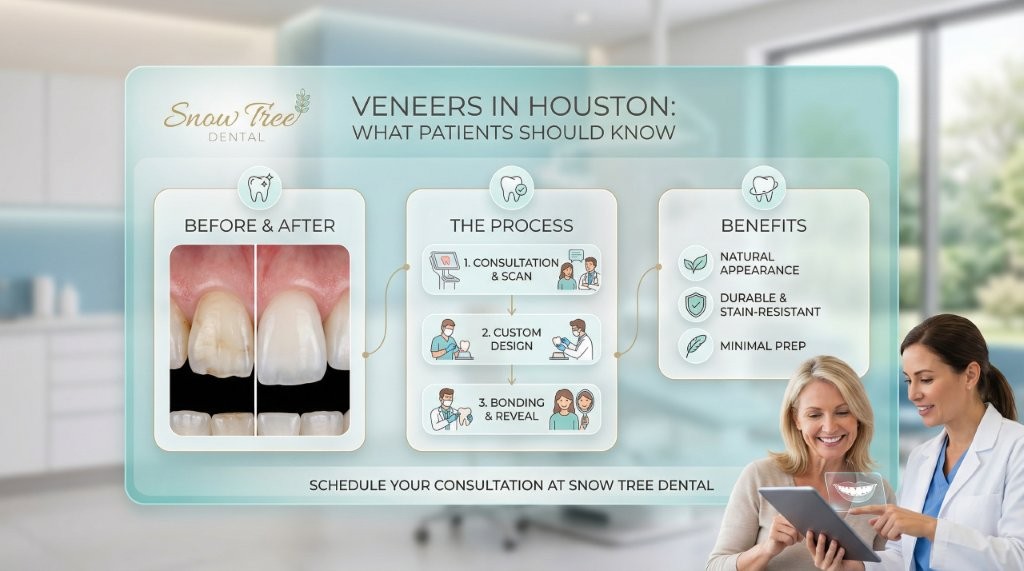
If you’ve been thinking about improving your smile, veneers have likely come up. Many patients consider veneers to address discoloration, small chips, gaps, or uneven edges—without dramatically changing how they look. When done thoughtfully, veneers can enhance your smile in a natural, balanced way.
At Snow Tree Dental in Houston, we focus on helping patients understand their options clearly. If you’re exploring veneers Houston patients commonly ask about, this guide will walk you through what matters most before making a decision.
What Are Veneers?
Veneers are thin, custom-made shells bonded to the front of teeth to improve appearance. They are typically made from porcelain or composite materials and are designed to match your natural teeth in shape, size, and color.
- Improve deep discoloration that whitening can’t fix
- Restore chipped or worn edges
- Close small gaps
- Create a more even, balanced smile
Why Patients Consider Veneers
Most patients aren’t looking for a dramatic change. They want a cleaner, more balanced version of their natural smile. Veneers can address multiple concerns at once—color, shape, and minor spacing—creating a cohesive result.
A trusted cosmetic dentist will also explain when veneers are not the best option and suggest more conservative alternatives when appropriate.
Types of Veneers: Understanding Your Options
Porcelain veneers: Known for durability and a natural, light-reflecting appearance. They resist stains and are custom-crafted for long-term results.
Composite veneers: Made from tooth-colored resin and often completed more quickly. Suitable for smaller corrections and subtle improvements.
Are Veneers Right for Everyone?
Veneers work best when your teeth and gums are healthy. If there are issues like decay, gum disease, or heavy grinding, those should be addressed first.
- Good candidates: healthy teeth, cosmetic concerns, desire for natural results
- May need alternatives: significant damage, bite issues, or untreated oral health problems
The Veneers Process
Consultation: Evaluate your smile, discuss goals, and plan the result.
Preparation: A small amount of enamel may be adjusted for proper fit.
Design: Impressions or scans are used to create custom veneers.
Placement: Final veneers are bonded and adjusted for comfort and appearance.
What to Expect After Veneers
Most patients adjust quickly. You may notice mild sensitivity or a slightly different feel at first.
- Brush and floss daily
- Avoid biting hard objects
- Attend regular dental visits
- Use a night guard if you grind your teeth

Veneers vs Other Cosmetic Options
Whitening: Best for surface stains. Explore teeth whitening options if color is your main concern.
Bonding: Useful for small chips or minor shape changes.
Crowns: Provide structural support when teeth are significantly damaged. Learn more about dental crowns in Houston.
Real-World Perspective
In daily practice, many patients come in asking for veneers but end up choosing a simpler option after understanding their choices. The most satisfied patients are usually the ones who take time to plan their treatment carefully and aim for a natural, balanced result rather than a dramatic change.
When to Talk to a Dentist
You don’t need to wait for pain to explore cosmetic options. Consider a visit if:
- You feel self-conscious about your smile
- Whitening hasn’t helped enough
- You have small chips or gaps
- You want to understand your options
For general oral health information, visit the American Dental Association.
Final Thoughts on Veneers
Veneers can improve the color, shape, and balance of your smile, but the best results come from thoughtful planning and realistic expectations. If you’re considering veneers, take the time to understand your options and what fits your goals best.
If you’re ready to explore your options, schedule a consultation with a dentist in Houston at Snow Tree Dental. We’re here to help you make a confident, informed decision.
Frequently Asked Questions
What are veneers?
Veneers are thin shells placed on the front of teeth to improve appearance, including color, shape, and alignment.
Are veneers permanent?
They are considered a long-term treatment because a small amount of enamel is usually adjusted during preparation.
Do veneers look natural?
Yes, when designed properly, they blend with your natural teeth and facial features.
How long do veneers last?
They can last many years with proper care, depending on material and habits.
Are veneers painful?
Most patients experience minimal discomfort, with only mild temporary sensitivity.
Can veneers fix crooked teeth?
They can improve mild alignment issues but do not physically move teeth.
How many veneers do I need?
This depends on your smile goals. Some need one or two; others choose several for balance.
Are veneers better than whitening?
It depends. Whitening works for surface stains, while veneers address multiple cosmetic concerns.