
Root Canal in Houston: Symptoms, Steps, and When to Get a Crown
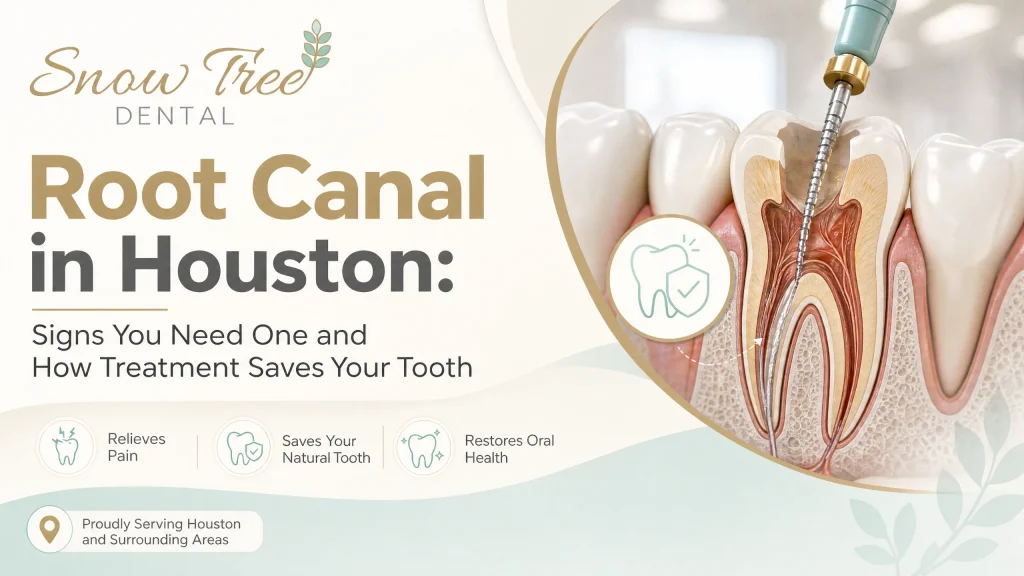
Root Canal in Houston: Signs You Need One and How Treatment Saves Your Tooth
What Is a Root Canal?
Endodontic therapy explained in simple terms
A root canal is a tooth-saving procedure that removes infected or inflamed tissue (the pulp) from inside your tooth, carefully disinfects the internal canals, and seals them to prevent reinfection. In short, it relieves dental pain, stops the spread of infection, and keeps your natural tooth in place so you can bite and smile normally. For many people, a root canal in Houston offers fast, lasting relief without needing an extraction. For additional background, see the American Association of Endodontists patient guide to root canal treatment.
Why saving your natural tooth matters
Your natural tooth helps maintain proper chewing forces, stimulates your jawbone, and keeps nearby teeth aligned. When you can keep the tooth, you typically need less dental work over the long term. A well-done root canal followed by a protective crown can help your tooth function comfortably for years.
Root Canal Symptoms to Watch For
Persistent toothache or throbbing pain
- Deep, throbbing pain that won’t go away
- Pain that wakes you at night or worsens when lying down
- Pain that radiates to the jaw, ear, or head
Sensitivity to hot, cold, or chewing
- Sharp pain when you bite or chew
- Lingering sensitivity to hot or cold that lasts longer than a few seconds
- A tooth that feels “high” or sore when you tap it
Swelling, tenderness, or a pimple on the gums
- Puffy, tender gums near one tooth
- A pimple-like bump (abscess) that may drain
- Bad taste or odor from the area
Darkening or discoloration of a tooth
- A single tooth that looks darker or gray can signal nerve damage after a cavity, injury, or crack.
When symptoms are a dental emergency
- Facial swelling, fever, or spreading pain
- Difficulty swallowing or breathing
- Severe pain that prevents sleep or normal activities
If you notice these urgent signs, call us right away for a same-day visit. You can also read our guidance on managing a toothache in Houston before you’re seen: https://www.snowtreedental.com/?p=3352
Quick symptom snapshot (for fast scanning)
- Persistent toothache or throbbing pain
- Sharp pain when chewing or touching the tooth
- Lingering sensitivity to hot or cold
- Swollen or tender gums, or a pimple-like bump
- Darkening or discoloration of the tooth
- Bad taste or odor from the tooth
- Facial swelling or jaw tenderness (seek urgent care)
Do I Need a Root Canal or Something Else?
Tooth infection vs. reversible irritation
Not every toothache means you need a root canal. Mild, short-lived sensitivity can come from gum recession, a small cavity, or recent dental work—issues that may be treated with desensitizing care or a simple filling. A root canal is usually recommended when bacteria reach the pulp and cause inflammation or infection that can’t heal on its own.
Root canal vs. extraction: preserving your smile
If a tooth can be predictably saved, we recommend endodontic therapy because it:
- Keeps your natural tooth, maintaining your bite and jawbone support
- Often avoids more complex—and potentially more costly—replacement later
- Lets you chew comfortably with a familiar bite
Extraction is appropriate when a tooth is too badly damaged or cracked to restore. If a tooth can’t be saved, modern replacements like dental implants provide strong, natural-looking function. To learn about this option, see our detailed guide to dental implants in Houston: https://www.snowtreedental.com/?p=3353
When to consider a crown after treatment
After a root canal, back teeth (molars and premolars) almost always need a crown to protect against future cracks and restore full chewing strength. Front teeth may only need a filling, though a crown can help if there’s heavy wear, a large filling, or cosmetic concerns.
How a Root Canal in Houston Works at Snow Tree Dental
Step-by-step: diagnosis, comfort, cleaning, sealing, and protection
- Exam and diagnosis: We listen to your symptoms, test the tooth gently, and use low-radiation digital X-rays and/or our intraoral camera to confirm what’s happening inside.
- Comfort first: Local anesthesia numbs the area. If you’re anxious, we’ll talk through calming options and take breaks as needed.
- Access and cleaning: A small opening allows us to reach the canals, remove the diseased pulp, and disinfect the space thoroughly.
- Shaping and sealing: We shape the canals for a precise fit and seal them with a biocompatible material to block bacteria.
- Temporary protection: We place a temporary filling; many teeth are later protected with a custom crown to restore full strength.
Modern technology and gentle techniques for dental pain relief
Our Houston office uses digital X-rays that minimize radiation exposure and intraoral cameras to show you clear, magnified images. Seeing what we see makes the process feel more predictable and less stressful. Gentle instrumentation and careful anesthesia aim to keep you comfortable from start to finish.
How long it takes and what to expect after you leave
Many root canals are completed in a single visit. Complex infections or multi-root teeth sometimes need a follow-up appointment or a separate visit for your final crown. After treatment, mild soreness or bite tenderness is common for a few days and usually improves steadily.
Recovery and Aftercare
Pain control, eating, and oral hygiene tips
- Take medications as directed. Over-the-counter pain relievers are often enough; we’ll guide you.
- Chew on the other side until your crown is placed (if recommended).
- Choose soft foods for a day or two; avoid very hot, hard, or sticky items right away.
- Keep the area clean. Brush gently and floss with care around the treated tooth.
- Warm saltwater rinses can soothe tender gums.
When to call us about post-op symptoms
Call promptly if you notice:
- Increasing pain after initial improvement
- Facial swelling, fever, or a pimple on the gums
- A crown or temporary that feels loose or high when you bite
Follow-up and placing the final crown
We’ll schedule your follow-up and, if needed, take digital scans or impressions for your crown. Once your permanent crown is placed, your bite should feel even and comfortable again. Good home care and regular checkups help the tooth last.
Cost, Insurance, and Flexible Options
Using PPO insurance and how we help file claims
Snow Tree Dental accepts most PPO plans and files claims for you to keep things simple. Benefits for endodontic therapy and crowns vary by plan; our team will review your coverage, estimate out-of-pocket costs, and discuss options before treatment begins. For a broader overview, see dental insurance and in-house plans in Houston: https://www.snowtreedental.com/?p=3358
In-house membership savings for preventive care and discounts
If you don’t have insurance, our in-house membership starts at $225/year and includes two exams, two cleanings, fluoride, X-rays, and up to 20% off other services—helpful if you need a crown after a root canal. We’ll walk you through details and help you choose what fits your needs.
When to Call a Dentist in Houston
Red flags that shouldn’t wait
- Sudden, severe tooth pain or sensitivity that lingers
- Swelling in the gums, face, or jaw
- A pimple-like bump on the gums, or bad taste from a tooth
- Fever or feeling unwell along with dental pain
These can signal a tooth infection that needs urgent care. Don’t wait—treatment can prevent complications and often saves the tooth.
Same-day emergency appointments near the Galleria
We offer same-day emergency visits whenever possible at our Houston office near the Galleria (2400 Augusta Dr). If you’re in severe pain or notice spreading swelling, call (832) 464-3368. You can also review steps to take right now from our emergency dentist in Houston near the Galleria: https://www.snowtreedental.com/?p=3355
Myth vs. Fact: Root Canals
- Myth: “Root canals are extremely painful.”
Fact: With modern anesthesia and gentle techniques, most patients feel pressure, not sharp pain. The procedure actually relieves the pain caused by infection. - Myth: “It’s better to pull the tooth.”
Fact: Saving your natural tooth helps maintain normal chewing and jaw health, and often avoids more involved—and potentially costlier—treatments later. - Myth: “The tooth is dead and will break.”
Fact: After endodontic therapy, a properly protected tooth (often with a crown) can function comfortably for many years.
Practice insight from our team
In our Houston office near the Galleria, we often meet patients who arrive anxious with a deep, throbbing toothache and leave noticeably more comfortable after gentle care and clear explanations. Using digital X-rays and intraoral cameras, we show exactly what’s happening inside the tooth so it’s easy to see why a root canal is the tooth-saving choice—and what to expect next, step by step.
Managing Anxiety and Making Visits Easier
Dental pain is stressful, and appointments shouldn’t add to it. Our team focuses on calm, compassionate communication and a pace that works for you. We schedule thoughtfully—including evening and Saturday hours—to make care easier for busy families. Our trilingual team (English, Spanish, Arabic) helps ensure you feel understood and supported at every visit.
How Digital X-Rays and Intraoral Cameras Improve Diagnosis
Clear imaging lets us pinpoint the source of your pain—such as deep decay, a crack, or a failing filling—and decide whether a root canal, a filling, or another approach is best. Digital X-rays use low radiation, and intraoral cameras allow you to see the tooth in real time, which helps you make confident, informed decisions.
Cracked Tooth and Root Canal: What to Know
Cracks can irritate the pulp and allow bacteria inside. Depending on the crack’s depth and location:
- A small, superficial crack may be treated with a filling or crown.
- A deeper crack that reaches the pulp may need a root canal and a crown.
- A vertical split below the gumline may not be savable; extraction and a replacement option are discussed.
Early evaluation matters—treating a crack promptly can prevent infection and preserve your tooth.
Root Canal Aftercare: A Simple Day-by-Day Guide
- Day 1–2: Mild soreness and bite tenderness are common. Stick to softer foods, use recommended pain relief, and avoid chewing directly on the tooth.
- Day 3–5: Sensitivity typically improves. Resume normal brushing and flossing; still avoid very hard or sticky foods if a temporary is in place.
- Day 6+: Most people feel back to normal. If you’re getting a crown, keep your follow-up so the tooth is fully protected for long-term function.
Short definition refresher
A root canal is an endodontic therapy that removes infected or inflamed tissue inside a tooth, disinfects the canals, and seals them to relieve pain and save the natural tooth. For many patients, a root canal in Houston provides fast dental pain relief while preserving normal chewing and smile appearance.
Root Canal Care That Fits Real Life in Houston
- Location: Near the Galleria at 2400 Augusta Dr
- Hours: Evening and Saturday appointments available
- Access: Same-day emergency visits when possible
- Comfort: Modern, gentle techniques with clear communication
- Coverage: Most PPO insurance accepted; we file claims for you
- Options: In-house membership from $225/year with preventive care included and up to 20% off other services
- Languages: English, Spanish, Arabic
Root Canal Warning Signs? Talk With a Trusted Dentist in Houston
If you’re unsure whether your symptoms point to a root canal or something simpler, start with a gentle evaluation from a trusted dentist in Houston: https://snowtreedental.com/ We’ll identify the cause of your pain and walk you through the best options.
Frequently Asked Questions
What are the most common root canal symptoms?
Short answer: Persistent toothache, lingering hot/cold sensitivity, pain when chewing, swollen gums or a pimple on the gums, and a darkening tooth.
Expanded answer: Deep, throbbing pain (especially at night), sharp pain on biting, temperature sensitivity that lasts more than a few seconds, puffy or tender gums, a pimple-like bump that may drain, bad taste, or a single tooth turning gray are classic signs the pulp is irritated or infected. If pain is severe or swelling spreads, see us promptly. For immediate tips, review our toothache guide: https://www.snowtreedental.com/?p=3352
Do I need a root canal or an extraction?
Short answer: If the tooth can be predictably saved, a root canal is usually the better first choice.
Expanded answer: Endodontic therapy removes infection, relieves pain, and preserves your natural tooth—helping maintain jawbone and a stable bite. Extraction is considered when a tooth is too damaged or cracked to restore. If a tooth can’t be saved, we’ll discuss replacement options, including implants. Learn more here: https://www.snowtreedental.com/?p=3353
Will a root canal hurt?
Short answer: With modern anesthesia and gentle techniques, most patients feel pressure, not sharp pain.
Expanded answer: The procedure is designed to stop the pain caused by infection. We numb the area thoroughly and work at a calm pace, taking breaks as needed. Most people report mild soreness afterward that improves over a few days—over-the-counter pain relievers are often enough.
How long does a root canal take, and how many visits will I need?
Short answer: Many root canals are completed in one visit; complex cases may take two, plus a separate visit for a crown if needed.
Expanded answer: Visit time varies by tooth and infection severity. Single-root front teeth are often quicker; multi-root molars can take longer. We’ll let you know what to expect after we examine the tooth with digital X-rays and testing.
Will I need a crown after my root canal?
Short answer: Back teeth usually need a crown; front teeth may only need a filling.
Expanded answer: Molars and premolars do heavy chewing, so a crown helps prevent cracks and restores full strength. Front teeth sometimes do well with a filling unless there’s heavy wear, a large restoration, or aesthetic goals—then a crown can help.
What is recovery like, and what can I eat afterward?
Short answer: Expect mild soreness for a few days; choose softer foods and avoid chewing on the treated tooth until fully restored.
Expanded answer: Take medications as directed, use warm saltwater rinses for tender gums, and brush and floss gently. Most people feel significantly better by day 3–5. If you have a temporary or are waiting on a crown, avoid very hard or sticky foods until it’s placed.
When is tooth pain an emergency, and what should I do?
Short answer: Severe pain, facial swelling, fever, or trouble swallowing/breathing are urgent—call us right away.
Expanded answer: These can indicate a spreading infection. We offer same-day emergency appointments near the Galleria when possible. Call (832) 464-3368. You can also review our emergency steps here: https://www.snowtreedental.com/?p=3355
How does insurance work, and do you have options if I don’t have coverage?
Short answer: We accept most PPO plans and file claims; our in-house membership starts at $225/year and offers preventive care and discounts.
Expanded answer: Coverage for endodontic therapy and crowns varies by plan. We’ll verify benefits, provide estimates, and discuss options before treatment. Without insurance, our in-house plan includes two exams, two cleanings, fluoride, X-rays, and up to 20% off other services. Get an overview here: https://www.snowtreedental.com/?p=3358
Can a cracked tooth be saved with endodontic therapy?
Short answer: Often yes—depending on the crack’s depth and location.
Expanded answer: Small cracks may be treated with a filling or crown. If a crack reaches the pulp, a root canal plus a crown can relieve pain and protect the tooth. A vertical split below the gumline may not be savable; we’ll explain your best options at the exam.
What technology do you use to diagnose and make a root canal more comfortable?
Short answer: Low-radiation digital X-rays and intraoral cameras for clear, precise diagnosis and planning.
Expanded answer: Digital imaging helps pinpoint deep decay, cracks, or failing fillings with minimal radiation. Intraoral cameras show you what we see, so decisions feel clear and informed. Gentle instrumentation and careful anesthesia support a calm, comfortable visit.
I’m anxious about dental work—can you help?
Short answer: Yes. We focus on calm, compassionate care and a pace that works for you.
Expanded answer: We explain each step, check in often, and can pause whenever you need. Evening and Saturday hours make scheduling easier for busy families. Our trilingual team (English, Spanish, Arabic) helps you feel understood from start to finish. Practice insight: At our Houston office, anxious patients often tell us clear explanations and seeing images from the intraoral camera make the root canal feel far less intimidating.
How do I schedule a root canal in Houston near the Galleria?
Short answer: Call (832) 464-3368 or schedule online—same-day emergencies are often available.
Expanded answer: Snow Tree Dental is near the Galleria at 2400 Augusta Dr. For a gentle evaluation or urgent dental pain relief, start here: https://snowtreedental.com/ If you’re dealing with a true emergency, see our guidance and contact info here: https://www.snowtreedental.com/?p=3355
Ready to Get Out of Pain? Schedule Your Root Canal in Houston
Don’t wait on tooth pain—relief can be simpler than you think, and saving your natural tooth is often the healthiest choice. Call Snow Tree Dental at (832) 464-3368, schedule online, or stop by our Houston office near the Galleria at 2400 Augusta Dr. Same-day emergencies are available, and our trilingual team is here to help. For urgent situations, you can also reach our emergency dentist in Houston near the Galleria: https://www.snowtreedental.com/?p=3355