
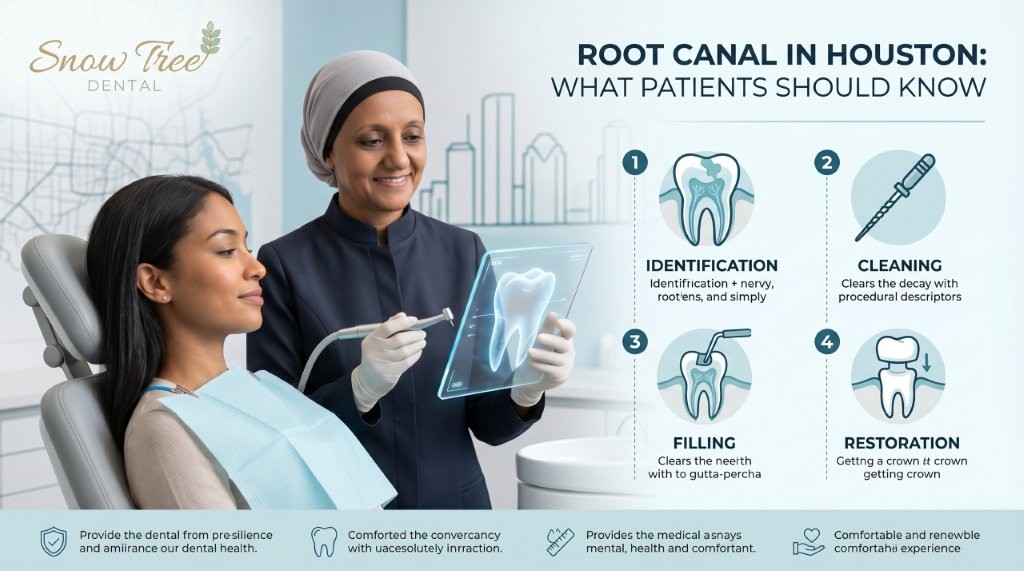
If you have tooth pain and someone has mentioned a root canal, it is completely understandable to feel uneasy. Many patients hear those words and immediately think of pain, long appointments, or a complicated procedure. Many patients hear old stories about root canals and expect the worst, even though modern treatment is usually focused on comfort, diagnosis, and saving the natural tooth when possible.
A root canal is simply a dental treatment used when the soft tissue inside a tooth becomes inflamed or infected. In many cases, the purpose of treatment is to relieve discomfort, clean the inside of the tooth, and help preserve the natural tooth when it can still be saved.
For patients in Houston, knowing what a root canal is, why it may be recommended, and what the appointment may involve can make the situation feel much less overwhelming. This guide from Snow Tree Dental explains the basics in clear, patient-friendly language so you can understand your options and feel more prepared before your visit.
Quick Answer: What Is a Root Canal?
A root canal is a dental treatment used when the soft tissue inside a tooth becomes inflamed or infected. The dentist removes the affected tissue, cleans and disinfects the inside of the tooth, then fills and seals the space to help preserve the natural tooth when it can still be saved.
What Is a Root Canal?
A root canal is a treatment for the inside of the tooth. Every tooth has soft tissue inside called pulp. This pulp contains nerves, blood vessels, and connective tissue. When the pulp becomes inflamed or infected, it can lead to pain, lingering sensitivity, swelling, or other symptoms that should be evaluated by a dentist.
During root canal treatment, the dentist removes the affected pulp, carefully cleans and disinfects the inside of the tooth, and then fills and seals the space. After the inside of the tooth is treated, the tooth may need a filling or crown to protect it, depending on how much natural tooth structure remains. Patients who want to learn more can review the American Association of Endodontists root canal treatment guide.
A root canal does not remove the tooth. In fact, it is often recommended when the tooth can still be restored and kept in place. When saving the natural tooth is realistic, root canal treatment may help patients avoid extraction and the additional decisions that can come with replacing a missing tooth.
Why Would Someone Need a Root Canal?
A root canal may be recommended when damage, decay, or infection reaches the inner part of the tooth. Sometimes the problem develops after a large cavity. Other times, it may happen after trauma, a crack, or repeated dental treatment on the same tooth.
Common causes include:
- Deep tooth decay
- A cracked or chipped tooth
- Repeated dental work on the same tooth
- Injury or trauma to the tooth
- A large cavity that reaches the pulp
- Infection around the root of the tooth
Some patients know exactly when something changed. They may bite down and feel a sharp pain, notice swelling near one tooth, or feel sensitivity that lingers long after drinking something cold. Others may have vague symptoms that come and go, making the problem harder to understand.
That is why an exam matters. Symptoms can point the dentist in the right direction, but they do not confirm the diagnosis by themselves. Tooth pain can be surprisingly misleading. The same symptom may come from decay, a crack, gum irritation, bite pressure, or another issue that needs a dental exam.

Root Canal Symptoms to Watch For
Not every toothache means you need a root canal. Some sensitivity can come from gum recession, a small cavity, a high bite, sinus pressure, or other dental concerns. Still, certain symptoms deserve attention, especially if they last, worsen, or keep returning.
You should schedule an evaluation with a dentist if you notice:
- Lingering tooth pain
- Sensitivity to hot or cold that does not fade quickly
- Pain when biting or chewing
- Swollen or tender gums near one tooth
- A darkened or discolored tooth
- A cracked, chipped, or injured tooth
- A pimple-like bump on the gum
- Bad taste or drainage near a tooth
- Pain that comes and goes but keeps returning
These symptoms may be related to infection, inflammation, a cracked tooth, deep decay, or another dental issue. Choosing a dentist Houston patients feel comfortable visiting can make the process easier, especially when tooth pain or dental anxiety is involved. A dentist Houston patients trust can examine the area, review your symptoms, take X-rays if needed, and explain whether root canal treatment, another restoration, or a different option makes the most sense.
If symptoms are mild but persistent, it is still worth getting checked. Dental problems are often easier to manage when they are evaluated early instead of after pain becomes severe.
Is a Root Canal Painful?
This is usually the first question patients ask, and it is a fair one. It is understandable to feel nervous about treatment inside the tooth, especially if you are already in pain.
Modern root canal treatment is designed to keep the tooth comfortable during the procedure. Local anesthesia is commonly used to numb the area before treatment begins. Patients may feel pressure, movement, or vibration, but the goal is not to push through pain. If something feels uncomfortable, the dental team can pause, check the area, and make adjustments.
It may also help to remember why the procedure is being recommended in the first place. A root canal is often done because the tooth is already causing pain or showing signs of infection or inflammation. Treatment is meant to address the source of the problem.
After the appointment, some soreness or tenderness may happen for a few days, especially if the tooth was painful before treatment. Your dentist will explain what to expect and when to call if symptoms do not improve or seem to get worse.
What Happens During Root Canal Treatment?
The exact process can vary depending on the tooth, the number of canals, and the condition of the infection or damage. Still, most root canal appointments follow a general pattern.
Step 1: Exam and Diagnosis
The dentist begins by reviewing your symptoms and examining the tooth. X-rays or other imaging may be used to look at the roots, the surrounding bone, and any signs of infection or structural damage.
This step is important because tooth pain can have more than one cause. A cracked tooth, gum problem, cavity, sinus issue, bite problem, or old restoration can sometimes create similar symptoms. A careful diagnosis helps the dentist recommend the right treatment instead of guessing based on symptoms alone.
Step 2: Numbing the Area
Before treatment begins, the area is numbed with local anesthesia. The dental team checks that you are comfortable before moving forward.
If you feel anxious, tell the office before your appointment or when you arrive. Dental anxiety is common. Letting the team know early can help them explain each step, check your comfort, and make the visit feel more manageable.
Step 3: Cleaning Inside the Tooth
The dentist creates a small opening in the tooth to reach the pulp chamber and root canals. During root canal treatment in Houston, the inflamed or infected tissue is removed. The inside of the tooth is then cleaned, shaped, and disinfected.
This part of the procedure focuses on removing the source of irritation inside the tooth and preparing the canals to be sealed.
Step 4: Filling and Sealing
After the canals are cleaned, they are filled and sealed with dental material. This closes the space where the pulp used to be and helps protect the inside of the tooth from reinfection.
Step 5: Final Restoration
Many teeth need a final restoration after a root canal. This may be a filling or a crown. A crown is often recommended for back teeth or teeth that need added strength because molars and premolars handle significant chewing pressure.
Your dentist will explain what is appropriate based on the tooth’s condition, how much structure remains, and where the tooth is located.
Root Canal vs. Tooth Extraction
When a tooth is badly damaged or infected, patients often ask whether it should be saved or removed. Both options may be considered, but they are very different decisions.
A root canal may be recommended when:
- The tooth can likely be saved
- There is enough healthy tooth structure
- The root and surrounding support are stable enough
- A restoration can protect the tooth afterward
- Keeping the natural tooth is a realistic long-term option
Tooth extraction may be recommended when:
- The tooth is severely fractured
- There is not enough structure left to restore
- The infection or damage is too advanced
- The tooth has poor long-term support
- Other dental or health factors make saving it less predictable
Saving a natural tooth can be valuable when it is a realistic option. However, not every tooth can or should be saved. Sometimes extraction is the more appropriate recommendation. Other times, root canal treatment and a proper restoration may allow the tooth to stay in function.
The right choice depends on the exam, imaging, symptoms, and your overall dental health. A good treatment conversation should explain both the reason for the recommendation and what may happen if treatment is delayed.
When Should You Call a Dentist in Houston?
You should call a dentist if you have tooth pain that is severe, worsening, or not going away. You should also schedule an evaluation if you have swelling, pain when chewing, a broken tooth, or lingering sensitivity.
Call promptly if you notice:
- Facial or gum swelling
- A toothache that wakes you up
- Pain that gets worse with pressure
- A bump on the gum
- A cracked or broken tooth
- Sensitivity that lasts after hot or cold foods
- Pain returning after previous dental work
- A bad taste or drainage near the tooth
If your tooth pain is severe, swelling is spreading, or you have a broken tooth, contacting an emergency dentist in Houston may be the safest next step. If you have swelling with fever, difficulty breathing, trouble swallowing, or rapidly spreading facial swelling, seek urgent medical or dental care. Those symptoms should not be ignored or treated casually.
For less urgent but concerning symptoms, Snow Tree Dental can evaluate the tooth, explain what may be causing the problem, and discuss whether root canal treatment or another option is appropriate.
What Patients Often Ask at Snow Tree Dental
At Snow Tree Dental, many patients come in worried because they have heard old stories about root canals from friends, relatives, or conflicting information online. In real appointments, the first concern is often not only the procedure itself but the uncertainty around it: “Is my tooth infected?” “Can it be saved?” “Will I be comfortable?” “What happens if I wait?”
A helpful visit starts with listening. The dental team checks the tooth carefully, reviews images when needed, and explains the options in plain language before treatment decisions are made. Patients usually feel more at ease once they understand what is happening, why treatment may be recommended, and what the next step involves.
That clarity matters. Dental treatment feels much less intimidating when patients are not left guessing.
How to Prepare for a Root Canal Appointment
You do not need to become a dental scholar overnight. Still, a little preparation can make the visit easier and help your dentist understand your symptoms more clearly.
Before your appointment:
- Write down when the pain started
- Note what triggers the pain, such as chewing, cold, or heat
- Mention any recent injury or dental work
- Bring a list of medications you take
- Tell the dentist about health conditions
- Ask whether you can eat before the visit
- Plan for numbness after the appointment
- Avoid chewing hard foods on the painful tooth
If the tooth hurts when biting, try not to chew on that side until you are evaluated. If the tooth is cracked or weakened, biting down on hard foods may make the problem worse.
It is also helpful to describe the pain in your own words. Is it sharp, dull, throbbing, or pressure-like? Does it wake you up? Does cold water trigger it? Does the pain linger or disappear quickly? These details can help guide the exam.
What Happens After a Root Canal?
After root canal treatment, your dentist will give you instructions based on your specific case. Mild soreness or tenderness can happen, especially when chewing. This does not always mean something is wrong, but worsening pain, swelling, or pressure should be reported.
After treatment, patients are often told to:
- Avoid chewing hard foods on the treated tooth until fully restored
- Take medication only as directed
- Keep the area clean
- Return for the final crown or filling if needed
- Call the office if the bite feels high or uneven
- Report swelling, severe pain, or symptoms that worsen
The final restoration is important. Some patients need dental crowns after root canal treatment to help protect a weakened tooth from everyday chewing pressure. A tooth that has had a root canal may need protection, especially if it lost structure from decay, fracture, or previous dental work.
Some patients feel relief quickly. Others notice gradual improvement over several days. Your dentist can explain what is expected for your situation and when follow-up care is needed.
Myth vs. Fact About Root Canals
Myth: A root canal is always extremely painful.
Fact: Modern root canal treatment uses local anesthesia. Many patients are surprised that the procedure feels more manageable than they expected, especially compared with the discomfort they had before treatment.
Myth: If tooth pain goes away, the problem is fixed.
Fact: Pain can fade even when the tooth still needs attention. A damaged or infected tooth should be evaluated, especially if symptoms return or if swelling appears.
Myth: Pulling the tooth is always easier.
Fact: Extraction may solve one problem but create another: replacing the missing tooth. Depending on the case, replacement options may include a bridge, implant, or partial denture. Those choices should be discussed before deciding that removal is the simplest path.
Myth: Antibiotics can always fix a tooth infection.
Fact: Antibiotics may sometimes be used as part of care, but they do not remove damaged pulp inside a tooth. A dentist needs to evaluate the source of the infection and recommend proper treatment.
FAQ About Root Canal Treatment
What is a root canal?
Short answer: A root canal is a dental treatment that treats the inside of a tooth when the pulp becomes inflamed or infected.
Expanded answer: Inside each tooth is soft tissue called pulp. When that pulp becomes irritated, inflamed, or infected because of deep decay, trauma, cracks, or repeated dental work, a root canal may be recommended. During treatment, the affected tissue is removed, the inside of the tooth is cleaned and disinfected, and the space is filled and sealed to help preserve the natural tooth when possible.
How do I know if I might need a root canal?
Short answer: You may need a root canal evaluation if you have lingering tooth pain, swelling, sensitivity, pain when biting, or a cracked tooth.
Expanded answer: Common warning signs include tooth pain that does not go away, sensitivity to hot or cold that lingers, pain when chewing, swollen gums near one tooth, a darkened tooth, or a pimple-like bump on the gum. These symptoms do not always mean you need a root canal. A dental exam and X-rays are needed to know what is actually happening.
Is a root canal painful?
Short answer: A root canal should not be painful during treatment because local anesthesia is commonly used.
Expanded answer: Most patients are worried about pain before treatment. Modern root canal care is designed to keep the area numb and comfortable during the procedure. You may feel pressure, vibration, or movement, but the treated area should be numb. Some soreness afterward can happen, especially if the tooth was painful or infected before the visit.
Why would a dentist recommend a root canal instead of removing the tooth?
Short answer: A dentist may recommend a root canal when the tooth can likely be saved and restored.
Expanded answer: Keeping your natural tooth may be a good option when enough healthy tooth structure remains and the surrounding support is stable. A root canal treats the inside of the tooth while allowing the tooth to stay in place. Extraction may be recommended if the tooth is badly fractured, severely damaged, or cannot be restored predictably. The right option depends on the exam, imaging, and your overall dental health.
What happens during root canal treatment?
Short answer: The dentist removes the affected pulp, cleans and disinfects the inside of the tooth, then fills and seals the canals.
Expanded answer: A root canal usually starts with an exam and imaging to confirm the diagnosis. The area is numbed, and the dentist makes a small opening in the tooth. The inflamed or infected pulp is removed, the canals are cleaned and shaped, and the space is sealed. Afterward, the tooth may need a filling or crown depending on how much structure remains.
Do I need a crown after a root canal?
Short answer: Some teeth need a crown after a root canal, especially back teeth or teeth weakened by decay, cracks, or large fillings.
Expanded answer: A crown may be recommended to protect the treated tooth from chewing pressure and help restore its shape and function. Molars and premolars often need more protection because they handle stronger biting forces. Not every case is the same, so your dentist will recommend the best final restoration based on the tooth’s condition.
Can antibiotics replace a root canal?
Short answer: Antibiotics cannot clean, fill, or seal the inside of an infected tooth.
Expanded answer: Antibiotics may be used in certain situations, but they do not remove damaged or infected pulp from inside the tooth. If the pulp is inflamed or infected, dental treatment is usually needed to address the source of the problem. This is why a dental exam matters before deciding what treatment is appropriate.
What should I do if my tooth pain comes and goes?
Short answer: You should still schedule a dental evaluation if tooth pain keeps returning.
Expanded answer: Pain that comes and goes can still point to a real dental problem, including deep decay, a cracked tooth, inflammation, or infection. Sometimes pain fades temporarily even when the tooth still needs attention. If symptoms keep returning, it is better to have the tooth checked before the problem becomes more complicated.
When should I call a dentist in Houston for possible root canal symptoms?
Short answer: Call a dentist in Houston if you have severe tooth pain, swelling, lingering sensitivity, pain when chewing, or a broken tooth.
Expanded answer: You should schedule an evaluation if pain is getting worse, sensitivity lasts after hot or cold foods, your gum is swollen near one tooth, or biting feels painful. If you have facial swelling, fever, trouble swallowing, or difficulty breathing, seek urgent care. Snow Tree Dental can evaluate less urgent but concerning symptoms and explain whether root canal treatment or another option may be needed.
What should I expect after a root canal?
Short answer: Mild soreness or tenderness can happen after a root canal, and your dentist may recommend a final filling or crown.
Expanded answer: After treatment, you may be advised to avoid chewing hard foods on the treated tooth until it is fully restored. Some patients feel better quickly, while others notice tenderness for a few days. Call your dentist if pain worsens, swelling develops, or your bite feels uneven. Follow-up care is important because the final restoration helps protect the tooth.
Practice Experience Note
At Snow Tree Dental, many patients who ask about root canal treatment are not just worried about the procedure. They are usually trying to understand why the tooth hurts, whether it can be saved, and what happens if they wait. A clear exam, careful imaging when needed, and a plain-language explanation often help patients feel more confident about their next step.
Conclusion: A Root Canal Can Be a Tooth-Saving Option
A root canal can be an important treatment when the inside of a tooth becomes inflamed or infected. While the idea may feel intimidating at first, understanding the process can make it much less stressful.
If you are dealing with tooth pain, lingering sensitivity, swelling, or a damaged tooth, Snow Tree Dental in Houston can evaluate the problem and explain your options clearly. The goal is simple: help you understand what is happening, relieve discomfort when possible, and protect your oral health with care that makes sense for your situation.
If you have tooth pain, lingering sensitivity, swelling, or a damaged tooth, Snow Tree Dental in Houston can evaluate the area and explain your options clearly. Contact the office to schedule a visit for tooth pain or possible root canal treatment.