
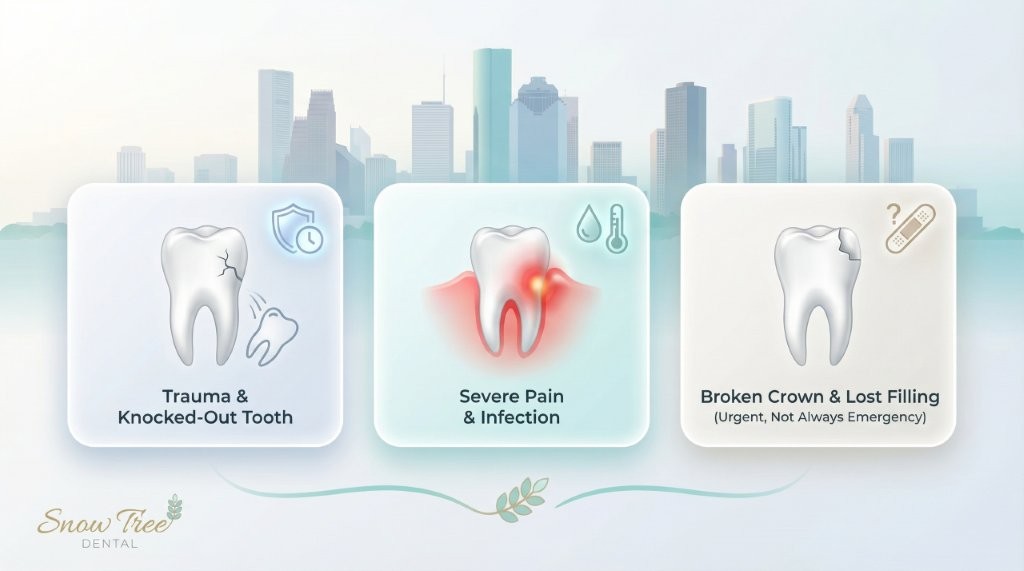
When something suddenly goes wrong with your teeth, it’s not always clear how serious it is. Some issues can wait a day or two. Others shouldn’t. If you’re searching for an emergency dentist Houston, you’re likely dealing with pain, swelling, or an unexpected injury. This guide helps you understand what truly counts as a dental emergency and what to do next.
What is a Dental Emergency?
A dental emergency usually means something is causing significant pain, swelling, bleeding, or damage and isn’t improving on its own. In these situations, prompt care can relieve discomfort and prevent the problem from getting worse.
- Severe or worsening pain
- Visible swelling or infection
- Bleeding that doesn’t stop
- Trauma to a tooth or jaw
7 Signs You Need an Emergency Dentist in Houston
Severe or persistent tooth pain: Pain that lingers or keeps you up at night often points to a deeper issue.
Swelling in the face or gums: Swelling can indicate infection, especially if it spreads or becomes tender.
Knocked-out tooth: Time matters. Acting quickly can improve the chance of saving the tooth.
Broken or cracked tooth: Pain or exposure of the inner tooth means it should be treated promptly.
Uncontrolled bleeding: If bleeding doesn’t stop with gentle pressure, it needs attention.
Signs of infection or abscess: Swelling, bad taste, pus, or throbbing discomfort should not be ignored.
Lost crown or filling with pain: An exposed tooth can quickly become more sensitive and vulnerable.
What is NOT a Dental Emergency?
Some issues can wait briefly, even if they’re inconvenient:
- Mild sensitivity
- Small chips without pain
- Loose crown without discomfort
Still, these should be evaluated soon to prevent bigger problems.
What to Do Before You Reach the Dentist
- Rinse gently with warm salt water
- Use a cold compress to reduce swelling
- Keep a knocked-out tooth moist (milk or saliva)
- Avoid chewing on the affected side
Avoid temporary fixes or adhesives that could make the situation worse. For general guidance, visit American Dental Association resources.
Emergency Dentist vs ER: Where Should You Go?
See a dentist if: You have tooth pain, a broken tooth, or localized swelling.
Go to the ER if: You have difficulty breathing, severe trauma, or uncontrolled bleeding.
How Fast Should You Act?
- Immediate: Knocked-out tooth, heavy bleeding
- Same day: Severe pain, swelling, infection
- Soon: Minor discomfort or damage
In many cases, acting quickly can prevent a more complex issue later.
What We Often See in Practice
Many patients try to wait out tooth pain, especially when it comes and goes. By the time they come in, the issue is often more advanced than it first seemed. Early evaluation usually leads to simpler, more comfortable care.
When to Call an Emergency Dentist in Houston
If something feels off or is getting worse, it’s worth checking. A quick call can help you avoid a situation that becomes more serious later. For related concerns, you can explore our tooth pain causes guide or learn more about root canal treatment in Houston.
If you’re dealing with pain or uncertainty, reaching out sooner can make treatment easier and more comfortable. Snow Tree Dental is here to help you get clear answers and timely care when you need it most.
Frequently Asked Questions
What counts as a dental emergency?
Severe pain, swelling, bleeding, or injury usually requires urgent care. If symptoms are worsening or affecting daily life, it’s best to contact a dentist.
How do I know if my tooth pain is serious?
Pain that is persistent, severe, or affects sleep should be evaluated quickly to rule out infection or deeper issues.
Should I go to the ER or a dentist?
Most dental problems are best handled by a dentist. The ER is for severe trauma, breathing issues, or uncontrolled bleeding.
What should I do if my tooth gets knocked out?
Keep it moist in milk or saliva and seek dental care immediately.
Can I wait if the pain goes away?
Pain can fade even if the problem remains. It’s still important to have it checked.
Is swelling serious?
Yes, swelling may indicate infection and should be evaluated promptly.
What is urgent dental care?
Issues that need prompt attention but are not life-threatening, such as cracked teeth or moderate pain.
How quickly should I see a dentist?
As soon as possible, especially for pain, swelling, or injury.