

Missing teeth can affect more than the way your smile looks. They can make it harder to chew comfortably, speak clearly, and feel relaxed in everyday situations. For many patients, dental implants are one of the most stable and natural-looking ways to replace missing teeth.
If you are comparing options for dental implants Houston patients can rely on, it helps to understand how implants work, who may be a good candidate, and what the process usually involves. This guide from Snow Tree Dental explains the basics in clear, patient-friendly language so you can feel more prepared before scheduling a consultation.
Dental implants are not the right answer for every person, and they should never be presented as a one-size-fits-all solution. A careful exam, imaging, health history review, and honest conversation are all part of choosing the safest and most appropriate treatment plan. Dentistry, shockingly, still requires looking inside the mouth before making decisions. Civilization survives another day.
What Are Dental Implants?
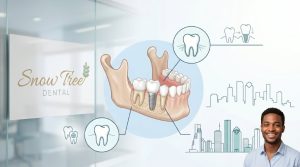
Dental implants are tooth replacement options designed to support a crown, bridge, or denture. The implant itself is a small post placed in the jawbone. Once it has healed and integrated with the surrounding bone, it can provide stable support for the visible replacement tooth or teeth.
Most implant restorations involve three main parts:
- Implant: The artificial tooth root placed in the jawbone
- Abutment: The connector between the implant and restoration
- Crown, bridge, or denture: The visible replacement tooth or teeth
For one missing tooth, an implant may support a single custom crown. For several missing teeth, implants may support a bridge. In some cases, implants can also help stabilize a denture so it feels more secure. Many patients also benefit from understanding how dental crowns work because the crown is often the visible restoration attached to a single dental implant.
Compared with traditional removable dentures, implants are designed to stay fixed in place or provide stronger support for a removable appliance. Compared with some bridges, an implant may replace a missing tooth without relying on nearby teeth in the same way. The best option depends on your mouth, bite, bone support, health history, budget, and personal goals.
Who May Be a Good Candidate for Dental Implants?
A person may be a candidate for dental implants if they have one or more missing teeth and enough healthy bone and gum tissue to support treatment. Candidacy, however, depends on more than just the missing tooth.
A dentist will usually evaluate:
- Gum health
- Bone support in the missing tooth area
- Bite alignment and spacing
- Medical history
- Smoking or tobacco use
- Oral hygiene habits
- Current dental infections or untreated gum disease
- Whether additional treatment may be needed first
Some patients are ready to begin implant planning soon after an exam. Others may need gum treatment, a tooth extraction, bone grafting, or other care before implant placement can be considered.
This is why an in-person consultation matters. Online research can help you understand the basics, but it cannot show bone levels, infection, bite pressure, gum condition, or whether another option may be better for your specific case. The internet can guess loudly. Your dentist can actually examine you.
Common Reasons Patients Consider Dental Implants
Patients usually ask about dental implants because they are dealing with a real daily problem. A missing tooth can affect meals, conversations, confidence, and the way the bite feels.
Common reasons include:
- A missing front tooth affecting confidence
- A missing back tooth making chewing harder
- Loose or uncomfortable dentures
- A failing tooth that may need removal
- Difficulty eating certain foods
- Gaps that affect speech or appearance
- Concern about long-term tooth replacement options
Many patients want something that feels secure and looks natural. Dental implants may help with those goals, but the plan should always be based on a full exam and realistic expectations.
What to Expect During the Dental Implant Process
The dental implant process usually happens in stages. The exact sequence depends on your oral health, the number of missing teeth, and whether any additional treatment is needed before placement.
Step 1: Consultation and Treatment Planning
The first step is a dental implant consultation. At Snow Tree Dental, this may include a conversation about your concerns, an oral exam, imaging, and a review of your health history.
Your dentist may look at:
- The missing tooth area
- Gum and bone health
- Bite pressure
- Nearby teeth
- Existing dental work
- Your comfort level and treatment goals
This is also the right time to ask questions. A good consultation should not feel rushed or confusing. You should understand why a treatment is recommended, what alternatives may exist, and what the next steps could involve.
Step 2: Preparing the Mouth
Some patients need treatment before implant placement. This may include removing a damaged tooth, treating gum disease, or rebuilding bone support with a graft. Not every patient needs these steps, but they are common enough that they should be discussed clearly.
Healthy support matters. Trying to place an implant without addressing infection, bone loss, or active gum problems is not a shortcut. It is poor planning dressed up as convenience, and nobody needs that.
Step 3: Implant Placement
If you are a candidate, the implant is placed into the jawbone during a surgical appointment. Healing time varies based on the person and the treatment plan. During healing, the implant is intended to integrate with the bone and create a stable foundation.
Your dentist will explain what to expect after the procedure, how to care for the area, and when follow-up visits are needed.
Step 4: Final Restoration
Once the implant is ready, a custom crown, bridge, or denture can be attached. The final restoration is designed to fit your bite and blend with your smile.
For many patients, this is the stage where the treatment starts to feel complete because the visible tooth replacement is now in place. The goal is not just to fill a space. It is to help restore comfort, function, and confidence in a way that fits the patient’s overall oral health.
Dental Implants vs. Bridges and Dentures
Dental implants are one option among several tooth replacement treatments. A responsible dentist Houston patients trust should explain the benefits and limitations of each option, not push one solution before understanding the full picture.
Dental Implants
Implants may offer stable support and a natural-looking result. They can be used for one tooth, several teeth, or denture support. They do require enough bone and gum support, and treatment usually takes planning and healing time.
Dental Bridges
A bridge can replace a missing tooth by using nearby teeth for support. It may be a good option when implants are not ideal or when surrounding teeth also need crowns. Bridges do require careful cleaning around and underneath the restoration.
Dentures
Dentures may replace multiple teeth or a full arch. They can be removable and may be more appropriate for certain patients. Some patients also choose implant-supported dentures for added stability.
The best option depends on your mouth, your health, and what you want treatment to accomplish. A thoughtful plan considers both the immediate concern and the long-term care needed to keep your mouth healthy. If you are comparing implants, bridges, or dentures, Snow Tree Dental can help you explore restorative dentistry in Houston based on your oral health, comfort, and long-term goals.
Risks and Limitations to Understand
Dental implants can be a strong option for many patients, but they still involve surgery and long-term maintenance. It is important to understand possible risks before treatment, even when the overall plan looks promising.
Potential concerns may include:
- Infection
- Delayed healing
- Gum inflammation around the implant
- Implant loosening or failure
- Bite-related stress
- Need for additional procedures
- Difficulty cleaning around the restoration
- Medical conditions affecting healing
This does not mean implants are unsafe for everyone. It means patients deserve a clear explanation before making a decision. That should not be a radical concept, but healthcare marketing has spent years trying to make “ask your provider” sound like fine print. For additional patient information, you can review the FDA dental implant safety information.
Why Gum Health Matters Before and After Dental Implants
Healthy gums are important before implant treatment and after the restoration is placed. If gum disease is active, your dentist may recommend treating it before moving forward with implant planning.
After treatment, implants still need regular care. While an implant cannot get a cavity like a natural tooth, the gum and bone around it can still develop inflammation or infection. Patients should brush, clean around the implant as instructed, and keep routine dental visits.
Good maintenance helps protect the tissues supporting the implant. Skipping care because the tooth is “not real” can create problems later. The implant may be artificial, but the gums and bone around it are very real, and they still need attention.
Real Practice Experience: What Patients Often Ask
In everyday dental practice, many patients ask about dental implants after living with a missing tooth, loose denture, or uncomfortable chewing for longer than they wanted to. Often, the biggest concern is not only appearance. Patients want to know whether they can chew normally again, whether the process will be painful, how many visits may be involved, and whether an implant is truly the best choice for their situation.
A helpful consultation is not just about showing an implant model. It is about listening to what bothers the patient most, checking gum and bone support, reviewing health history, and explaining realistic options in plain language. Patients usually feel more comfortable when they understand the “why” behind each step, not just the name of the procedure.
Myth vs. Fact About Dental Implants
Myth: Dental implants are right for everyone.
Fact: Many patients may be candidates, but not everyone is ready for implants right away. Gum health, bone support, medical history, and oral hygiene all matter.
Myth: Dental implants do not need maintenance.
Fact: Implants need daily cleaning and regular dental visits. The surrounding gum and bone tissue must stay healthy.
Myth: Dental implants are only about appearance.
Fact: Appearance is one reason patients ask about implants, but chewing comfort, stability, speech, and long-term function are also important.
Myth: If I have missing teeth, I already know I need implants.
Fact: Implants may be a good option, but bridges, dentures, or other treatments may also be appropriate depending on the case.
When Should You Call a Dentist?
You should schedule a dental visit if you have a missing tooth or a tooth that feels loose, painful, cracked, or badly damaged. You should also call if dentures no longer fit comfortably or if chewing has become difficult.
Call a dentist if you notice:
- A missing tooth gap that affects chewing or speech
- Pain or swelling around a damaged tooth
- Loose dentures or sore spots
- Bleeding gums
- A tooth that feels unstable
- Changes in your bite
- Trouble eating foods you used to enjoy
Waiting too long can sometimes make treatment more complex. A consultation can help you understand what is happening, what options are available, and whether dental implants should be part of the conversation.
Questions to Ask Before Choosing Dental Implants in Houston
Before starting treatment, ask clear questions. A trustworthy dental team should welcome them.
Helpful questions include:
- Am I a good candidate for dental implants?
- Do I have enough bone support?
- Do I need gum treatment first?
- What type of restoration would be used?
- How will my bite be evaluated?
- What are the risks in my specific case?
- What alternatives should I consider?
- How do I care for the implant after treatment?
- How many visits may be involved?
These questions help you make a more informed decision instead of relying on vague promises. Vague promises belong in bad ads, not dental care. A trusted dentist in Houston should explain your options clearly, answer your questions, and recommend treatment only after evaluating your specific needs.
FAQ Section: Dental Implants in Houston
1. What are dental implants?
Short answer:
Dental implants are tooth replacement options that use an artificial tooth root to support a crown, bridge, or denture.
Expanded answer:
A dental implant is placed in the jawbone to create support for a replacement tooth or teeth. For one missing tooth, the implant may support a custom crown. For several missing teeth, implants may support a bridge or help stabilize a denture. The right option depends on your gum health, bone support, bite, and overall oral health.
2. Who is a good candidate for dental implants?
Short answer:
A good candidate usually has healthy gums, enough bone support, and overall health that allows for dental surgery.
Expanded answer:
Your dentist will need to evaluate your mouth before recommending dental implants. Important factors include gum health, bone support, bite alignment, medical history, oral hygiene, and whether there is any active infection or untreated gum disease. Some patients are ready for implant planning right away, while others may need additional treatment first, because teeth continue refusing to cooperate with simple answers.
3. How do I know if I need dental implants or another option?
Short answer:
You need a dental exam to know whether dental implants, bridges, dentures, or another treatment option is best.
Expanded answer:
Dental implants are only one way to replace missing teeth. A dental bridge, removable denture, or implant-supported denture may be more appropriate depending on your case. During a consultation, your dentist can review the missing tooth area, check your bite, discuss your goals, and explain which options may fit your needs.
4. Are dental implants painful?
Short answer:
Patients may feel pressure, soreness, or discomfort at different stages, but your dentist should explain comfort options and aftercare before treatment.
Expanded answer:
The experience varies depending on the procedure, the patient’s health, and whether additional treatment is needed. Before treatment begins, your dentist should explain what to expect, how discomfort is typically managed, and how to care for the area afterward. If you are nervous, bring that up during the consultation so the dental team can talk through your concerns clearly.
5. How long does the dental implant process take?
Short answer:
The timeline varies because implant treatment depends on healing, bone support, gum health, and whether additional procedures are needed.
Expanded answer:
Some patients need extra steps before implant placement, such as tooth extraction, gum treatment, or bone grafting. Others may move through planning and treatment more directly. Because healing is different for each person, your dentist should explain your expected timeline after examining your mouth and reviewing imaging.
6. Can I get dental implants if I have gum disease?
Short answer:
Possibly, but active gum disease may need to be treated before dental implant placement.
Expanded answer:
Healthy gums and bone support are important for implant planning. If gum disease, inflammation, infection, or bone loss is present, your dentist may recommend treating those issues first. This helps create a healthier foundation before considering implant placement.
7. Are dental implants better than dentures?
Short answer:
Dental implants may offer more stability for some patients, but they are not automatically better for everyone.
Expanded answer:
Dentures, bridges, dental implants, and implant-supported dentures each have their own role. Some patients prefer the stability of implants, while others may be better suited for dentures or another restorative option. The best choice depends on your oral health, bone support, comfort, medical history, and treatment goals.
8. Do dental implants need special care?
Short answer:
Dental implants need daily cleaning and regular dental visits to help protect the surrounding gums and bone.
Expanded answer:
An implant cannot get a cavity like a natural tooth, but the tissue around it still needs care. Patients should brush daily, clean around the implant as instructed, and keep regular checkups. Your dentist or hygienist may recommend specific tools depending on the type of implant restoration you have.
9. Do dental implants last forever?
Short answer:
Dental implants are designed as a long-term tooth replacement option, but no dental treatment should be described as guaranteed forever.
Expanded answer:
Long-term success depends on many factors, including oral hygiene, gum health, bite forces, health conditions, smoking, and regular dental visits. Your dentist should explain how to care for your implant and what warning signs to watch for over time.
10. When should I ask a dentist about dental implants in Houston?
Short answer:
Ask about dental implants in Houston if you have a missing tooth, loose dentures, trouble chewing, or a tooth that may need removal.
Expanded answer:
A consultation can help you understand whether implants should be part of your treatment plan. Snow Tree Dental can evaluate your oral health, review your concerns, and explain whether dental implants, bridges, dentures, or another option may be appropriate.
Schedule a Dental Implant Consultation in Houston
If you are considering dental implants in Houston, Snow Tree Dental can help you understand your options with a careful exam, clear explanation, and a treatment plan based on your needs.
Whether you are missing one tooth, dealing with uncomfortable dentures, or trying to decide between implants, bridges, and other restorative options, the first step is a consultation. During your visit, the dental team can review your oral health, discuss your goals, explain possible next steps, and help you decide whether dental implants are the right choice for your smile.
For Houston patients, choosing a local dental team also makes follow-up visits, maintenance, and ongoing communication easier throughout the process.