
Dental Implants in Houston: Candidacy, Steps, and Recovery Guide
Dental implants in Houston are a long-term way to replace a missing tooth with a small titanium post in the jaw that supports a custom crown. The result looks natural, feels stable, and helps maintain the jawbone where the tooth was lost. If you’re comparing options for missing tooth replacement and want a calm, local perspective, this guide walks through candidacy, the implant process, and recovery so you can plan confidently with an implant dentist in Houston.
Key steps at a glance:
- Consultation and 3D imaging to confirm candidacy
- Pre-treatment if needed (extraction, bone graft)
- Implant placement under local anesthesia
- Healing and osseointegration over several weeks to months
- Abutment placement and impression/scan
- Custom crown placement and bite check
Quick answers:
- Who is a candidate? Typically, people with healthy gums, sufficient bone, and good overall health. Smokers or those with uncontrolled conditions may need additional planning.
- How long is the process? Many cases span a few months from placement to final crown; timelines are longer if grafting is needed.
- Is recovery painful? Expect soreness and mild swelling for a few days—usually manageable with home-care guidance.
Who’s a Candidate for Dental Implants in Houston?
Health and Bone Considerations
The ideal candidate has healthy gums, strong oral hygiene habits, and enough jawbone to support an implant. Overall health matters, too. Conditions such as uncontrolled diabetes or active gum infection should be addressed before surgery. Smoking can slow healing and raise the risk of complications. If you smoke, your dentist will talk through a plan—often pausing tobacco use before and after surgery—to support better outcomes.
Missing Tooth Replacement Goals
A single tooth implant replaces a missing tooth without relying on neighboring teeth. It protects bone volume in the area and supports a natural, comfortable bite. For some people, a bridge or partial denture is appropriate—especially when multiple teeth are missing or when a faster timeline is the priority. Your goals—like long-term function, ease of care, and preserving nearby teeth—help guide the recommendation.
What Your Implant Dentist in Houston Evaluates
A thorough evaluation typically includes:
- Clinical exam of your gums, bite, and neighboring teeth
- Digital X-rays and often 3D imaging (CBCT) to assess bone
- Intraoral photos for planning and communication
- Review of your medical history and medications
- Bite analysis to understand how your teeth come together and how forces will load the implant
At Snow Tree Dental, we use low-radiation digital X-rays and intraoral cameras to show you what we see and explain your options clearly.
When Additional Steps Are Needed
If bone volume is thin or the sinus is close in the upper back jaw, your dentist may recommend bone grafting or a sinus lift to create the right foundation. If your gums show signs of periodontal disease, therapy may come first. While these steps add time, they’re important for long-term stability.
The Implant Process: From Consultation to Your New Tooth
Step 1 – Consultation and 3D Imaging
Your first visit focuses on your health, goals, and anatomy. You can expect:
- Low-radiation digital X-rays and 3D imaging if indicated
- Intraoral photos and a bite evaluation
- A clear discussion of options, timelines, and what success looks like for you
For a deeper walkthrough of timing and planning, see our step-by-step dental implant process in Houston: https://www.snowtreedental.com/?p=3357
Step 2 – Pre-Treatment (If Needed)
If the failing tooth is present, a gentle extraction may be recommended. In some cases, the dentist will place a bone graft in the socket to preserve volume for a future implant. Healing windows vary from a few weeks to a few months, depending on the site and grafting needs.
Step 3 – Implant Placement
On surgery day, your implant dentist numbs the area with local anesthesia. The titanium implant is precisely positioned into the jawbone, often with a surgical guide for accuracy. Many patients are surprised by how straightforward this appointment feels. Comfort options and calm, step-by-step communication help reduce anxiety.
Step 4 – Osseointegration and Healing
Over the next several weeks to a few months, your bone bonds to the implant in a process called osseointegration. You may wear a temporary tooth replacement—such as a flipper, an Essex retainer, or a temporary crown if appropriate—so you can smile and function while healing. For recovery tips and typical milestones, review our dental implants in Houston procedure and recovery guide: https://www.snowtreedental.com/?p=3353
Step 5 – Abutment and Single Tooth Implant Crown
Once the implant is stable, an abutment is attached. Digital scans or impressions are taken to create your custom crown. At delivery, your dentist checks the fit, color, and bite so your new tooth looks natural and feels comfortable.
Step 6 – Follow-Up and Maintenance
You’ll return for periodic check-ins to ensure tissues remain healthy and your bite stays balanced. Good home care—brushing, flossing, or using interdental brushes around the implant—plus routine professional cleanings are key to long-term success.
Recovery and Aftercare: What to Expect in Houston
The First 24–72 Hours
Mild swelling, oozing, and tenderness are common. Plan for:
- Soft foods (yogurt, eggs, mashed potatoes, smoothies without seeds)
- Gentle brushing away from the surgical site
- Avoiding straws and smoking to protect the clot
- Sleeping with your head elevated for the first night or two
Pain Control and Swelling
Cold compresses during the first 24 hours can help with swelling. Over-the-counter pain relief, taken as directed by your dentist, is usually sufficient. Call your dentist if you notice increasing pain after the third day, persistent bleeding, fever, or anything that doesn’t feel right.
Eating and Daily Routines
Advance your diet as you’re comfortable—start with soft foods, then add more texture as tenderness improves. Keep activity light for the first couple of days and avoid heavy exercise until your dentist says it’s okay. Continue gentle oral hygiene to keep the area clean.
Healing Timeline at a Glance
- Days 1–3: Soreness and swelling peak, then begin to subside
- Week 1–2: Stitches (if placed) may dissolve; most normal routines resume
- Weeks 6–12: Many implants are ready for the abutment and crown phase; grafted sites may take longer
Every case is unique—your dentist will map your timeline based on bone quality, health, and the location of the site.
Single Tooth Implant vs. Alternatives
Single Tooth Implant Benefits
- Preserves bone in the area of the missing tooth
- Doesn’t require shaping neighboring teeth
- Feels stable and natural for chewing
- Easy to clean with brushing and floss aids
Bridge or Partial Denture Considerations
A traditional bridge can be a good option when adjacent teeth already need crowns or when a faster timeline is important. A removable partial denture is typically the most budget-friendly choice and can replace multiple teeth, though it may feel bulkier. Talk with your dentist about your goals, anatomy, and maintenance preferences. If you’re comparing fixed options, our crowns vs. bridges in Houston article will help you weigh pros and cons.
Cost Planning and Access in Houston
Insurance and Payment Basics
At Snow Tree Dental, most PPO insurance is accepted, and our team files claims for you. Every plan is different, so we’ll verify benefits and provide a transparent estimate. For details on coverage and planning, see our guide to dental insurance and in-house plans in Houston: https://www.snowtreedental.com/?p=3358
In-House Membership Savings
If you don’t have insurance, our in-house membership starts at $225/year and includes two exams, two cleanings, fluoride, and X-rays, plus up to 20% off other services. It’s a simple way to keep preventive care on track while reducing overall treatment costs.
Using Phased Care
Implant treatment can be planned in phases—extraction and grafting now, placement later, and restoration when the site is ready. Phasing can help align care with your schedule, healing, and budget.
Real Experience at Snow Tree Dental Near the Galleria
From our Houston office on Augusta Dr near the Galleria, we’ve guided many patients through imaging, placement, and routine check-ins with a calm, steady approach. A typical visit includes a relaxed conversation about your goals, a review of 3D images on-screen, and plenty of time for questions. Our team’s focus is simple: keep you comfortable, explain every step, and move at a pace that feels right for you. If you’re starting your search for a friendly dentist in Houston, learn more about our practice here: https://snowtreedental.com/
Myth vs. Fact: Dental Implants
- Myth: “Implant surgery is extremely painful.”
Fact: With local anesthesia and gentle techniques, most patients describe soreness rather than sharp pain, and it improves over a few days. - Myth: “You need perfect health to qualify.”
Fact: Many health conditions can be accommodated with thoughtful planning. Your dentist will coordinate with your medical providers as needed. - Myth: “Implants always take a year.”
Fact: Timelines vary. Some cases move from placement to crown in a few months; grafting or complex sites can extend healing. - Myth: “Cleaning implants is complicated.”
Fact: Daily brushing and flossing (or interdental brushes) plus regular checkups keep implants healthy for the long run.
Getting Started with an Implant Dentist in Houston
What to Bring and Expect at Your Consultation
- A list of medications and medical conditions
- Any recent dental X-rays if you have them (we can also take new digital images)
- Your priorities: timing, budget, cosmetic goals, and comfort preferences
You’ll leave with a personalized plan that outlines steps, a realistic timeline, and a transparent estimate.
Questions to Ask Your Dentist
- Am I a good candidate, and what (if anything) should I do first?
- What are my alternatives, and how do they compare?
- What’s the expected timeline from today to my final crown?
- What will I use as a temporary tooth during healing?
- How do we maintain the implant long-term, and how often should I return?
Local Access and Comfort at Snow Tree Dental
- Convenient location near the Galleria: 2400 Augusta Dr, Houston, TX
- Evening and Saturday appointments to fit busy schedules
- Same-day emergency appointments available when urgent needs arise
- Trilingual team (English, Spanish, Arabic) led by Dr. Muna Mohammed
- Modern diagnostics: low-radiation digital X-rays and intraoral cameras
- Patient-first support: most PPO insurance accepted; we file claims for you
If you’re early in your research, our dental implants in Houston procedure and recovery guide and our step-by-step dental implant process in Houston dive deeper into process details and healing expectations:
- Procedure and recovery: https://www.snowtreedental.com/?p=3353
- Step-by-step process: https://www.snowtreedental.com/?p=3357
Conclusion
Choosing dental implants in Houston starts with understanding whether you’re a candidate, the steps from consultation to crown, and what recovery looks like. With clear planning, gentle techniques, and steady follow-up, most people find the process manageable and the results worth the wait. If you’re ready to explore a single tooth implant or compare options, schedule a consultation with Snow Tree Dental—your friendly dentist in Houston—so we can create a plan that fits your timeline, comfort, and goals. Call us at (832) 464-3368 or request a visit online at https://snowtreedental.com/. We look forward to caring for you.
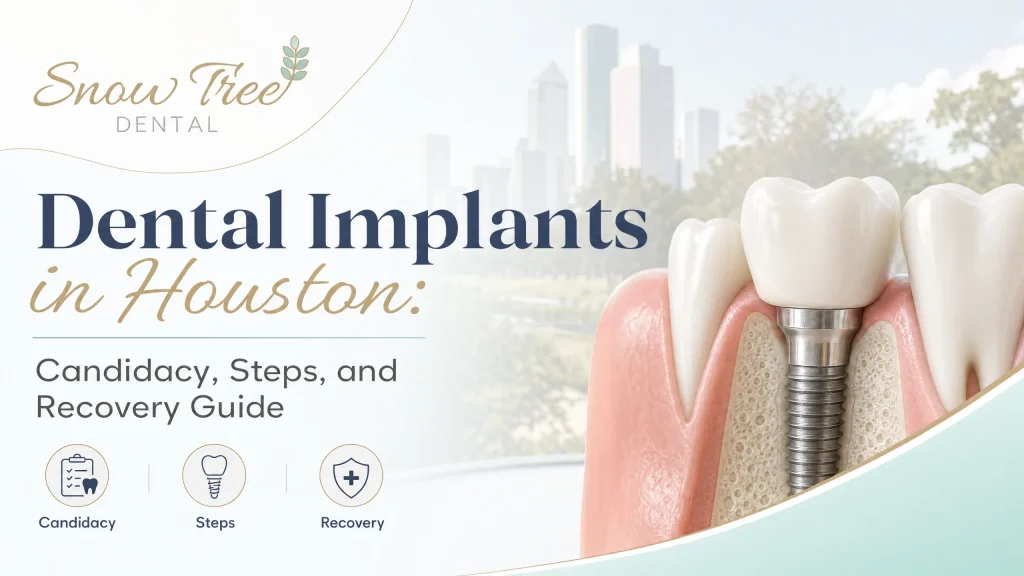
Image note: Alt text suggestion for a header image: “Dental implants in Houston: consultation, 3D imaging, and single tooth implant steps at Snow Tree Dental.” Links: Snow Tree Dental | https://snowtreedental.com/; dentist in Houston | https://snowtreedental.com/; dental implants in Houston procedure and recovery | https://www.snowtreedental.com/?p=3353; step-by-step dental implant process in Houston | https://www.snowtreedental.com/?p=3357; dental insurance and in-house plans in Houston | https://www.snowtreedental.com/?p=3358
Frequently Asked Questions
Am I a good candidate for dental implants in Houston?
Short answer: Usually, yes if your gums are healthy, you have enough bone, and your overall health is stable.
Expanded answer: Most candidates have healthy gums, sufficient jawbone, and good daily hygiene. Conditions like uncontrolled diabetes or active gum disease should be addressed first, and smokers may need a quit or pause plan to support healing. Your implant dentist in Houston will confirm candidacy with a clinical exam, digital X-rays, and often 3D imaging.
How long does the dental implant process take from start to finish?
Short answer: Many cases take a few months, longer if bone grafting is needed.
Expanded answer: After evaluation and any pre-treatment, the implant is placed and allowed to heal while the bone bonds to it over several weeks to a few months. Once stable, an abutment and custom crown are added. For a deeper walkthrough, see our step-by-step dental implant process in Houston: https://www.snowtreedental.com/?p=3357
Does dental implant surgery hurt?
Short answer: Most people feel pressure, not sharp pain, thanks to local anesthesia.
Expanded answer: During placement, the area is numbed so you stay comfortable. Afterward, mild soreness and swelling for a few days are common and usually managed with home-care guidance and over-the-counter pain relief taken as directed. Call your dentist if pain worsens after the third day or you notice unusual symptoms.
Will I need a bone graft or sinus lift before my implant?
Short answer: Only if the bone is too thin or the sinus is close to the implant site.
Expanded answer: Your dentist evaluates bone volume with X-rays and often 3D imaging. If needed, a bone graft or sinus lift helps create a solid foundation for long-term stability. These steps can extend the timeline but support better outcomes.
What can I use as a temporary tooth while my implant heals?
Short answer: Options include a flipper, an Essex retainer, or a temporary crown when appropriate.
Expanded answer: Your dentist will discuss the best temporary based on the location, bite, and healing needs. The goal is to protect the site while letting you smile and function comfortably until your final single tooth implant crown is placed.
How do I care for a dental implant day to day?
Short answer: Brush twice daily and clean between teeth; keep routine checkups.
Expanded answer: Treat your implant like a natural tooth with brushing and flossing or interdental brushes. Regular professional cleanings and periodic check-ins help keep the tissues healthy and your bite balanced. Your care plan may include specific tools and technique tips based on your anatomy.
What are my alternatives to a single tooth implant?
Short answer: A traditional bridge or a removable partial denture.
Expanded answer: Bridges can work well if neighboring teeth already need crowns or you want a faster fixed option. Removable partial dentures are typically more budget-friendly and can replace multiple teeth but may feel bulkier. For comparisons of fixed options, see our crowns vs. bridges article from the site if you’re considering those alternatives.
How much do implants cost, and does insurance help?
Short answer: Coverage varies by PPO plan; we verify benefits and provide clear estimates.
Expanded answer: At Snow Tree Dental, most PPO insurance is accepted and we file claims for you. If you don’t have insurance, our in-house membership starts at $225/year and includes preventive care plus up to 20% off other services. For details, see our guide to dental insurance and in-house plans in Houston: https://www.snowtreedental.com/?p=3358
What should I expect in the first 72 hours after implant surgery?
Short answer: Mild swelling and soreness that improve over a few days.
Expanded answer: Plan soft foods, avoid straws and smoking, keep your head elevated the first night or two, and brush gently away from the site. Use cold compresses in the first 24 hours and take pain relief as directed. Contact your dentist if pain increases after day three or you notice fever or persistent bleeding. For recovery tips and milestones, see our dental implants in Houston procedure and recovery guide: https://www.snowtreedental.com/?p=3353
What is a typical first visit like at Snow Tree Dental near the Galleria?
Short answer: A calm consultation with imaging, a bite evaluation, and a clear plan.
Expanded answer: In our Houston office on Augusta Dr, we review your goals, take low-radiation digital X-rays and 3D imaging when indicated, and discuss options and timelines at an easy, unhurried pace. Patients often tell us seeing their 3D images on-screen helps everything “click,” and we make plenty of time for questions so you leave with confidence.