
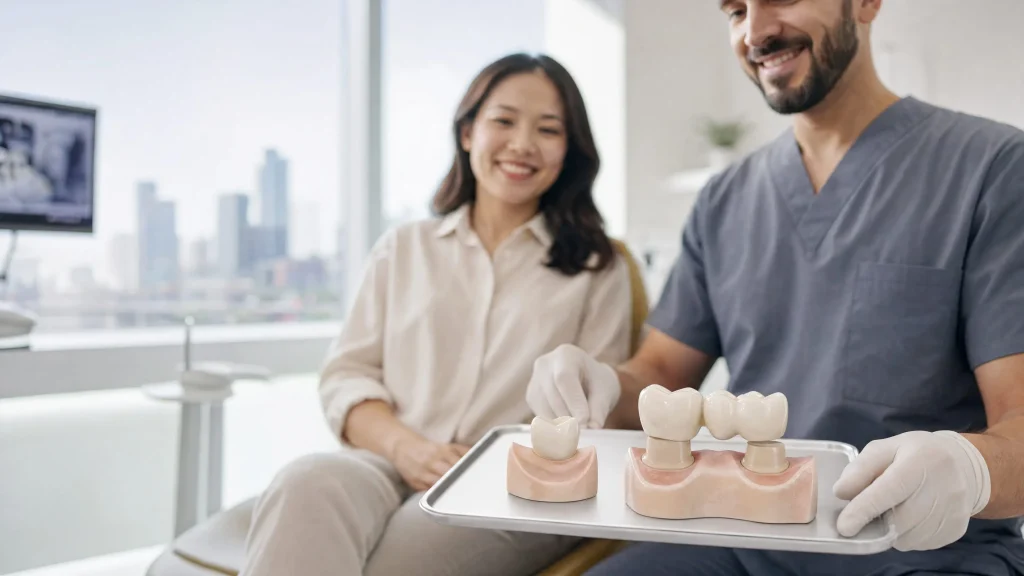
If you’re comparing crowns vs bridges Houston, you’re likely wondering how each option works, what drives cost in our area, and which choice will fit your smile, timeline, and budget. In short, a crown is a custom cap that covers and strengthens a damaged tooth, while a bridge replaces one or more missing teeth by anchoring artificial teeth to neighboring teeth or implants. Below, you’ll find a clear, practical tooth replacement comparison with local cost drivers, candidacy guidance, pros and cons, and what to expect at each step. When you’re ready, schedule with our trusted dentist in Houston for a personalized plan and estimate.
What Is a Dental Crown?
A crown is a protective cover that restores the shape, strength, and appearance of a compromised tooth. It’s recommended when a filling or bonding would be too weak to hold up to everyday function over time.
- When crowns are used
- Cracked, worn, or fractured teeth
- Teeth with very large fillings that no longer support normal biting
- Teeth following root canal therapy that need reinforcement
- Cosmetic improvements in shape or color when veneers aren’t the best fit
- Materials overview
- Porcelain crown: Highly aesthetic and translucent for front teeth; blends naturally with surrounding enamel.
- Porcelain-fused-to-metal (PFM): Combines a metal substructure for strength with porcelain for appearance; durable, though the metal underlayer can affect translucency.
- Zirconia: Very strong and chip-resistant, ideal for back teeth and heavier bite forces; modern translucent zirconia offers improved cosmetics.
- Gold alloy: Biocompatible and long-lasting with gentle wear on opposing teeth; often chosen for molars where appearance matters less.
- Procedure steps and timeframe
- Exam and planning: We evaluate cracks, decay, bite alignment, and gum health. Imaging and photos help guide material selection.
- Tooth preparation: The tooth is shaped to make space for the crown.
- Impression or scan: Digital or traditional impressions capture precise details.
- Temporary crown: A provisional crown protects the tooth while the lab fabricates the final.
- Final placement: The custom crown is adjusted for fit and bite, then bonded or cemented. Most crowns take two visits a few weeks apart; same-day options may be available depending on technology and case specifics.
What Is a Dental Bridge?
A bridge replaces missing teeth by connecting one or more artificial teeth (pontics) to crowns on neighboring teeth (abutments) or to dental implants.
- When bridges are used
- One or more adjacent missing teeth
- Patients who want a fixed (non-removable) solution
- Situations where implants aren’t the right fit due to medical, anatomical, or timing factors
- Types of bridges
- Traditional: Pontic(s) attached to crowns on the teeth on both sides of the gap.
- Cantilever: Pontic supported by a single abutment tooth on one side; used selectively in low-stress areas.
- Maryland (resin-bonded): A conservative option using a wing-like framework bonded to the back of adjacent teeth; often chosen for front teeth with lighter bite forces.
- Implant-supported overview: Pontics attached to dental implants rather than natural teeth; helps avoid preparing neighboring teeth.
- Procedure steps and timeframe
- Exam and planning: We assess gum health, bone support, bite forces, and the condition of potential abutment teeth.
- Tooth preparation: For traditional bridges, neighboring teeth are shaped for crowns.
- Impression or scan: Captures the abutment teeth and the space to be filled.
- Temporary bridge: Protects prepared teeth and maintains appearance.
- Final placement: The bridge is adjusted for fit and bite, then cemented. Expect a similar two-visit process as crowns; implant-supported bridges follow their own timeline.
Crowns vs Bridges Houston: Key Differences at a Glance
- Purpose
- Crown: Saves and covers a compromised tooth.
- Bridge: Replaces one or more missing teeth.
- Tooth preparation involved
- Crown: Prepares one tooth.
- Bridge: Typically prepares two or more abutment teeth (unless implant-supported or Maryland style).
- Hygiene and maintenance considerations
- Crown: Brush and floss like a natural tooth.
- Bridge: Brush normally, and clean under the pontic daily. Floss threaders, super floss, or a water flosser help remove plaque beneath the false tooth. (American Dental Association: Dental Bridges)
- Longevity and repair scenarios
- Crown: Can serve for many years with good hygiene and routine checkups. If issues arise, repair or replacement usually involves just that single tooth.
- Bridge: Lifespan depends on oral hygiene, bite forces, and the health of the abutment teeth. If an abutment fails, the entire bridge may need replacement.
Cost Factors in Houston (Without Guessing Numbers)
Dental fees vary across a large, diverse city like Houston. Instead of quoting figures that fluctuate, here’s what typically shapes cost here:
- What affects a dental crown cost in Houston
- Material choice (porcelain crown, zirconia, PFM, gold alloy)
- Tooth location and visibility (front vs back, aesthetic demands)
- Preparation complexity (cracks, decay, gum contouring)
- Bite/occlusion factors (grinding, clenching, need for a night guard)
- Insurance plan details, annual maximums, and deductibles
- What affects a dental bridge cost
- Number of units (pontics plus abutment crowns)
- Health and preparation needs of abutment teeth
- Material selection and shade-matching requirements
- Span length and bite forces (longer spans require more engineering)
- Insurance coverage specifics for prosthetics
- Insurance, HSAs/FSAs, and phased treatment planning
- Many Houston plans contribute toward crowns and bridges, but coverage levels vary. We’ll review your plan together so you understand co-pays and timing.
- HSAs and FSAs can often be used for eligible portions of treatment.
- Phased planning—addressing urgent needs first and scheduling additional work when benefits renew—can help you make the most of coverage.
- Why a consult provides the most accurate estimate
- A brief exam and imaging reveal whether the tooth is restorable, how complex prep will be, and which materials fit your goals. That’s why a quick visit with a Houston dentist near you yields the clearest, tailored estimate.
Pros and Cons
- Crown pros
- Preserves and reinforces a compromised tooth
- Restores natural shape, function, and appearance
- Multiple material options to match aesthetics and bite forces
- Crown cons
- Requires removing some tooth structure for proper fit
- Temporary sensitivity can occur after preparation
- If the underlying tooth changes over time, repair or replacement may be needed
- Bridge pros
- Fills a gap quickly with a fixed, non-removable solution
- Restores chewing function and smile symmetry
- Helpful when neighboring teeth already need crowns
- Bridge cons
- Involves altering neighboring teeth (for traditional bridges)
- Requires special flossing under the pontic
- If an abutment tooth has issues later, the entire bridge can be affected
Porcelain Crown vs Bridge: Aesthetic and Functional Considerations
- Front-tooth aesthetics and shade matching
- Porcelain and advanced translucent zirconia can be crafted to match nearby teeth in color and light reflection. Front teeth demand careful shade selection and glazing for a natural look—whether placing a single porcelain crown or designing a bridge with multiple visible units.
- Back-tooth bite forces and wear
- Molars carry heavy loads. Materials like zirconia or gold are often favored for strength and longevity. With bridges, span design and occlusal balance help reduce stress on the abutments.
- Speech and comfort notes
- Most people adapt quickly to the contour of a crown or bridge. Bridges replacing front teeth may briefly affect “s” or “th” sounds until your tongue adapts. Thoughtful shaping and polishing support clear speech and day-to-day comfort.
Candidacy Checklist: Which Option Fits Your Situation?
Use this quick guide as a conversation starter—then talk with a Houston dentist about your options to confirm the best fit and timing.
- If the tooth can be saved, think crown
- Tooth is cracked, worn, or has a large failing filling
- Enough healthy structure remains after decay removal or a root canal
- You prefer to keep your natural tooth when possible
- If the tooth is missing, think bridge (or discuss implants)
- You want a fixed replacement without wearing a removable partial
- Neighboring teeth are strong enough—or already need crowns
- Implants aren’t an immediate fit due to bone, timing, or medical reasons
- Gum health, bone support, and bite alignment
- Healthy gums and stable bone help crowns and bridges last. Your bite alignment, grinding/clenching habits, and the space available all influence design choices and material selection.
- Lifestyle, hygiene routine, and budget preferences
- Are you comfortable using floss threaders under a bridge? Do you prefer the simplicity of caring for a single crowned tooth?
- Insurance coverage, HSA/FSA timing, and your preferred appointment schedule can all guide the plan.
Procedure, Recovery, and Care
-

A Houston dentist reviews when a crown or a bridge is the better fit, with examples of materials and bite alignment. Numbing, prep, temporaries, final placement
- We numb the area to keep you comfortable. After preparation and impressions or scans, you’ll leave with a well-fitted temporary while the lab crafts your final restoration. On delivery day, we check contacts, bite, and shade before bonding.
- Sensitivity expectations and when to call
- Mild temperature sensitivity for a few days to a week is common, especially after crown or abutment prep. Call us if pain lingers, worsens, or chewing isn’t comfortable—small adjustments can make a big difference.
- Daily care
- Crown: Brush twice daily and floss normally.
- Bridge: Brush as usual and clean under the pontic daily with floss threaders, super floss, or a water flosser. If you grind, consider a night guard to protect your investment.
- Follow-up and maintenance visits
- Regular checkups and cleanings help us spot wear, looseness, or gum changes early. We’ll evaluate your bite and the margins around crowns and under bridges to keep everything stable.
Real-World Example from Our Houston Clinic
In our Houston practice, we often meet patients deciding between a single porcelain crown to save a cracked tooth and a bridge to replace a missing molar. We review X-rays together, talk through bite forces and cleaning habits, and it’s common to find that a well-made crown preserves a restorable tooth, while a bridge suits a space that’s been missing for a while—especially if the neighboring teeth already need crowns. These chairside conversations help patients feel confident about the plan that fits their day-to-day life.
Myth vs Fact: Crowns and Bridges
- Myth: “A bridge is always better than an implant.”
- Fact: A bridge can be the right fixed solution, particularly when abutment teeth already need crowns. But if adjacent teeth are healthy, an implant-supported option may help preserve them. The best choice depends on your oral health, bite, and goals.
- Myth: “Crowns and bridges don’t need special maintenance.”
- Fact: Crowns need routine brushing and flossing; bridges require cleaning under the pontic daily. Consistent habits play a big role in longevity.
- Myth: “Front-tooth porcelain won’t look natural.”
- Fact: With careful shade matching and material selection, porcelain crowns and bridge units can blend seamlessly in most smiles.
Quick Definitions and Key Differences
- Definition
- Crowns vs bridges Houston: A crown is a custom cap that covers and strengthens a damaged tooth, while a bridge replaces one or more missing teeth by anchoring artificial teeth to neighboring teeth or implants.
- Key differences at a glance
- Purpose: Crown saves a tooth; bridge fills a gap
- Candidacy: Crown needs a restorable tooth; bridge needs strong abutments
- Cost drivers: Materials, number of units, prep complexity, insurance
- Care: Crown flosses normally; bridge needs floss threaders under the pontic
- Longevity: Both can last years with good hygiene and checkups
Which Is Right for Me?
- If the tooth can be saved, a crown is usually the go-to.
- If the tooth is missing, a bridge is a fast, fixed replacement—especially when neighboring teeth already need crowns.
- A brief exam with a Houston dentist will confirm candidacy and provide a personalized estimate. If you’re searching for a Houston dentist near me who offers both options, we’re here to help.
Why Choose a Local, Patient-First Team
- Clear explanations: We prioritize plain-language guidance so you can compare trade-offs confidently.
- Modern technology: Digital imaging and precise shade-matching help your crown or bridge look and feel natural.
- Convenient care: Easy online scheduling, helpful insurance coordination, and a location right here in Houston.
- Continuity: Regular checkups let us protect your work over time with adjustments, polishing, and hygiene coaching.
Helpful Next Steps
- Gather your questions: Materials, timeline, insurance coverage, and at-home maintenance are great starting points.
- Bring your insurance card: We’ll verify benefits and estimate out-of-pocket portions for a crown or a bridge.
- Consider timing: If you’re nearing year-end, we can often phase care to make the most of renewing benefits.
- Explore our practice: Learn more about our team and services at Dentist in Houston, TX | Snow Tree Dental
When a Bridge vs an Implant Might Be Discussed
- Choose a traditional bridge when:
- You want a fixed solution now and the neighboring teeth already warrant crowns.
- You prefer to avoid surgery or have time-sensitive goals.
- Consider implant-supported options when:
- Neighboring teeth are healthy and you want to avoid altering them.
- Bone volume and health allow predictable placement, and the timeline works for you.
Either path benefits from a personalized evaluation that weighs bite forces, gum health, aesthetics, and your day-to-day maintenance routine.
A Calm Path to a Confident Decision
Choosing between a crown and a bridge comes down to preservation versus replacement. A crown protects a restorable tooth; a bridge fills a space so you can chew and smile with confidence. In this tooth replacement comparison, we covered how each option works, what shapes dental crown cost Houston and dental bridge cost in our area, and how daily care supports longevity. If you’re comparing crowns vs bridges Houston and want a clear, personalized estimate, book online at Snow Tree Dental or call (832) 464-3368. We provide family and cosmetic dentistry in Houston with patient-first care and modern technology. When you’re ready, schedule with Snow Tree Dental—your trusted dentist in Houston—so we can plan the right next step together. Learn more at https://snowtreedental.com/ (Dentist in Houston, TX | Snow Tree Dental).
Frequently Asked Questions
What’s the main difference between a crown and a bridge?
Short answer: A crown saves and covers a damaged tooth; a bridge replaces one or more missing teeth.
Expanded answer: In this crowns vs bridges Houston comparison, a crown is a custom cap that restores strength, shape, and appearance to a compromised tooth. A bridge fills a gap by connecting an artificial tooth (pontic) to neighboring teeth or implants.
How do I decide between a crown and a bridge in Houston?
Short answer: If the tooth can be saved, think crown; if the tooth is missing, think bridge (or discuss implants).
Expanded answer: A crown is ideal when there’s enough healthy structure to restore a cracked or heavily filled tooth. A bridge is a fixed solution for a missing tooth—especially if the adjacent teeth already need crowns. A quick exam with a Houston dentist confirms candidacy, materials, timeline, and an accurate estimate.
How much does a crown or bridge cost in Houston?
Short answer: Costs vary; materials, case complexity, and insurance shape the total.
Expanded answer: Dental crown cost Houston depends on factors like material (porcelain, zirconia, PFM, gold), tooth location, and bite considerations. Dental bridge cost is influenced by the number of units, abutment tooth health, span length, and materials. Insurance, HSA/FSA use, and phased planning also affect out-of-pocket portions. A local consult provides the clearest estimate.
What does the procedure and timeline look like?
Short answer: Typically two visits a few weeks apart; same-day options may be available depending on technology and the case.
Expanded answer: After exam and planning, the tooth (or abutments) is prepared, impressions or scans are taken, and a temporary is placed. At the second visit, your custom crown or bridge is adjusted for fit and bite, then bonded or cemented. Implant-supported bridges follow their own timeline.
How do I clean a crown vs a bridge?
Short answer: Crown: brush and floss normally. Bridge: brush as usual and clean under the pontic daily.
Expanded answer: Care mirrors the article’s tooth replacement comparison. Crowns are maintained like natural teeth. Bridges need daily cleaning under the false tooth using floss threaders, super floss, or a water flosser to help prevent plaque buildup.
How long do crowns and bridges last?
Short answer: Many years with good hygiene and routine checkups.
Expanded answer: Longevity depends on oral hygiene, bite forces, gum health, and material choice. Crowns are typically simpler to repair or replace if issues arise. With bridges, if an abutment tooth fails, the entire bridge may need replacement. Regular Houston checkups help protect your investment.
Are porcelain crowns strong enough for back teeth?
Short answer: Often yes, but zirconia or gold may be preferred for heavy bite forces.
Expanded answer: Front teeth benefit from porcelain and modern translucent zirconia for natural aesthetics. Molars carry heavier loads, so zirconia or gold often offers added durability. Your dentist will match materials to your bite, location, and cosmetic goals.
Will a bridge affect my speech or comfort?
Short answer: Most people adapt quickly.
Expanded answer: You may notice brief changes with “s” or “th” sounds when front teeth are replaced. Thoughtful shaping and polishing help, and most patients adapt within days. Call if bite or comfort doesn’t feel right—small adjustments can make a big difference.
When is an implant-supported bridge discussed instead of a traditional bridge?
Short answer: When you want to avoid preparing healthy adjacent teeth and implants are a good fit.
Expanded answer: If neighboring teeth are healthy and bone volume allows predictable implant placement, an implant-supported option can preserve natural tooth structure. A traditional bridge is a solid choice when adjacent teeth already need crowns or timing favors a faster fixed solution.
Does insurance cover crowns and bridges? Can I use HSA/FSA?
Short answer: Many plans help, but coverage varies; HSAs/FSAs often apply.
Expanded answer: In Houston, many plans contribute toward crowns and bridges, with differences in percentages, deductibles, and annual maximums. We verify benefits, estimate co-pays, and can plan treatment in phases—especially around year-end—to help you maximize coverage. HSAs/FSAs commonly apply to eligible portions.
Real practice note from our Houston team
In everyday visits, we often help patients choose between a single porcelain crown to save a cracked tooth and a bridge to fill a long-standing gap—especially when neighboring teeth already warrant crowns. Reviewing X-rays and talking through cleaning habits together usually makes the next step feel clear and comfortable.