
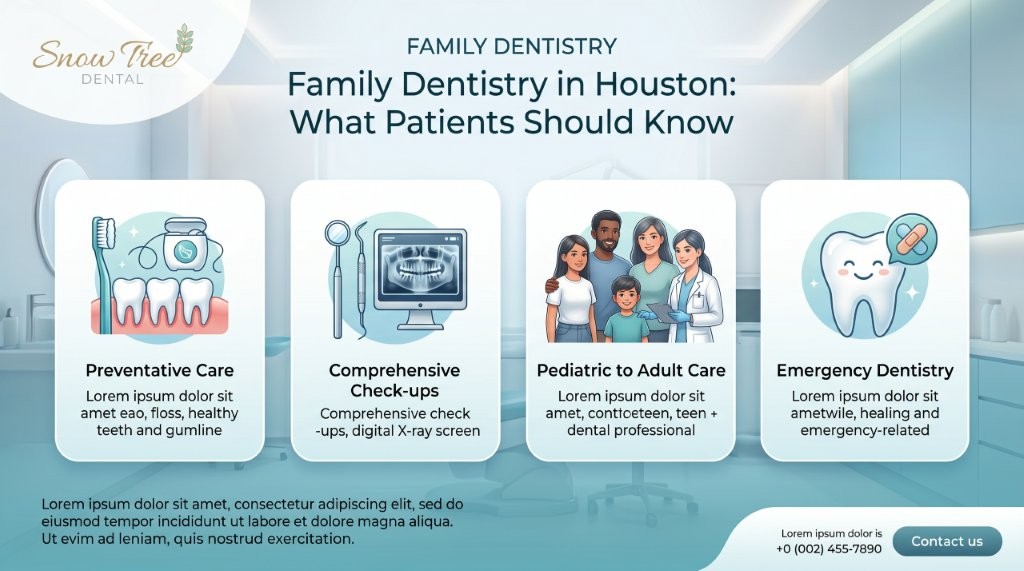
Finding the right dental office for your household can make routine care feel much easier. Family dentistry is designed to support patients at different ages and stages of life, from children coming in for early visits to adults managing preventive, restorative, or gum health needs.
For many Houston families, having one trusted dental office can simplify scheduling, improve comfort, and create a stronger long-term relationship with the dental team. It also helps patients feel less like they are starting over every time they need care. When the same team gets to know your history, concerns, and comfort level, dental visits often feel more familiar and less stressful.
At Snow Tree Dental, family-focused care means helping patients understand their oral health, ask questions comfortably, and receive guidance that fits their needs without pressure or confusion.
What Is Family Dentistry?
Family dentistry refers to dental care for patients across multiple age groups. A family dentist may care for children, teens, adults, and older adults, depending on the services offered by the office and the needs of each patient.
Family dentistry often includes:
- Routine dental exams
- Professional cleanings
- Cavity checks
- Fillings
- Gum health evaluations
- X-rays when needed
- Children’s dental visits
- Preventive education
- Restorative options such as crowns or bridges
- Guidance for urgent dental concerns
The main idea is continuity. Instead of each family member going to a different office, many patients prefer a dental home where the team becomes familiar with their health history, habits, concerns, and long-term goals.
Family Dentistry vs. General Dentistry
Family dentistry and general dentistry overlap in many ways. Both may include exams, cleanings, fillings, gum checks, and basic restorative care. The difference is often the patient range and the style of care.
A general dentist may focus mostly on adult patients, while a family dentist is typically comfortable caring for different ages. That can be helpful for parents who want their child’s dental visits to feel familiar and for adults who want a consistent office for their own care.
A family-focused office also understands that dental needs change over time. A young child may need help building brushing habits. A teenager may need guidance about sports mouthguards, wisdom teeth, or orthodontic concerns. Adults may need help with sensitivity, gum health, worn teeth, or older fillings. Older patients may need support with crowns, bridges, missing teeth, dry mouth, or chewing comfort.
Why Family Dentistry Matters for Houston Families
Houston families are often balancing work, school, traffic, errands, and appointments. Having a trusted dental office nearby can make it easier to stay consistent with care instead of waiting until something hurts.
A family dental office can make ongoing care easier in several practical ways:
- A familiar place for routine visits
- Easier scheduling for multiple family members
- A dental team that understands your history
- Comfort for children who see parents receiving care too
- Ongoing prevention instead of only treating problems after they become painful
- Clear explanations for patients who feel nervous or unsure
That consistency matters because dental care is not just about treating problems after they appear. It is also about noticing concerns early, helping patients build better habits, and making visits feel less intimidating.
Common Services Included in Family Dentistry
A visit for family dentistry in Houston may look different for each patient, depending on age, symptoms, oral health history, and comfort level. Still, many family dental offices provide a similar foundation of preventive and restorative care.
Routine Dental Exams and Cleanings
Routine exams allow the dentist to check your teeth, gums, bite, and overall oral health. Cleanings help remove plaque and tartar buildup that regular brushing may not fully remove.
During a visit, the dental team may also review brushing and flossing habits, discuss sensitivity, check for gum inflammation, and recommend X-rays if they are needed.
Routine exams and cleanings are an important part of preventive dental care, especially for families who want to stay ahead of cavities, gum concerns, and everyday oral health changes.
Children’s Dental Visits
Children benefit from early, positive dental experiences. A family dentist can help children become comfortable with dental visits while also helping parents understand brushing habits, diet concerns, fluoride guidance, and normal tooth development.
For younger patients, the goal is to build trust gradually. Calm explanations, gentle visits, and consistent routines can make dental care feel more normal instead of scary.
Fillings and Basic Restorative Care
If a cavity is found, the dentist may recommend a filling. Fillings are used to repair areas of tooth structure affected by decay or minor damage.
Patients should not assume every dark spot or sensitive tooth automatically means a filling is needed. A dentist needs to examine the tooth, review symptoms, and sometimes use X-rays before recommending treatment.
Gum Health Support
Gum health is a major part of family dentistry. Bleeding gums, swelling, tenderness, or persistent bad breath may be signs that the gums need attention.
Some patients need routine cleanings, while others may need a deeper type of cleaning depending on the condition of the gums and the bone support around the teeth. The right recommendation depends on an exam and diagnosis.
Dental Crowns, Bridges, and Restorative Options
When a tooth is cracked, weakened, heavily filled, or damaged, a dentist may discuss a crown. If teeth are missing, options such as bridges or other replacement solutions may be reviewed.
Restorative care should always be based on the patient’s exam, comfort, oral health, and long-term needs. A good dental visit should leave you understanding why a treatment is recommended, what it is meant to do, and what your options may be.
When a tooth is weakened, cracked, or heavily restored, your dentist may discuss options such as dental crowns in Houston based on your exam and long-term needs.
Emergency Dental Guidance
Family dental offices may also help patients understand what to do when dental symptoms suddenly appear. Tooth pain, swelling, broken teeth, or injuries should not be ignored.
Some dental concerns can wait for a scheduled appointment, while others need more urgent attention. If you are not sure, calling the dental office is usually the safest next step.
What to Expect During a Family Dental Visit
A family dental visit usually begins with a review of your health history, dental concerns, and any symptoms you are experiencing. This helps the dentist understand what has changed since your last visit and whether there are any issues that need closer attention.
A typical appointment may include:
- Review of medical and dental history
- Dental exam
- Gum evaluation
- X-rays if needed
- Professional cleaning when appropriate
- Discussion of findings
- Treatment recommendations if needed
- Home care guidance
Good dental care should feel clear. Patients should understand what was found, why treatment may or may not be recommended, and what options are available. If something is confusing, it is reasonable to ask for a simpler explanation before making a decision.
Family Dentistry for Different Ages
Children
Children need support with brushing habits, cavity prevention, and comfort during dental visits. A family dentist can help parents understand what is normal as baby teeth come in, fall out, and make room for adult teeth.
Early visits can also help children become more familiar with the dental office environment. That comfort can make future cleanings and exams easier.
Teens
Teenagers may face different concerns, including inconsistent brushing, sugary drinks, sports injuries, wisdom tooth monitoring, and orthodontic questions. Dental visits can help reinforce healthy habits while also giving teens space to understand their own oral health.
This stage is also a good time to discuss mouthguards, diet habits, and sensitivity or jaw discomfort if those concerns appear.
Adults
Adults often need preventive care, gum checks, cavity treatment, replacement of older dental work, help with sensitivity, or restorative options. Some adults also want to discuss cosmetic concerns, such as discoloration, worn teeth, or uneven edges.
For many adults, dental care is also about staying ahead of small problems before they become painful or harder to manage.
Older Adults
Older patients may have concerns related to gum health, dry mouth, worn teeth, missing teeth, crowns, bridges, dentures, or chewing comfort. A family dentist can help monitor changes and recommend care based on comfort, function, and oral health.
The goal is to help patients maintain healthy teeth and gums for as long as possible while also addressing comfort and everyday function.
Signs You Should Call a Dentist
Some dental symptoms are worth checking sooner rather than waiting and hoping they improve on their own. Not every symptom means something serious, but a dental exam can help you understand what is actually happening.
Call a dentist if you notice:
- Tooth pain that does not go away
- Swelling in the gums, jaw, or face
- Bleeding gums that happen often
- A chipped, cracked, or broken tooth
- Sensitivity to hot, cold, or sweets
- Bad breath that does not improve with brushing
- A loose adult tooth
- Pain when biting or chewing
- Jaw discomfort
- A child complaining of tooth pain
- A filling, crown, or bridge that feels loose
Waiting too long can sometimes make treatment more complicated. If pain, swelling, or damage is involved, it is better to call and ask what type of appointment may be needed.
If you have swelling, severe pain, a broken tooth, or a loose adult tooth, contact the office to ask whether emergency dental care is needed.
Common Causes of Dental Problems in Families
Family dental visits often reveal patterns. Sometimes several family members have similar habits, routines, or risk factors. This does not mean anyone has done something wrong. It simply means oral health is often shaped by daily routines.
Common causes of dental problems may include:
- Inconsistent brushing or flossing
- Frequent snacking
- Sugary drinks
- Dry mouth
- Teeth grinding
- Delayed dental visits
- Old or damaged dental work
- Gum inflammation
- Sports injuries
- Difficulty helping young children brush well
A family dentist can help identify these patterns and recommend realistic changes. The best advice is usually practical, not perfect. Most families need habits they can actually follow on busy school mornings, late workdays, and evenings when everyone is tired.
Real Practice Experience: What Families Often Appreciate
In a real dental office setting, many families appreciate consistency. Parents often feel more comfortable when their children can visit the same office where they receive their own care, and patients tend to relax when explanations are simple, visits feel organized, and the dental team remembers their concerns from one appointment to the next. That familiar relationship can make routine care feel less stressful, especially for patients who have avoided the dentist in the past.
Myth vs. Fact About Family Dentistry
Myth: Family dentistry is only for children.
Fact: Family dentistry can include care for children, adults, and older patients. It is designed around different life stages, not just pediatric care.
Myth: You only need a dentist when something hurts.
Fact: Pain is not the only reason to visit. Regular exams can help identify concerns before they become more uncomfortable or harder to treat.
Myth: A family dentist only does cleanings.
Fact: Many family dental offices offer preventive care, fillings, gum evaluations, crowns, bridges, and guidance for urgent concerns. Services vary by office.
Myth: Every family member needs the same treatment.
Fact: Dental care should be personalized. A child, parent, and older adult may all need different recommendations based on their age, oral health, habits, and symptoms.
How to Choose a Family Dentist in Houston
Choosing a dentist in Houston that families can trust is about more than finding the closest office. Convenience matters, but comfort, communication, and clarity matter too.
Look for a dental office that offers:
- Clear explanations
- Experience with different age groups
- A calm and welcoming environment
- Preventive care guidance
- Practical scheduling options
- Honest discussion of treatment choices
- Respect for patient concerns
- A location that works for your family’s routine
A good family dentist should help you understand your options without making you feel rushed or pressured. Patients deserve to know what is recommended, why it matters, and whether there are different ways to approach care.
Simple Tips for Family Oral Health at Home
Family dentistry works best when office visits are supported by simple daily habits at home. Small routines can make a meaningful difference over time, especially when they are realistic enough to maintain.
Helpful habits include:
- Brush twice daily with fluoride toothpaste
- Floss daily or use dentist-recommended cleaning aids
- Help young children brush until they can do it well on their own
- Limit frequent sugary snacks and drinks
- Encourage water between meals
- Use mouthguards for sports when recommended
- Do not ignore pain, swelling, or bleeding gums
- Keep regular dental visits based on your dentist’s guidance
For additional general patient education, you can also review American Dental Association oral health guidance about brushing, flossing, and routine dental care.
FAQ About Family Dentistry in Houston
What is family dentistry?
Short answer: Family dentistry is dental care for patients of different ages, often including children, teens, adults, and older adults.
Family dentistry usually focuses on routine exams, cleanings, preventive guidance, cavity checks, gum health, fillings, and restorative care when needed. The goal is to give families a familiar dental home where different members of the household can receive care based on their age, comfort level, and oral health needs.
Is family dentistry only for children?
Short answer: No. Family dentistry is for patients at many stages of life, not just children.
Children may need help building healthy habits and getting comfortable with dental visits. Adults may need preventive care, fillings, gum evaluations, crowns, or help with sensitivity. Older patients may need support with worn teeth, missing teeth, dry mouth, or chewing comfort.
What services are commonly included in family dentistry?
Short answer: Family dentistry commonly includes exams, cleanings, cavity checks, fillings, gum evaluations, X-rays when needed, and preventive education.
Some family dental offices may also offer restorative options such as crowns or bridges, along with guidance for urgent concerns like tooth pain, swelling, or broken teeth. Services can vary by office, so recommendations should always be based on the patient’s exam and individual needs.
How often should my family visit the dentist?
Short answer: The right schedule depends on each person’s oral health, gum condition, cavity risk, medical history, and dentist recommendations.
Many patients benefit from regular dental visits, but not every patient has the same needs. Some people may need more frequent monitoring because of gum concerns, frequent cavities, dry mouth, or ongoing dental treatment. Your dentist can recommend a schedule after reviewing your oral health.
Can children and adults go to the same family dentist?
Short answer: In many cases, yes. A family dental office may care for both children and adults, depending on the services offered and each patient’s needs.
This can be helpful for busy families because it keeps dental care more organized. Parents may feel more comfortable when their children visit the same office they already know, and children may feel more at ease seeing familiar faces during appointments.
How do I choose a family dentist in Houston?
Short answer: Look for clear communication, experience with different age groups, a comfortable office, practical scheduling, and a patient-first approach.
When choosing a family dentist in Houston, convenience matters, but it should not be the only factor. Patients should feel comfortable asking questions, understanding recommendations, and discussing concerns without feeling rushed. A good dental office should explain treatment options clearly and help families make informed decisions.
What should I expect at a family dental visit?
Short answer: A family dental visit usually includes a health history review, dental exam, gum evaluation, cleaning when appropriate, X-rays if needed, and a discussion of findings.
The dentist or dental team may ask about symptoms such as pain, sensitivity, bleeding gums, jaw discomfort, or changes since your last visit. After the exam, they should explain what they found, whether treatment is recommended, and what home care steps may help.
When should I call a dentist instead of waiting?
Short answer: Call a dentist if you have tooth pain, swelling, bleeding gums, a broken tooth, a loose adult tooth, or pain when biting.
Not every dental symptom is an emergency, but symptoms that involve pain, swelling, injury, or a change in how a tooth feels should be checked. Waiting too long can sometimes make treatment more complicated.
Does family dentistry include emergency dental care?
Short answer: Family dentistry may include guidance for urgent dental concerns, but emergency services depend on the dental office.
A family dentist can often help patients understand what to do about tooth pain, broken teeth, swelling, dental injuries, or loose dental work. If urgent care is needed, the office can explain the next steps based on your symptoms and availability.
Why is having one dental office for the family helpful?
Short answer: One dental office can make care more familiar, organized, and consistent for the whole family.
When a dental team gets to know your family’s history, habits, and concerns, visits may feel less stressful. Parents may also find it easier to manage appointments, ask questions, and keep track of recommended care when everyone is seen in one trusted place.
What are common dental problems family dentists see?
Short answer: Common concerns include cavities, bleeding gums, tooth sensitivity, worn teeth, broken teeth, dry mouth, and dental anxiety.
Family dentists often help patients recognize patterns in daily habits, such as inconsistent flossing, frequent sugary drinks, teeth grinding, or delayed dental visits. The goal is not to blame anyone. It is to identify realistic ways to protect oral health at home and during routine dental visits.
What is one thing families can do at home to support oral health?
Short answer: Keep daily care simple and consistent: brush twice a day, clean between teeth, limit frequent sugary snacks, and do not ignore symptoms.
For children, parents may need to help with brushing until the child can do it well. For adults and older patients, consistency matters too, especially if there are gum concerns, dental restorations, dry mouth, or sensitivity. Small habits are not glamorous, but teeth are deeply unimpressed by glamour.
Final Thoughts on Family Dentistry in Houston
Family dentistry gives Houston patients a practical way to manage dental care for children, adults, and older family members in one trusted place. It can make routine visits easier, support long-term prevention, and help patients feel more comfortable with their dental team over time.
If you are looking for a family-focused dental office in Houston, Snow Tree Dental welcomes patients who want clear explanations, thoughtful care, and a calm approach to oral health. Schedule a visit to discuss your family’s dental needs, ask questions, and learn what type of care may be right for you.