
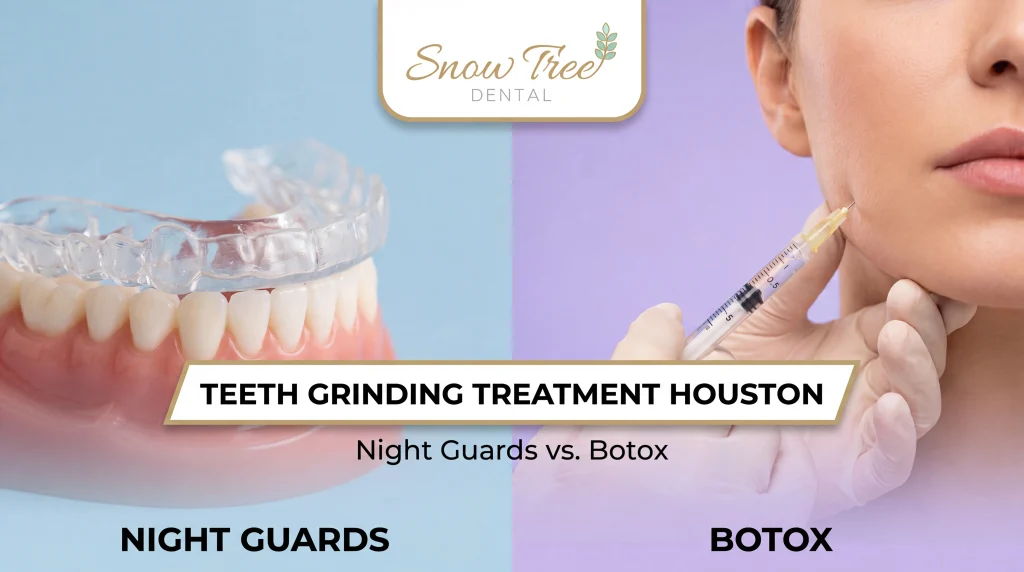
Teeth Grinding Treatment Houston: Night Guards vs. Botox
Teeth Grinding Treatment Houston: Night Guards vs. Botox for Bruxism Relief
If you wake up with a sore jaw or notice flattened, chipped, or sensitive teeth, you may be dealing with bruxism—unconscious clenching or grinding. Teeth grinding treatment Houston typically aims to do two things: protect your teeth and calm overactive jaw muscles. At Snow Tree Dental near the Galleria, we offer conservative appliances like custom night guards and TMJ splints, as well as adjunctive Botox for bruxism when it’s appropriate. This balanced guide compares comfort, effectiveness, risks, timelines, maintenance, and cost factors so you can make a confident, personalized decision—then schedule with our dentist in Houston for a tailored plan at Snow Tree Dental.
Quick definition and highlights
- Night guards and TMJ splints cushion and stabilize your bite to help prevent wear, cracks, and sore teeth.
- Botox for bruxism targets jaw muscles such as the masseter to reduce clenching intensity and muscle-related discomfort.
- Many patients do best starting with a night guard for protection; Botox can be added for stubborn muscle pain or severe clenching.
Night guard/TMJ splint
- Pros: protects enamel and dental work; noninvasive; adjustable and long-term
- Cons: doesn’t stop the habit itself; needs nightly wear and periodic maintenance
Botox for bruxism
- Pros: can ease jaw pain and clenching intensity; quick visits; no nightly device
- Cons: temporary results that wear off in months; does not physically protect teeth; repeat sessions needed
What Is Bruxism and How It Damages Your Smile
Bruxism overview from the National Institute of Dental and Craniofacial Research can occur during the day (often clenching) or at night (often grinding). Triggers include stress, sleep disorders, certain medications, bite discrepancies, and even caffeine or alcohol close to bedtime. Over time, grinding can:
- Wear down enamel and flatten chewing surfaces
- Crack or fracture teeth and crowns
- Strain jaw joints and muscles, leading to morning soreness or headaches
- Contribute to gum recession and tooth sensitivity
- Enlarge jaw muscles (hypertrophy), making the angles of the jaw look “wider”
Common signs include:
- Morning jaw pain or fatigue
- Worn or shiny “wear facets” on teeth
- Chipped edges or fractured restorations
- Headaches around the temples
- Tooth sensitivity to hot or cold
- Clicking or popping in the TMJ
Daytime clenching vs. nighttime grinding
- Daytime clenching is frequently stress- or posture-related. Awareness, micro-breaks, and posture changes can help.
- Nighttime grinding is unconscious and typically requires protection (a night guard or TMJ splint) and, in some cases, muscle-calming support like Botox for bruxism.
Option 1 — Custom Night Guard (and TMJ Splint) in Houston
How a night guard works
A custom night guard creates a smooth, protective interface between the upper and lower teeth. It redistributes forces, cushions enamel, and can reduce muscle strain by guiding the jaw toward a more relaxed position. A TMJ splint is a specialized appliance designed to stabilize the joint and control how the bite comes together—useful when the joint itself is inflamed or unstable.
Types of appliances
- Soft guards: cushioned and comfortable for lighter clenchers; may wear out faster.
- Hard acrylic guards: durable and precise; ideal for heavy grinders.
- Hybrid/dual-laminate guards: soft inside for comfort, hard outside for protection.
- TMJ stabilization splints: crafted to influence joint positioning and reduce overload on the TMJ.
Comfort, fit, and maintenance timeline
- Fit: Custom devices made from intraoral scans are slim, contoured to your teeth, and typically more comfortable than over-the-counter options.
- Break-in: Expect a few nights to adjust. Minor refinements at follow-ups are common.
- Care: Rinse daily, brush gently with a soft toothbrush, and use a non-abrasive cleaner. Store it in a ventilated case.
- Replacement: Lifespan varies with grinding intensity and material. Bring your guard to checkups so we can monitor wear and fit.
Pros and cons for long-term protection
- Pros: Direct, ongoing protection for teeth and restorations; noninvasive; adjustable; can be used indefinitely.
- Cons: Requires nightly wear and proper cleaning; does not stop the underlying habit or muscle activity by itself.
Who’s a good candidate
- Most grinders and clenchers, especially those with enamel wear, cracked teeth, or sensitive restorations
- Patients who want a first-line, reversible solution with strong protection
- People with TMJ symptoms who may benefit from a stabilization splint
Option 2 — Botox for Bruxism and Jaw Clenching Relief
How Botox relaxes overactive jaw muscles
Botox for bruxism involves small, targeted injections into the masseter and sometimes temporalis muscles. By limiting how strongly the muscle can contract, it reduces overactivity and can help decrease clenching intensity and muscle-related pain.
What treatment feels like and how long results last
- Visits are typically quick. We use gentle techniques and fine needles.
- Minor tenderness at injection sites can occur briefly.
- Results often begin within days and are typically maintained for several months, then re-evaluated.
Pros and cons: symptom relief vs. protection
- Pros: Can reduce jaw pain, tension headaches related to clenching, and the intensity of grinding; no device to wear at night.
- Cons: Temporary; does not physically protect teeth or restorations; repeat sessions are needed for ongoing relief.
Who’s a good candidate and safety considerations
- Adults with moderate to severe clenching pain or frequent TMJ muscle flare-ups
- Patients who can’t tolerate a night guard, or those seeking complementary relief alongside a guard
- Candidacy depends on medical history, medications, pregnancy status, and your dental exam. We’ll discuss benefits and risks before treatment.
Night Guard vs. Botox: Side-by-Side Comparison
Effectiveness
- Pain relief: Night guards reduce muscle strain indirectly and protect the bite; Botox directly reduces clenching intensity. Some patients find Botox adds meaningful comfort when pain persists despite a guard.
- Protection from wear: Night guards and TMJ splints provide a physical barrier. Botox does not.
- Habit severity: Guards work across the spectrum; Botox can help when clenching forces are high and symptomatic.
Comfort and convenience
- Night guard: No injections; requires consistent nightly wear and cleaning. Once you adapt, most patients find them easy to use.
- Botox: No nightly device; short visits; temporary soreness at injection sites is possible.
Longevity, maintenance, and follow-up
- Night guard: Ongoing use with periodic adjustments and eventual replacement depending on wear.
- Botox: Effects are temporary; follow-up sessions are scheduled as needed to maintain relief.
Cost factors and insurance considerations
- Night guards and TMJ splints: Costs vary by material, complexity, and follow-up needs. Some dental plans may offer partial coverage for appliances.
- Botox for bruxism: Often considered elective; coverage varies by plan. Expect periodic maintenance visits.
- At Snow Tree Dental, we provide transparent pricing, accept most PPOs, and offer an in-house dental plan. Our team will review estimates before you decide.
When a Combined Approach Makes Sense
Some patients benefit most from both: a custom night guard (for protection) plus Botox (for muscle relief). This can be especially helpful when:
- Severe clenching is chipping teeth or breaking crowns
- TMJ muscles are tender, enlarged, or easily fatigued
- You’ve tried a guard alone and still wake with jaw pain
- You’re navigating a short-term flare and want relief while your appliance plan stabilizes your bite
Lifestyle and dental factors to address triggers
- Practicing stress management and gentle jaw stretches
- Focusing on sleep hygiene: consistent bedtime and less screen time before sleep
- Limiting caffeine and alcohol in the evening
- Checking possible airway or sleep issues with your physician when indicated
- Keeping routine dental visits to monitor wear and address bite interferences
Myth vs. Fact: Bruxism Care
- Myth: “A night guard will stop me from grinding.” Fact: It protects teeth and can ease strain, but it doesn’t eliminate the habit itself.
- Myth: “Botox fixes bruxism permanently.” Fact: It can reduce clenching intensity for a period; effects are temporary and need maintenance.
- Myth: “Store-bought guards work just as well.” Fact: Over-the-counter trays often fit loosely, feel bulky, and may not protect evenly—custom devices are tailored for comfort and protection.
What to Expect at Snow Tree Dental in Houston
Exam, digital X-rays, bite assessment, and planning
We begin with a thorough evaluation, digital X-rays when needed, and a bite and muscle assessment. Intraoral cameras help us show you areas of wear or small cracks so you can see what we see. Then we discuss whether a custom night guard, TMJ splint, Botox for bruxism, or a combination is the best path.
Custom appliance design and gentle Botox techniques
If a night guard or TMJ splint is recommended, we use comfortable intraoral scans—no messy impressions—to design a precise, slim-fit appliance. If Botox is appropriate, we use conservative, gentle techniques and schedule follow-ups to monitor your response.
Transparent pricing, insurance, and plan options
We’re upfront about costs, accept most PPO insurance plans, and offer an in-house dental plan for savings on preventive care and member perks. You’ll know estimated fees before moving forward.
Flexible scheduling near the Galleria
Life is busy. We offer evening and Saturday appointments, easy online booking, and same-day emergency dentistry when teeth crack or pain flares. Find us at 2400 Augusta Dr. Ste #175, Houston, TX 77057.
Real Practice Insight
In our Houston office, we often meet patients who tried a store-bought guard without relief. After a bite assessment and digital scans, a custom night guard made a noticeable difference in morning jaw tension. For a few patients with severe clenching, pairing the guard with targeted Botox provided added comfort. The key was tailoring the fit and follow-up to their daily habits and sleep patterns.
Home Care Tips to Support Treatment
- Keep your tongue resting on the roof of your mouth and lips together when relaxed; avoid letting the back teeth touch during the day.
- Apply a warm compress or try gentle jaw stretches in the evening.
- Moderate caffeine and alcohol, especially late in the day.
- Replace worn toothbrushes and keep up with regular cleanings; bring your guard to checkups for a fit review.
- If you chip or crack a tooth, call right away—same-day emergency visits are available.
When to Seek Urgent Dental Care
- Sudden tooth pain that disrupts sleep
- A cracked tooth, broken crown, or a sharp edge cutting your cheek or tongue
- Jaw locking or swelling
Prompt attention helps protect nerves and restorations and can prevent more extensive treatment.
Why Choose Snow Tree Dental for Teeth Grinding Treatment in Houston
- Balanced care: We offer both night guards/TMJ splints and Botox, so your plan fits your symptoms and goals.
- Modern comfort: Digital X-rays, intraoral cameras, and precise scanning for a slimmer, more comfortable fit.
- Transparent and accessible: Most PPOs accepted, in-house plan available, and clear estimates.
- Flexible access: Evening and Saturday visits, online scheduling, and same-day help when you need an emergency dentist near the Galleria.
- Local team you can call: (832) 464-3368.
Suggested visual
- Diagram: compare tooth wear facets vs. protected enamel
- Image alt text: teeth grinding treatment Houston – custom night guard fitting
Night Guard Houston or Botox: Which Works Best?
For most patients, a custom night guard or TMJ splint is the first-line choice for lasting protection from tooth wear. Botox can be added to reduce painful clenching and help calm overactive muscles—especially in moderate to severe cases. The best teeth grinding treatment Houston depends on your exam findings, bite, medical history, and comfort preferences.
Frequently Asked Questions
How do I choose between a night guard and Botox for bruxism?
Short answer: Start with a custom night guard for protection; consider Botox if muscle pain or clenching intensity persists.
Expanded answer: A guard or TMJ splint physically shields your teeth and can reduce muscle strain, making it the first-line option for most patients. Botox for bruxism can be added when jaw clenching relief is still needed, especially in moderate to severe cases. At your exam, we’ll review symptoms, wear patterns, and medical history to personalize your teeth grinding treatment Houston.
Does a night guard stop teeth grinding?
Short answer: No—night guards protect your teeth but don’t eliminate the habit.
Expanded answer: A custom night guard or TMJ splint creates a smooth, durable barrier that redistributes forces and cushions enamel. It helps prevent wear, cracks, and sore teeth but doesn’t turn off the clenching reflex itself. That’s why some patients also benefit from muscle-calming support like Botox.
How long do Botox results last for jaw clenching, and what does treatment feel like?
Short answer: Results typically last several months, and visits are quick with minor, brief tenderness possible.
Expanded answer: Botox for bruxism uses small, targeted injections into overactive jaw muscles to reduce clenching intensity. Most patients notice effects within days, with benefits generally maintained for a few months before re-evaluation. The appointment is brief, and we use gentle techniques and fine needles.
Can I combine a night guard with Botox for better results?
Short answer: Yes—many patients do best with protection from a guard and muscle relief from Botox.
Expanded answer: A combined approach helps when clenching is chipping teeth or causing persistent muscle pain. The guard/TMJ splint protects your teeth and restorations, while Botox can ease muscle overactivity. We’ll tailor timing and follow-ups so both parts of your plan work together.
Are store-bought night guards as effective as custom guards?
Short answer: Usually not—over-the-counter guards often fit loosely and protect unevenly.
Expanded answer: Custom appliances made from intraoral scans are slimmer, more precise, and more comfortable than boil-and-bite options. A good fit improves protection and makes nightly wear more practical. We’ll also monitor wear over time and adjust your device as needed.
How soon will I feel relief with a night guard or Botox?
Short answer: Many patients adjust to a guard within days; Botox effects often begin within days and last months.
Expanded answer: A night guard typically needs a brief break-in period, with fine-tuning at follow-ups for best comfort. Botox for bruxism may reduce jaw tension within days, and we’ll schedule check-ins to track how long your relief lasts and when to maintain it.
What does the evaluation look like at Snow Tree Dental?
Short answer: We perform a thorough exam with digital X-rays as needed, a bite and muscle assessment, and a personalized plan.
Expanded answer: Using intraoral cameras, we’ll show you wear facets or small cracks so you can see what we see. Then we’ll discuss whether a custom night guard, TMJ splint, Botox, or a combination best fits your goals. Easy online scheduling and evening/Saturday hours make follow-ups simple.
Will insurance cover a night guard or Botox for bruxism?
Short answer: Coverage varies—many plans may help with appliances, while Botox is often elective.
Expanded answer: Some PPO plans offer partial benefits for night guards or TMJ splints, while Botox coverage depends on your policy. We provide transparent pricing, accept most PPOs, and offer an in-house dental plan. You’ll receive estimates before you decide.
How do I care for a custom night guard, and how long does it last?
Short answer: Rinse daily, brush gently, use a non-abrasive cleaner, and bring it to checkups; lifespan depends on grinding intensity and material.
Expanded answer: Consistent cleaning and storing in a ventilated case help maintain clarity and fit. We’ll assess wear at routine visits and advise when adjustments or replacement are needed. Durable acrylic or dual-laminate options are ideal for heavier grinding.
Who is a good candidate—or not—for Botox for bruxism?
Short answer: Adults with persistent clenching pain may benefit; candidacy depends on your medical history and exam.
Expanded answer: We review your medications, pregnancy status, and muscle findings to confirm safety and fit. Botox can help when you can’t tolerate a guard or need added relief with a guard. We’ll discuss benefits, limitations, and maintenance visits before treatment.
Do you offer flexible scheduling and emergency care near the Galleria?
Short answer: Yes—Snow Tree Dental provides evening and Saturday hours, online booking, and same-day emergency dentistry.
Expanded answer: If you chip a tooth or have sudden pain from grinding, call us for prompt care. Our office is near the Galleria at 2400 Augusta Dr. Ste #175, Houston, TX 77057. For appointments, call (832) 464-3368 or book with our dentist in Houston at https://snowtreedental.com/.
Ready for Teeth Grinding Treatment in Houston?
Let’s protect your smile and help your jaw feel better—on your schedule and within a clear plan. Call Snow Tree Dental at (832) 464-3368 or book online with our Houston dentist at Snow Tree Dental (https://snowtreedental.com/) to schedule your personalized evaluation. We’re here with patient-first care, modern technology, and flexible hours near the Galleria.