
Invisalign vs Braces Houston: Pros, Cons, and Best Fit | Snow Tree Dental
Invisalign vs Braces in Houston: Pros, Cons, and Who’s a Good Fit
Choosing between Invisalign and traditional braces is a big decision—and it’s not just about looks. This practical guide compares comfort, appearance, maintenance, eating habits, oral hygiene, treatment time, case complexity, and cost factors through a Houston lens. We’re Snow Tree Dental, a friendly, modern practice near the Galleria led by Dr. Muna Mohammed since 2019. A one-on-one consult helps tailor the choice to your smile and routine. If you’re weighing Invisalign vs braces Houston options, you’re in the right place. For general care and scheduling, meet your dentist in Houston at Snow Tree Dental: https://snowtreedental.com/.
Quick Overview: How Invisalign and Braces Work
What are clear aligners (Invisalign)?
Clear aligners are slim, custom plastic trays that move teeth through a planned series of steps. Each set is worn for about 1–2 weeks, 20–22 hours per day, and removed for eating and brushing. Small tooth-colored “attachments” may be added to certain teeth to guide specific movements. Aligners are popular with adults and teens who want a low-profile look and day-to-day flexibility.
What are traditional metal or ceramic braces?
Braces use brackets bonded to teeth and connected by wires and small elastic ties. They stay on 24/7, and your dentist periodically adjusts them to guide teeth into position. Ceramic braces work the same way but use tooth-colored brackets for a more discreet appearance than metal.
Orthodontic treatment goals: alignment, bite, function, and smile aesthetics
Whether you choose clear aligners or braces, the goals are similar: straighten teeth, improve how your bite functions, support long-term oral health, and create a confident, balanced smile. The best method depends on your case, lifestyle, and what will help you stay consistent.
Invisalign vs Braces Houston: Pros and Cons at a Glance
Appearance and confidence at work/school
- Invisalign: Nearly invisible in photos, meetings, and presentations—great for professionals around the Galleria, students, and anyone camera-facing.
- Braces: Metal is most visible; ceramic blends better with teeth. Many teens embrace braces as a milestone and even enjoy choosing band colors.
Comfort and mouth irritation
- Invisalign: Smooth plastic reduces cheek and lip irritation.
- Braces: Brackets and wires can occasionally rub or poke; orthodontic wax helps. Mild soreness can follow adjustments for a day or two.
Eating and lifestyle flexibility (removability vs fixed)
- Invisalign: Remove aligners to eat. No food list—enjoy Tex-Mex, BBQ, and crunchy salads—then brush or rinse and pop them back in.
- Braces: Avoid very hard, sticky, or chewy foods that can bend wires or break brackets (think caramel, hard chips, or some nuts).
Oral hygiene and cavity risk during treatment
- Invisalign: Easier brushing and flossing—just remove trays and keep them clean. Fewer plaque traps.
- Braces: Brush carefully around brackets and use floss threaders or a water flosser. Extra diligence helps prevent decalcification (white spots) and cavities.
Appointments, check-ins, and treatment time ranges
- Both: Regular visits matter. Aligners rely on daily wear time; braces rely on wire adjustments.
- Time ranges: Often similar. Compliance, biology, and case complexity drive the schedule more than the appliance itself.
Treating simple vs more complex orthodontic cases
- Invisalign: A strong choice for mild to moderate crowding/spacing and many bite refinements, especially with smart staging and attachments.
- Braces: Sometimes preferred for complex rotations, vertical movements, and certain bite corrections that benefit from fixed control.
Cost Comparison and What Affects Your Investment
Factors that influence cost (case complexity, timeline, materials)
- Case complexity: More movements, extra refinements, or bite corrections can increase cost.
- Timeline: Longer treatment, additional visits, and more aligners or wires may affect the overall investment.
- Materials/tech: Ceramic braces may cost more than metal; aligner systems can vary by case scope.
Insurance and HSA/FSA basics for orthodontic treatment
- Orthodontic benefits: Many PPO plans include an orthodontic lifetime maximum. Coverage varies—bring your info and we’ll check it for you.
- Pre-tax funds: HSA and FSA dollars can often be used for orthodontic treatment.
Snow Tree Dental support: we file PPO insurance and offer an in-house membership
- We’ll verify and file your PPO insurance to help you use your benefits with less hassle.
- No insurance? Ask about our in-house membership (from $225/year) with 2 exams, 2 cleanings, fluoride, X-rays, and up to 20% off treatment.
- For more details, see our guide to dental insurance in Houston and in-house dental membership: https://www.snowtreedental.com/?p=3358
Adult Orthodontics vs Teen Needs
Professional and social considerations for adults
- Discretion: Clear aligners fit well with presentations, networking, and client-facing roles around the Uptown/Galleria corridor.
- Travel: Aligners make it easier to stay on track during business trips—pack your next set and a travel brush.
Teen compliance and activity considerations (sports, instruments)
- Sports: Braces may require a special mouthguard; aligners must be removed with a case handy.
- Instruments: Woodwinds and brass can be trickier with braces at first; aligners are removable for practice.
- Accountability: Teens who can consistently wear aligners 20–22 hours daily do well. For forgetful wearers, braces may be the safer bet.
Retainers and keeping your results long term
- Expect retainers after either option. Consistent retainer wear protects your new alignment and keeps your investment lasting.
Who’s a Good Fit? Real-World Scenarios We See in Houston
Best candidates for Invisalign (clear aligners)
- You want low-profile treatment for work, interviews, or photos.
- You prefer full food freedom and easy brushing and flossing.
- You can commit to wearing trays 20–22 hours a day.
- Your case involves mild to moderate crowding/spacing or refinements to a prior orthodontic result.
Best candidates for braces (including complex cases)
- You’re comfortable with a visible solution and prefer a “set it and forget it” approach—no taking trays in and out.
- You or your teen may struggle to wear aligners consistently.
- Your bite is more complex and may benefit from the continuous control of brackets and wires.
When a hybrid approach or attachments make sense
- Hybrid plans—such as a short phase of limited braces followed by aligners—can tackle complex movements and finish discreetly.
- Tooth-colored attachments with aligners help achieve more precise movements without switching fully to braces.
Myth vs Fact: Quick Clarity
- Myth: “Invisalign is always faster.” Fact: Treatment time depends on your biology, complexity, and consistency—both methods can be similar.
- Myth: “Braces are my only option for a real bite change.” Fact: Many bite improvements can be achieved with aligners plus attachments—your case determines the best path.
- Myth: “You can’t eat normally with Invisalign.” Fact: You remove aligners to eat, so you can enjoy your usual Houston favorites—just clean before trays go back in.
What to Expect at a Consultation in Houston
Digital X-rays and intraoral photos to map your bite
We take digital X-rays and high-resolution intraoral photos to evaluate tooth positions, jaw relationships, and gum health. That information helps us build a safe, precise plan for your ADA MouthHealthy: Orthodontics.
Treatment options, timelines, and what’s realistic
We’ll review your goals, compare aligners vs braces, and discuss expected treatment time ranges, check-in frequency, and what daily life looks like with each choice. You’ll leave with clear next steps—no pressure.
Comfort-focused care and convenient evening/Saturday hours
Our team prioritizes gentle, anxiety-free care with modern tech like digital X-rays and intraoral cameras. For busy Houston schedules, we offer evening and Saturday appointments near the Galleria for easy access.
Our First-Hand Experience
Since 2019, we’ve noticed a steady pattern: working professionals in the Galleria area often choose clear aligners for the low-profile look and travel flexibility, while families sometimes opt for braces for teens who might forget wear time. We’ve also had patients start with a short braces phase for a complex movement, then transition to aligners to finish more discreetly. Whatever the path, consistency and good home care make the biggest difference day to day.
Lifestyle-Based Comparison for Houston Living
Commuting and meetings
- Aligners: Handy for long commutes down 610 or quick meetings—remove trays briefly if needed and keep a case in your bag.
- Braces: Fixed and predictable—no risk of forgetting trays at home.
Dining out and events
- Aligners: Remove to enjoy BBQ or fajitas, then brush or rinse before reinserting.
- Braces: Choose softer options, skip the sticky sweets, and use a pocket toothbrush after meals.
Travel
- Aligners: Pack your next set and a mini cleaning kit. Consistent wear keeps you on schedule.
- Braces: Carry orthodontic wax and a travel brush; if a bracket loosens, call us and we’ll guide you.
Cost Factors with a Clear Next Step
- Complexity drives cost more than the brand name. Two people can pay very different amounts for “the same” treatment if one case is more involved.
- Insurance may help; we’ll check your benefits and file PPO claims to reduce hassle.
- No insurance? Ask about our in-house membership (from $225/year) for built-in preventive care and savings.
- For deeper details on budgeting and benefits, visit our article on dental insurance in Houston and in-house plans: https://www.snowtreedental.com/?p=3358
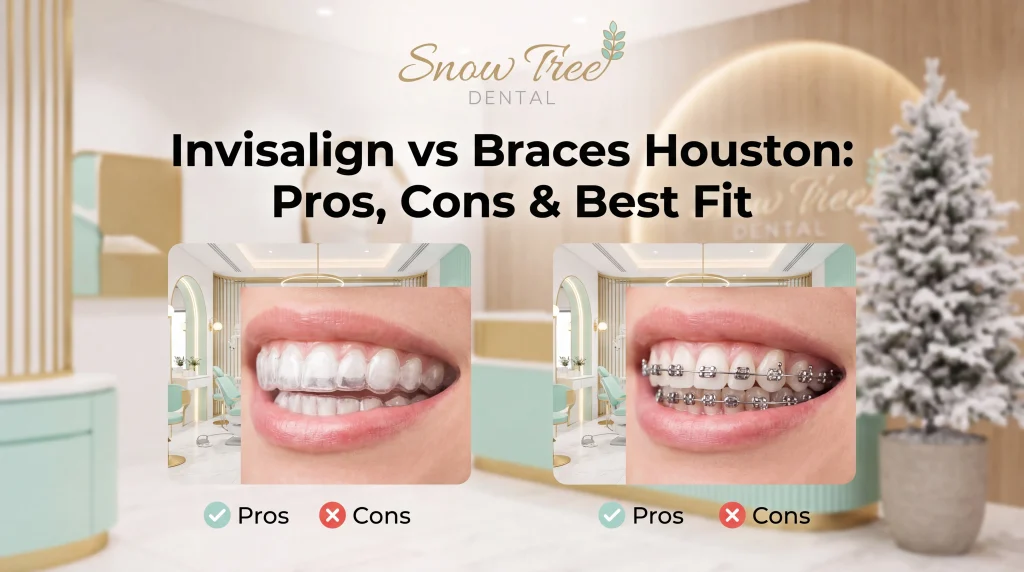
Image alt text: Invisalign vs braces Houston comparison chart
Featured, In-Case-You-Skim Summary
- Invisalign: Removable, discreet clear aligners with strong lifestyle flexibility; best when you can commit to 20–22 hours of daily wear and your case is mild to moderate.
- Braces: Fixed brackets and wires that work for mild to complex cases; ideal if you prefer a set schedule and won’t risk forgetting trays.
- Time: Often similar for comparable cases; compliance matters most.
- Hygiene: Easier with aligners; braces require extra care around brackets.
- Eating: Full freedom with aligners (remove to eat) vs a modified diet with braces.
Where to Learn More
If you want a deeper dive into timelines and candidate types, see our related guide: Invisalign vs braces Houston cost and timeline: https://www.snowtreedental.com/?p=3359
What to Expect After Treatment: Retainers and Routine
- Retainers are part of every orthodontic plan, no matter what you choose.
- Following your retainer schedule helps keep teeth from drifting.
- We’ll show you how to clean and store retainers and set a simple maintenance routine.
Why Choose Snow Tree Dental for Orthodontic Treatment in Houston
- Friendly, patient-first team and clear explanations—no pressure.
- Modern technology for planning and comfort.
- Convenient location near the Galleria with evening and Saturday appointments.
- We accept most PPO insurance and file claims for you.
- Comprehensive care under one roof—family, preventive, restorative, cosmetic, and emergency dentistry—with same-day emergency appointments available when needed.
Next Steps: Start with a Personalized Assessment
Comparing Invisalign vs braces Houston options is easier with a tailored plan. schedule online with Snow Tree Dental, your trusted dentist in Houston: https://snowtreedental.com/. Or call us at (832) 464-3368. We’ll verify and file your PPO insurance, explain our in-house membership, and map out a clear, comfortable path to a confident smile—on a timeline and routine that fit your life near the Galleria.
Frequently Asked Questions
What’s faster for Invisalign vs braces Houston patients?
Short answer: Often similar—your case complexity and consistency matter most.
Expanded: Treatment time depends more on your biology, case difficulty, and (for aligners) wearing trays 20–22 hours daily than on the tool itself. Many mild to moderate cases finish in comparable timelines with either option. We’ll estimate your range at a consultation based on your goals and exam findings.
How do I know if I’m a better candidate for Invisalign or braces?
Short answer: Mild to moderate cases often do great with clear aligners; complex bites may benefit from braces.
Expanded: Aligners work well for crowding/spacing and many bite refinements—especially with attachments. Braces can be preferred for complex rotations, vertical movements, or bite changes that need fixed control. A one-on-one exam helps match your smile and routine to the right approach.
What’s the cost difference, and will insurance help?
Short answer: Cost varies by complexity; many PPO plans include an orthodontic benefit. We verify and file for you.
Expanded: Your investment is driven by how involved your case is and how long it takes. Some PPOs include an orthodontic lifetime maximum, and HSA/FSA funds often apply. For budgeting tips and coverage basics, see our guide: https://www.snowtreedental.com/?p=3358. For timing and candidate details, visit our related article: https://www.snowtreedental.com/?p=3359.
What can I eat with Invisalign or braces?
Short answer: Aligners come out to eat—no food list. Braces require avoiding very hard, sticky, or chewy foods.
Expanded: With aligners, remove trays to enjoy Houston favorites like BBQ or fajitas, then brush or rinse before reinserting. With braces, skip caramel, hard chips, and certain nuts to avoid broken brackets or bent wires. A pocket brush helps after meals.
Is oral hygiene easier with clear aligners?
Short answer: Yes—remove trays to brush and floss normally.
Expanded: Aligners reduce plaque traps around brackets and wires. Clean trays daily and brush after meals for the best results. Braces require careful brushing around brackets and tools like floss threaders or a water flosser to prevent white spots and cavities.
How often are appointments, and what does follow-up look like?
Short answer: Regular check-ins for both; aligners rely on daily wear, braces on periodic adjustments.
Expanded: We’ll set a visit schedule that fits your plan—often every 6–10 weeks. Aligners may include multiple sets to change at home; braces visits focus on wire adjustments. Your consistency between visits keeps treatment on track.
Can teens use Invisalign, or are braces better?
Short answer: Teens can do great with aligners if they’re consistent; braces are safer for forgetful wearers.
Expanded: Active teens who will wear trays 20–22 hours daily often succeed with aligners. For sports and instruments, aligners are removable, while braces may need a special mouthguard and a short adjustment period. If compliance is a concern, braces provide reliable, continuous control.
Will I need a retainer after treatment?
Short answer: Yes—retainers protect your new alignment.
Expanded: Every orthodontic plan ends with retainers to keep teeth from drifting. We’ll tailor wear schedules, show you how to clean and store them, and set an easy maintenance routine long term.
What if I lose an aligner or a bracket breaks?
Short answer: Call us—we’ll guide you and can often see you quickly.
Expanded: For a lost aligner, you may switch to the next or prior set temporarily; we’ll advise based on your stage. For a broken bracket or poking wire, orthodontic wax can help until we see you. Same-day emergency appointments are available when needed.
What do Houston patients at Snow Tree Dental tend to choose?
Short answer: Many working adults choose aligners; families often pick braces for teens.
Expanded: Since 2019, we’ve seen professionals near the Galleria favor clear aligners for a low-profile look and travel flexibility. Families sometimes choose braces for teens who might forget wear time. We also use short hybrid plans—limited braces first, then aligners—to finish more discreetly when appropriate.
Why choose Snow Tree Dental for orthodontic treatment in Houston?
Short answer: Friendly, modern care near the Galleria with evening/Saturday hours and insurance filing.
Expanded: We offer clear explanations, digital X-rays and intraoral cameras, and convenient scheduling. Most PPO insurance accepted—we file for you—and we have an in-house membership from $225/year for preventive care and savings. Learn more or schedule at https://snowtreedental.com/ or call (832) 464-3368.
Do you have a membership plan if I don’t have insurance?
Short answer: Yes—our in-house membership starts from $225/year.
Expanded: It includes 2 exams, 2 cleanings, fluoride, X-rays, and up to 20% off treatment. It’s a helpful way to manage preventive care and reduce overall costs. Details are in our insurance and membership guide: https://www.snowtreedental.com/?p=3358.