
Invisalign vs Braces Houston: Real Costs, Real Timelines, No Hype
Invisalign vs Braces Houston: Cost, Timeline, and Best Candidates
Thinking through Invisalign vs braces means weighing two proven paths to a straighter smile. Clear aligners use a series of removable trays to guide teeth, while fixed braces rely on brackets and wires to move them with steady, hands-on control. The better choice for you depends on case complexity, lifestyle, budget, and—if you’re considering aligners—your consistency in wearing trays as prescribed.
If you’re comparing Invisalign vs braces in Houston, you’re in good company. Many teens and adults want straighter teeth without turning daily routines upside down. At Snow Tree Dental, a top-rated dentist in Houston near the Galleria, we walk you through the options clearly so you can choose what fits your goals, schedule, and comfort level. With modern technology, flexible hours (including evenings and Saturdays), and transparent pricing, getting started is easier than you might expect. When you’re ready, schedule with our dentist in Houston at Snow Tree Dental to take the next step or visit Dentist in Houston, TX | Snow Tree Dental at https://snowtreedental.com/.
Quick Look: How Invisalign and Braces Compare
- Appearance: Invisalign is nearly invisible; braces are visible (ceramic braces can blend more with teeth).
- Comfort: Aligners are smooth; braces can occasionally irritate cheeks or lips.
- Eating: Aligners come out for meals; braces require avoiding sticky, hard, or very crunchy foods.
- Cleaning: With aligners, you brush and floss normally; braces call for extra tools and attention.
- Visits: Aligners often mean shorter, less frequent check-ins; braces require regular adjustments.
- Suitability: Aligners excel for mild to moderate cases; braces handle more complex bite work.
Comfort, Appearance, and Day-to-Day Wear
- Invisalign: Clear trays sit snugly against teeth and come out for eating and brushing. Expect a day or two of mild pressure when you switch to a new set; it typically fades quickly.
- Braces: They’re always working, which can bring brief soreness after adjustments or occasional soft-tissue irritation. Orthodontic wax and today’s lower-profile brackets help a lot.
Treatment Oversight and Predictability
- Invisalign: Digital planning maps tooth movements step by step. Success hinges on wearing aligners 20–22 hours a day and following your aligner treatment timeline.
- Braces: Your dentist fine-tunes movements chairside with wire changes and elastics, which can be ideal for complex mechanics and precise bite correction.
Cost in Houston: What Affects Your Total Investment
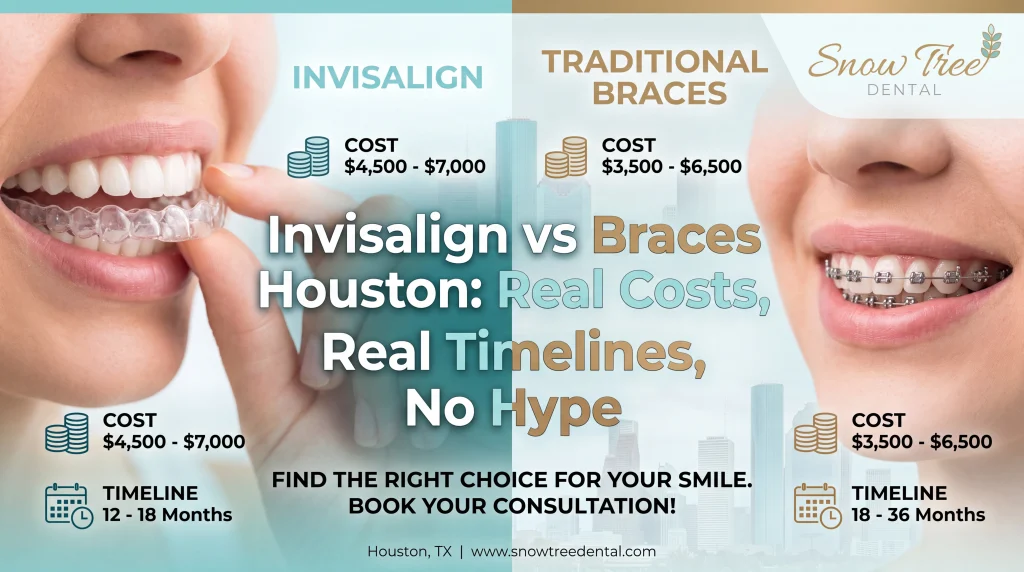
Clear aligner cost in Houston and braces pricing are often closer than people think. Your total cost reflects time, complexity, and the level of in-person oversight—not just the appliance.
Case complexity and length of treatment
- Mild spacing or crowding usually costs less than extensive bite corrections or significant rotations.
- Longer treatment often increases fees due to more visits, materials, and refinements.
Type of braces or aligners chosen
- Traditional metal braces are typically the most cost-effective fixed option.
- Ceramic or clear braces can run higher because of materials.
- Invisalign and other aligners vary by case difficulty, number of trays, and whether refinements are needed.
Insurance, HSAs/FSAs, and in-house dental plans
- Many PPO plans include orthodontic benefits for teens and sometimes adults, often with a lifetime maximum.
- HSAs/FSAs can be used for qualified orthodontic expenses, helping you save pre-tax dollars.
- We accept most major PPOs and offer an in-house dental plan that can reduce preventive and restorative costs during treatment. Our team helps you understand benefits clearly so there are no surprises.
Why “cheap” can cost more over time
- Mail-order aligners or ultra-low quotes may skip X-rays, in-person exams, and ongoing monitoring. Without proper oversight, you risk gum issues, bite problems, or relapse—often costing more to fix later.
- Choosing a trusted provider who monitors your progress and oral health protects your investment and your results.
Myth vs Fact: Cost and Speed
- Myth: “Aligners are always cheaper and faster.”
- Fact: In Houston, aligners and braces can be similar in cost. For some complex movements, braces may finish sooner; for highly compliant patients, aligners can progress efficiently. Your case—not the brand—drives both time and cost.
Aligner Treatment Timeline vs Braces Timeline
For many patients, overall timelines are comparable, but the experience differs.
Average visit frequency and check-ins
- Invisalign: Check-ins are often every 6–10 weeks and tend to be shorter. Some progress checks can be streamlined with quick in-office evaluations or photos.
- Braces: Adjustments typically occur every 4–8 weeks to change wires, add elastics, or refine details.
Attachments, refinements, and mid-course corrections
- Invisalign: Small tooth-colored attachments may be placed to help trays grip and move teeth accurately. Refinement sets are common near the end to perfect the finish.
- Braces: Power chains, elastic wear, and wire bends are used to fine-tune rotations and bite relationships as you go.
Retainers and keeping results stable
- Both paths end with retainers. Wearing them as directed is essential while bone and ligaments adapt. Consistency protects your smile long-term.
Best Candidates: Who Should Choose What?
When Invisalign is a great fit
- Mild to moderate crowding or spacing
- Adults and motivated teens who can wear trays 20–22 hours daily
- Patients prioritizing discreet treatment and straightforward hygiene
- Those with busy schedules who prefer fewer, shorter visits
When braces may be better
- Significant bite changes (overbite, underbite, open bite) requiring complex mechanics
- Noticeable rotations or vertical movements that aligners may not manage reliably alone
- Situations where compliance with removable trays could be challenging
Teen vs adult considerations
- Teens: Braces can help when aligner wear may be inconsistent; that said, many teens thrive with aligners—especially with parental support and built-in wear indicators.
- Adults: Aligners often fit well with work, travel, and special events. Adults with complex bite needs may still benefit from braces or a hybrid plan.
Lifestyle, Comfort, and Maintenance
Eating, drinking, and oral hygiene differences
- Invisalign: Remove trays for meals; water is the only beverage safe to sip with aligners in. Brush before putting trays back to avoid trapping sugars and acids. Routine brushing and flossing remain simple.
- Braces: Skip sticky, hard, and very crunchy foods. Use floss threaders, interdental brushes, or a water flosser to clean around brackets and wires thoroughly.
Speech, sports, and special events
- Invisalign: A slight lisp can appear briefly at the start; most patients adapt in a few days. For sports, remove aligners and wear a mouthguard.
- Braces: Speech is usually unchanged. A braces-compatible mouthguard is important for contact sports. For photos or big events, ceramic braces offer a lower-profile look.
Compliance and what it really takes to succeed
- Aligners: Wear trays as directed, keep them clean, and switch on schedule. Carry a case so you don’t lose aligners at meals.
- Braces: Attend adjustments, protect brackets, and keep hygiene meticulous. Follow elastic instructions to stay on timeline.
Real Experience From Our Houston Team
At our Houston office near the Galleria, we’ve helped many professionals and teens succeed with both options. One pattern we notice: frequent travelers gravitate toward aligners because check-ins can be spaced out and hygiene is simpler on the road. On the other hand, when digital X-rays reveal complex bite changes, braces often provide more predictable control. The best outcomes come from an honest conversation about lifestyle, goals, and how hands-on you want your daily routine to be.
Choosing a Provider in Houston
Why digital X-rays and intraoral cameras matter
- Digital X-rays help evaluate root positions and bone levels for safe tooth movement, while keeping exposure efficient.
- Intraoral cameras let you see what we see, so attachments, bracket positions, and hygiene tips are easy to understand.
Flexible scheduling (evenings, Saturdays) and emergency support
- Houston days are full. We offer evening and Saturday appointments to fit work and school, plus same-day emergency dentistry when possible for broken brackets, poking wires, or aligner issues.
Transparent pricing and insurance help at Snow Tree Dental
- We verify orthodontic benefits, estimate out-of-pocket costs, and explain payment options in plain language. Our in-house dental plan and acceptance of most major PPOs help make treatment more accessible. Visit Snow Tree Dental—your family and cosmetic dentist near the Galleria—to see how simple starting can be.
What to Expect at Your First Visit
Evaluation, photos, and records
- We begin with a thorough exam, digital X-rays as indicated, and photos. These records help assess tooth movement needs, gum health, and jaw relationships.
Personalized treatment plan and timeline estimate
- You’ll receive a clear plan—Invisalign, braces, or a hybrid approach—based on your case. We’ll discuss the aligner treatment timeline or braces steps, expected milestones, and how we’ll handle refinements.
Financing options and next steps
- We review insurance, HSA/FSA use, and payment options. You’ll leave knowing costs, sequence, and how to get started. Many patients begin scans or records the same day.
Tips to Make Either Option Easier
- Build new habits early: Set reminders for aligner wear or elastic changes.
- Create a travel kit: Toothbrush, travel-size toothpaste, floss, and an aligner case.
- Protect your progress: Wear retainers as directed and store them safely.
- Keep communication open: If trays feel loose early or a bracket breaks, call promptly. Small, timely tweaks keep your timeline steady.
Where Invisalign and Braces Overlap—And Where They Don’t
- Overlap: Both can straighten teeth beautifully, improve confidence, and make long-term brushing and flossing easier.
- Differences: Braces shine for big bite changes, complex rotations, and vertical movements. Aligners win on convenience, appearance, and hygiene for mild to moderate cases when compliance is strong.
Safety and Comfort: Technology That Helps
Our modern tech—digital X-rays, precise planning tools, and intraoral cameras—supports safer, more comfortable care. Gentle techniques and thoughtful appointment pacing help limit soreness and keep visits efficient, so you can get in and out around Houston traffic and school pickups.
Local Considerations for Houston Patients
- Commute-friendly scheduling: Evening and Saturday hours reduce time away from work or school.
- Galleria-area convenience: Our office at 2400 Augusta Dr. Ste #175, Houston, TX 77057 makes it easy to pair appointments with nearby errands.
- Insurance landscape: We work with most major PPOs common to Houston employers and help you maximize benefits alongside HSAs/FSAs.
Frequently Asked Questions
1) How do I choose between Invisalign vs braces in Houston?
Short answer: It depends on your case complexity, lifestyle, budget, and how consistently you can wear aligners.
Expanded answer: Aligners are great for mild to moderate cases and offer discreet, removable wear. Braces remain the most predictable choice for complex bite changes and rotations. At Snow Tree Dental in Houston, we’ll evaluate your goals and bite, then recommend Invisalign, braces, or a hybrid plan that fits your schedule and comfort.
2) How much do clear aligners cost in Houston compared with braces?
Short answer: In Houston, clear aligners and braces are often similar in total cost, depending on case complexity and treatment length.
Expanded answer: Mild spacing or crowding typically costs less than significant bite corrections. Material choices (metal vs ceramic braces) and the number of aligner trays or refinements also affect fees. We’re transparent about costs, accept most major PPOs, and help you use HSAs/FSAs.
3) What is the typical aligner treatment timeline vs braces timeline?
Short answer: Overall timelines are often comparable, but visit frequency and day-to-day experience differ.
Expanded answer: Invisalign check-ins are commonly every 6–10 weeks and are usually shorter, while braces adjustments are often every 4–8 weeks. With aligners, success depends on wearing trays 20–22 hours daily; with braces, progress relies on adjustments and following elastic instructions.
4) Am I a good candidate for Invisalign?
Short answer: Yes if you have mild to moderate crowding/spacing and can wear trays 20–22 hours a day.
Expanded answer: Invisalign fits adults and motivated teens who prioritize a discreet look and simple hygiene. If you need significant bite changes or complex rotations, braces may be more reliable. We’ll confirm candidacy with an exam, photos, and digital X-rays.
5) Will insurance cover Invisalign or braces at Snow Tree Dental?
Short answer: Many PPO plans include orthodontic benefits, and HSAs/FSAs can often be used.
Expanded answer: Coverage varies and may include a lifetime orthodontic maximum. Our Houston team verifies benefits, estimates out-of-pocket costs, and explains payment options clearly. We also offer an in-house dental plan that can reduce preventive and restorative costs during treatment.
6) How often will I need appointments?
Short answer: Invisalign often requires shorter, less frequent visits than braces.
Expanded answer: Aligners are typically checked every 6–10 weeks; braces are adjusted about every 4–8 weeks. We offer evening and Saturday appointments near the Galleria to make visits easier around work and school.
7) What if I lose an aligner or break a bracket?
Short answer: Call us promptly so we can keep your treatment on track.
Expanded answer: For a lost tray, we’ll advise you to move forward or back a set or order a replacement. For a broken bracket or poking wire, we offer same-day emergency dentistry when possible to keep you comfortable and on schedule.
8) Do Invisalign aligners hurt less than braces?
Short answer: Both can cause temporary pressure; aligners feel smooth, while braces can sometimes irritate soft tissues.
Expanded answer: With Invisalign, mild soreness often appears for a day or two with each new tray. Braces may cause brief tenderness after adjustments; wax and today’s lower-profile brackets help a lot. Either way, discomfort usually fades quickly.
9) What happens after treatment—do I need retainers?
Short answer: Yes—retainers are essential to keep your results stable.
Expanded answer: Whether you choose Invisalign or braces, you’ll wear retainers as directed while bone and ligaments adapt to new tooth positions. Consistent retainer use protects your smile long-term and reduces the chance of relapse.
10) Real-world insight: What have you seen work best for busy Houston patients?
Short answer: Frequent travelers and professionals often prefer aligners; complex bite cases do best with braces.
Expanded answer: At our Houston office near the Galleria, we’ve seen aligners fit smoothly into busy routines thanks to fewer, shorter check-ins and easy hygiene on the go. When digital X-rays reveal complex bite mechanics, braces usually offer more predictable control. The best plan comes from an honest conversation about goals, lifestyle, and daily habits.
Invisalign vs Braces Houston—Find Your Best Option
Choosing between Invisalign and braces in Houston comes down to your case complexity, lifestyle, and commitment. Aligners are discreet and convenient for many adults and teens who can wear trays as directed. Braces remain the gold standard for complex movements and when you want continuous, hands-on control. Ready to compare your options with a trusted local team? Book online with Snow Tree Dental near the Galleria or call (832) 464-3368. For more about our practice, visit Dentist in Houston, TX | Snow Tree Dental at https://snowtreedental.com/. We’ll provide a clear plan, transparent pricing, and a realistic timeline—so your next step feels easy and confident.
American Association of Orthodontists
{
“@context”: “https://schema.org”,
“@type”: “FAQPage”,
“mainEntity”: [
{
“@type”: “Question”,
“name”: “How do I choose between Invisalign vs braces in Houston?”,
“acceptedAnswer”: {
“@type”: “Answer”,
“text”: “It depends on your case complexity, lifestyle, budget, and aligner wear consistency. Aligners suit mild to moderate cases and offer discreet, removable wear, while braces are ideal for complex bite changes and rotations. At Snow Tree Dental in Houston, we’ll evaluate your goals and bite, then recommend Invisalign, braces, or a hybrid plan.”
}
},
{
“@type”: “Question”,
“name”: “How much do clear aligners cost in Houston compared with braces?”,
“acceptedAnswer”: {
“@type”: “Answer”,
“text”: “In Houston, clear aligners and braces are often similar in total cost, driven by case complexity and treatment length. Material choices (metal vs ceramic braces) and the number of aligner trays or refinements also affect fees. We’re transparent about costs, accept most major PPOs, and help you use HSAs/FSAs.”
}
},
{
“@type”: “Question”,
“name”: “What is the typical aligner treatment timeline vs braces timeline?”,
“acceptedAnswer”: {
“@type”: “Answer”,
“text”: “Overall timelines are often comparable, but visit frequency and experience differ. Invisalign check-ins are commonly every 6–10 weeks and are usually shorter; braces adjustments are often every 4–8 weeks. Aligners require 20–22 hours of daily wear, while braces rely on regular adjustments and elastic use.”
}
},
{
“@type”: “Question”,
“name”: “Am I a good candidate for Invisalign?”,
“acceptedAnswer”: {
“@type”: “Answer”,
“text”: “You may be if you have mild to moderate crowding/spacing and can wear trays 20–22 hours a day. Invisalign fits adults and motivated teens who want a discreet look and simple hygiene. For significant bite changes or complex rotations, braces may be more reliable. An exam, photos, and digital X-rays confirm candidacy.”
}
},
{
“@type”: “Question”,
“name”: “Will insurance cover Invisalign or braces at Snow Tree Dental?”,
“acceptedAnswer”: {
“@type”: “Answer”,
“text”: “Many PPO plans include orthodontic benefits, and HSAs/FSAs can often be used. Coverage varies and may include a lifetime orthodontic maximum. Our team verifies benefits, estimates out-of-pocket costs, and explains payment options. We also offer an in-house dental plan that can reduce preventive and restorative costs during treatment.”
}
},
{
“@type”: “Question”,
“name”: “How often will I need appointments?”,
“acceptedAnswer”: {
“@type”: “Answer”,
“text”: “Invisalign often requires shorter, less frequent visits—commonly every 6–10 weeks—while braces are adjusted about every 4–8 weeks. We offer evening and Saturday appointments near the Galleria to fit work and school schedules.”
}
},
{
“@type”: “Question”,
“name”: “What if I lose an aligner or break a bracket?”,
“acceptedAnswer”: {
“@type”: “Answer”,
“text”: “Call us promptly so we can keep your treatment on track. For a lost tray, we’ll advise moving forward or back a set or ordering a replacement. For a broken bracket or poking wire, we offer same-day emergency dentistry when possible.”
}
},
{
“@type”: “Question”,
“name”: “Do Invisalign aligners hurt less than braces?”,
“acceptedAnswer”: {
“@type”: “Answer”,
“text”: “Both can cause temporary pressure. Invisalign often brings mild soreness for a day or two with each new tray and feels smooth against cheeks and lips. Braces can cause brief tenderness after adjustments; wax and lower-profile brackets help reduce irritation.”
}
},
{
“@type”: “Question”,
“name”: “What happens after treatment—do I need retainers?”,
“acceptedAnswer”: {
“@type”: “Answer”,
“text”: “Yes—retainers are essential to keep results stable. Whether you choose Invisalign or braces, wearing retainers as directed lets bone and ligaments adapt to new tooth positions and reduces the chance of relapse.”
}
},
{
“@type”: “Question”,
“name”: “Real-world insight: What have you seen work best for busy Houston patients?”,
“acceptedAnswer”: {
“@type”: “Answer”,
“text”: “Frequent travelers and professionals often prefer aligners for fewer, shorter check-ins and easy hygiene, while complex bite cases do best with braces for predictable control. At our Houston office near the Galleria, we tailor recommendations to your goals, lifestyle, and daily habits.”
}
}
]
}