
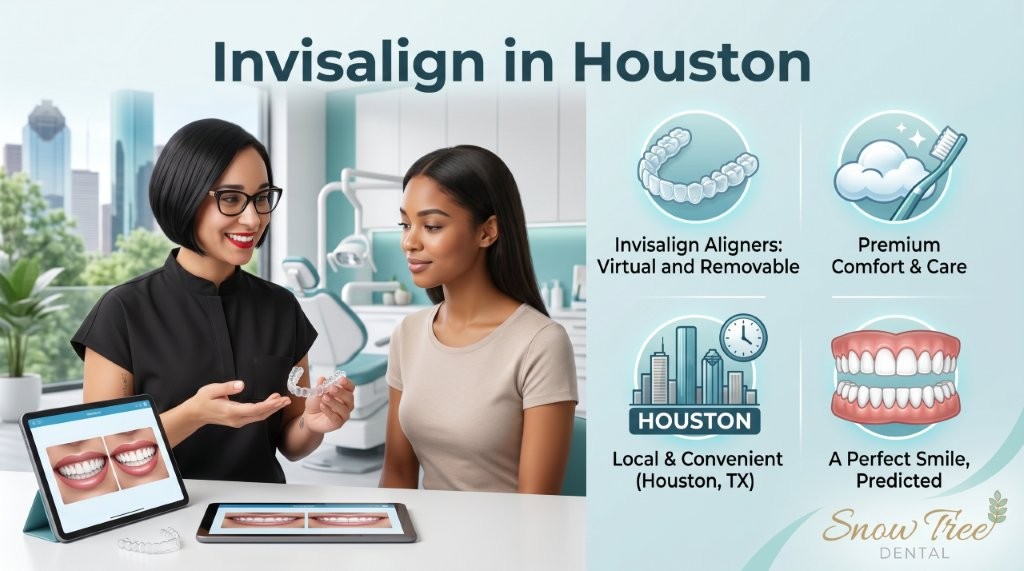
If you have been thinking about Invisalign, you may be looking for a straighter smile without traditional metal braces. Many patients like the idea of clear aligners because they are removable, discreet, and easier to fit into daily life.
Even though Invisalign looks simple, it is still a planned dental treatment that should be guided by a professional evaluation. Teeth, gums, bite alignment, oral hygiene, and daily habits all matter.
For patients considering Invisalign treatment in Houston, the first step is a careful dental evaluation. Your dentist needs to look at more than whether your teeth appear crooked. Your bite, gum health, existing dental work, and long-term oral health goals all play a role.
At Snow Tree Dental, the goal is to help patients understand whether Invisalign makes sense for their smile, their lifestyle, and their overall dental health.
Quick Answer: What Is Invisalign?
Invisalign is a clear aligner treatment that uses custom removable trays to gradually move teeth into better alignment. It may help with crowding, spacing, crooked teeth, and some bite concerns, but a dental exam is needed to confirm whether it is right for your smile.
What Is Invisalign?
Invisalign is a clear aligner system that uses a series of custom-made plastic trays to gradually move teeth into better alignment. Each aligner is designed to guide the teeth through small movements over time.
Unlike traditional braces, Invisalign aligners are removable. You take them out to eat, drink anything besides water, brush, and floss. That flexibility is one reason many adults and teens ask about Invisalign.
Patients can also review general guidance from the American Association of Orthodontists about clear aligners and orthodontic treatment.
Invisalign may be used to help with concerns such as:
- Crowded teeth
- Small gaps between teeth
- Crooked or rotated teeth
- Some bite issues
- Mild to moderate alignment concerns
- Teeth that are harder to clean because of crowding
However, Invisalign is not right for every case. Some complex bite problems or severe alignment issues may require braces or care from an orthodontic specialist. A consultation helps determine what is realistic, safe, and appropriate for your mouth.
How Invisalign Works
Invisalign treatment begins with an evaluation. Your dentist will examine your teeth, gums, bite, and overall oral health. Depending on your case and the office’s process, this may include digital scans, impressions, photos, or X-rays.
Once a treatment plan is created, you receive a series of aligners. Each set is worn as instructed before moving to the next one. The aligners apply gentle pressure to move teeth gradually.
Because the aligners are removable, patient consistency plays a major role in whether treatment stays on track.
Invisalign vs. Braces
Both Invisalign and braces are used to move teeth. The better choice depends on your needs, your bite, and your ability to follow the treatment plan.
Invisalign may be preferred when:
- The patient wants a less noticeable option
- The alignment issue is suitable for clear aligners
- The patient can wear aligners consistently
- The patient wants to remove trays for meals and brushing
Braces may be better when:
- The case is more complex
- The patient may not wear removable aligners reliably
- Certain tooth movements are needed
- A specialist recommends fixed appliances
Neither option is automatically better for everyone. A dentist Houston patients trust should explain the benefits, limitations, and responsibilities of each option clearly.
Who May Be a Good Candidate for Invisalign?
A good Invisalign candidate is usually someone with alignment concerns that can be treated with clear aligners and who is willing to follow treatment instructions carefully.
You may be a candidate if you:
- Have mild to moderate crowding or spacing
- Want a removable option
- Brush and floss consistently
- Have healthy teeth and gums
- Can wear aligners for the recommended daily time
- Understand that retainers are usually needed after treatment
Some patients need other dental care before starting Invisalign. Untreated cavities, gum disease, broken teeth, or active oral health concerns should usually be addressed first. Healthy teeth and gums give aligner treatment a better foundation.
Why Gum Health Matters Before Invisalign
Gum health is especially important before Invisalign treatment. Clear aligners fit closely over the teeth. If plaque and bacteria are not controlled well, the gums may become irritated.
Crowded teeth can also make brushing and flossing harder. Some patients become interested in Invisalign because they feel their teeth are difficult to clean. That can be a valid concern, but the gums should be evaluated before aligner treatment begins.
Before beginning treatment, your dentist may check for:
- Bleeding gums
- Gum inflammation
- Gum recession
- Deep pockets around teeth
- Bone support
- Plaque and tartar buildup
- Signs of periodontal disease
If your dentist notices bleeding, inflammation, or tartar buildup, a gum health evaluation may be recommended before starting aligner treatment. This helps create a healthier foundation for tooth movement and makes it easier to maintain your results during treatment.
What to Expect During an Invisalign Consultation in Houston
An Invisalign consultation is not just a quick yes-or-no conversation. It is a chance to understand what is happening with your teeth and whether clear aligners are a good fit for your situation.
At Snow Tree Dental, a consultation may include a review of your dental concerns, your smile goals, and your current oral health. The dentist may examine your bite, gum condition, tooth alignment, and any existing dental work.
You may discuss:
- What you want to improve
- Whether Invisalign is suitable
- Possible treatment limitations
- How often you may need check-ins
- How to care for aligners
- Whether any dental work is needed first
- What happens after treatment
For patients in Houston, it can be helpful to choose a dental office that explains the full process clearly, from the first evaluation to aligner care and post-treatment retainers.
This is also the right time to ask questions. Patients should understand the treatment before making a decision, not feel pushed into something because it sounds convenient or looks simple online.
Living With Invisalign Day to Day
Invisalign works best when it becomes part of your daily routine. The trays are removable, but they still require consistency.
Eating and Drinking
You remove Invisalign aligners before eating. This means there are no food restrictions like with traditional braces, but it also means you need to remember to put the trays back in after meals.
You should also remove aligners before drinking anything other than water. Coffee, tea, soda, and colored drinks can stain aligners or increase the risk of buildup if liquid gets trapped against the teeth.
Brushing and Flossing
Good oral hygiene matters during Invisalign treatment. Ideally, you should brush before putting aligners back in after meals. If brushing is not possible right away, rinsing your mouth and cleaning properly as soon as you can is better than ignoring it completely.
Flossing is also important, especially if crowding has made certain areas harder to clean. Invisalign treatment may improve tooth alignment over time, but it does not replace daily plaque control. There is no substitute for daily brushing and flossing during Invisalign treatment.
Cleaning Your Aligners
Aligners should be cleaned regularly. Patients should avoid hot water because heat can distort the plastic. Use the cleaning method recommended by your dental provider.
A simple practical tip: do not wrap aligners in a napkin during meals. Many patients do this once, then accidentally throw them away. Keeping the case with you makes it much easier to protect your aligners during meals.
Common Signs Invisalign May Be Worth Discussing
You may want to ask about Invisalign if you notice:
- Crowded front teeth
- Gaps between teeth
- Teeth shifting over time
- Difficulty flossing certain areas
- Bite discomfort
- Teeth that feel uneven when you close
- A smile you feel self-conscious about
These signs do not automatically mean Invisalign is the right treatment. They simply mean it may be worth bringing up during a dental visit. A dentist can help determine whether clear aligners, braces, cosmetic treatment, or another option would better match your needs.
Causes of Crooked or Crowded Teeth
Teeth can become crowded or misaligned for several reasons. Some patients have alignment concerns from childhood. Others notice changes later in life, even if they had braces or retainers years ago.
Common contributing factors may include:
- Genetics
- Jaw size and tooth size differences
- Early tooth loss
- Delayed dental care
- Previous orthodontic relapse
- Wisdom teeth concerns
- Gum disease or bone support changes
- Teeth shifting with age
Understanding the cause matters. If teeth have shifted because of gum or bone support changes, that should be evaluated carefully before starting aligners. If the issue is mild relapse after previous orthodontic treatment, the plan may look different. A dental exam helps connect the visible concern with the right treatment approach.
Treatment Options Besides Invisalign
Invisalign is one option, but it is not the only one. Depending on your needs, your dentist may discuss several possible treatment paths.
Options may include:
- Invisalign clear aligners
- Other clear aligner systems
- Traditional braces
- Cosmetic bonding for small shape concerns
- Veneers for selected cosmetic cases
- Retainers for minor relapse or maintenance
- Gum treatment before orthodontic care
- Referral to an orthodontist for complex cases
The best plan should address the reason for the concern, not just the way the teeth look. For example, a small gap may have one treatment option, while crowding connected to bite problems may need a more complete plan. This is why a personalized evaluation matters.
Practice Experience: What Patients Often Ask
At Snow Tree Dental, we often meet patients who are interested in Invisalign but are not sure whether their smile concern is “big enough” for treatment. Some patients mainly want straighter front teeth, while others are dealing with crowding that makes flossing harder. A helpful consultation looks at more than appearance. It also considers gum health, bite comfort, daily habits, and whether clear aligners fit the patient’s lifestyle.
That kind of realistic conversation matters. Invisalign can be a great option for some patients, but it should be recommended thoughtfully and with a clear understanding of what treatment can and cannot do.
Myth vs. Fact About Invisalign
Myth: Invisalign is only cosmetic.
Fact: Many patients are interested in Invisalign for cosmetic reasons, but alignment can also affect bite comfort, cleaning access, and long-term dental planning. The reason for treatment should be discussed during an exam.
Myth: Invisalign works without much effort.
Fact: Invisalign requires patient cooperation. If aligners are not worn as directed, treatment may not progress as planned.
Myth: Everyone can use Invisalign instead of braces.
Fact: Some cases are better suited for braces or specialist orthodontic treatment. The right option depends on the teeth, bite, and treatment goals.
Myth: You do not need to worry about gums during Invisalign.
Fact: Healthy gums are important before and during aligner treatment. Gum inflammation, plaque buildup, or periodontal disease may need attention first.
When to Call a Dentist
You should call a dentist if you are considering Invisalign and want to know whether you are a candidate. You should also schedule a visit if you notice gum bleeding, loose teeth, tooth pain, bite changes, or shifting teeth.
During Invisalign treatment, call your provider if:
- An aligner cracks or is lost
- A tray does not fit properly
- Pain feels unusual or severe
- Gums become swollen or painful
- You develop tooth sensitivity that does not improve
- You are unsure whether to move to the next aligner
It is better to ask early than to guess. Small problems are usually easier to manage when your dental team knows about them promptly.
FAQ About Invisalign in Houston
1. What is Invisalign?
Short answer: Invisalign is a clear aligner treatment that uses removable trays to gradually move teeth into better alignment.
Expanded answer: Invisalign uses a series of custom-made clear aligners that fit over your teeth. Each set of aligners is designed to guide the teeth through small movements over time. Many patients like Invisalign because the trays are discreet and removable, but treatment still needs proper dental planning and consistent wear.
2. Is Invisalign right for everyone?
Short answer: No. Invisalign may work well for some patients, but not every bite or alignment issue is best treated with clear aligners.
Expanded answer: Invisalign may be a good option for mild to moderate crowding, spacing, or alignment concerns. More complex bite problems may require braces or care from an orthodontic specialist. A dental evaluation helps determine whether Invisalign is appropriate for your teeth, gums, bite, and goals.
3. How do I know if I am a good candidate for Invisalign in Houston?
Short answer: A consultation is the best way to know whether Invisalign fits your smile, oral health, and daily routine.
Expanded answer: During an Invisalign consultation in Houston, your dentist can check your teeth, gums, bite, and any existing dental work. They may also review your oral hygiene habits and treatment goals. At Snow Tree Dental, Invisalign conversations often include practical questions about crowding, flossing difficulty, shifting teeth, and whether clear aligners make sense for the patient’s lifestyle.
4. Can Invisalign help with crowded teeth?
Short answer: Invisalign may help with some crowded teeth, especially mild to moderate cases.
Expanded answer: Crowded teeth are one common reason patients ask about Invisalign. Clear aligners may help create better alignment when the case is suitable. Severe crowding or complex bite concerns may need another approach, so your dentist will need to evaluate the cause and severity before recommending treatment.
5. Do I need healthy gums before Invisalign?
Short answer: Yes. Healthy gums are important before and during Invisalign treatment.
Expanded answer: Gum inflammation, bleeding, tartar buildup, or periodontal disease may need to be treated before starting Invisalign. Clear aligners fit closely over the teeth, so good plaque control matters. A healthy foundation helps make treatment planning safer and supports better oral hygiene during aligner wear.
6. Can I eat with Invisalign?
Short answer: No. Invisalign aligners should be removed before eating.
Expanded answer: You should take your aligners out before meals and snacks. This helps protect the trays from damage and staining. After eating, brush your teeth before putting the aligners back in when possible. If brushing is not possible right away, rinse your mouth and clean properly as soon as you can.
7. What can I drink while wearing Invisalign?
Short answer: Water is usually the safest drink while wearing Invisalign aligners.
Expanded answer: Coffee, tea, soda, juice, and other colored or sugary drinks can stain aligners or become trapped against the teeth. Hot drinks may also affect the shape of the plastic. Most patients are advised to remove aligners before drinking anything other than water.
8. Does Invisalign hurt?
Short answer: Invisalign may cause pressure or soreness, especially when starting a new set of aligners.
Expanded answer: Some discomfort is common when teeth begin moving or when switching to a new tray. This usually feels like pressure or mild soreness. Severe pain, sharp irritation, or discomfort that does not improve should be discussed with your dentist.
9. How do I clean Invisalign aligners?
Short answer: Clean your aligners daily using the method recommended by your dental provider.
Expanded answer: In general, aligners should be rinsed and cleaned regularly. Avoid hot water because heat can distort the plastic. Keep your aligners in their case when they are not in your mouth. Wrapping them in a napkin is a classic way to accidentally throw them away during lunch.
10. Will I need retainers after Invisalign?
Short answer: Most patients need retainers after Invisalign to help maintain their results.
Expanded answer: After teeth are moved, they can shift again over time. Retainers help hold the teeth in their new positions. Your dentist will explain what type of retainer may be recommended and how often you should wear it after treatment.
11. What should I ask before starting Invisalign?
Short answer: Ask whether you are a good candidate, whether your gums are healthy enough, and what daily care will involve.
Expanded answer: Good questions include: Is Invisalign right for my case? Do I need any dental work first? How often will I need check-ins? What happens if I lose an aligner? Will I need attachments? Will I need retainers afterward? Asking these questions helps you understand the full treatment process before starting.
12. When should I call a dentist during Invisalign treatment?
Short answer: Call your dentist if an aligner is lost, cracked, painful, or does not fit properly.
Expanded answer: You should also contact your dental provider if your gums become swollen or painful, if tooth sensitivity does not improve, or if you are unsure whether to move to the next aligner. It is better to ask early than to guess and risk disrupting treatment.
Conclusion: Is Invisalign Right for You?
Invisalign can be a helpful option for Houston patients who want to improve tooth alignment with clear, removable aligners. It may be especially appealing for adults and teens who want a discreet treatment option, but it is not right for every smile or every bite.
The best way to know is through a thoughtful dental evaluation. At Snow Tree Dental, patients can discuss their goals, gum health, bite concerns, and daily habits before deciding whether Invisalign is the right fit.
A dentist Houston families trust should explain your options clearly and help you understand both the benefits and limits of Invisalign.
If you are considering Invisalign in Houston, Snow Tree Dental can help you take the next step with a thoughtful consultation. The team will evaluate your teeth, gums, bite, and goals so you can understand whether clear aligners are the right fit for your smile and oral health.
Suggested Featured Image Alt Text
Invisalign clear aligners during a dental consultation for a Houston patient