
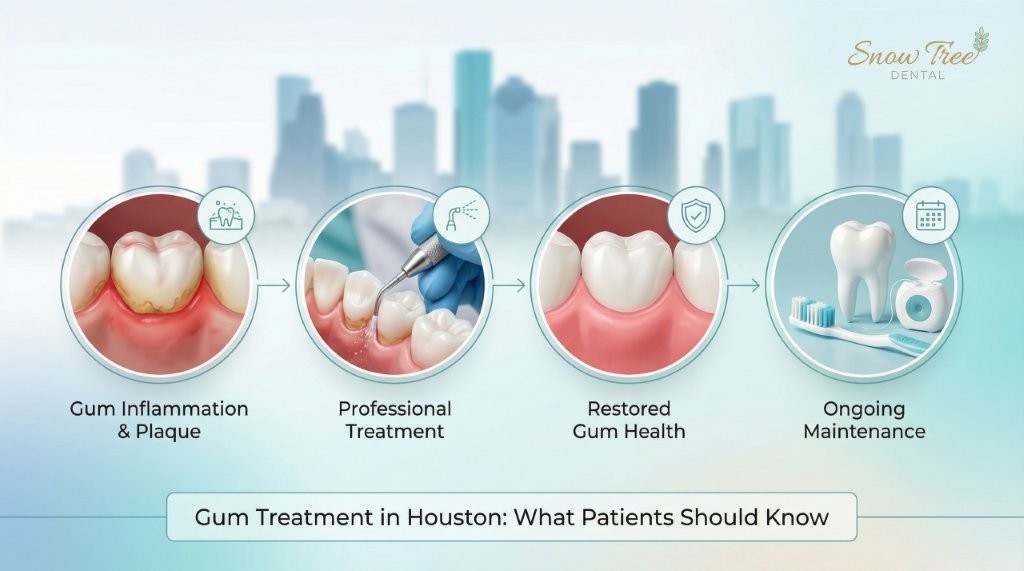
If your gums bleed when you brush, feel tender, or look slightly swollen, it may be time to consider gum treatment. Many patients assume these symptoms are minor or temporary, but they are often early signs of gum disease that should not be ignored.
For patients looking for gum treatment Houston options, the goal is not just to treat symptoms, but to understand the cause and prevent the condition from progressing. At Snow Tree Dental, we often see patients who waited longer than they expected simply because the issue didn’t feel urgent at first.
What Is Gum Disease and Why It Matters
Gum disease is an infection of the tissues that support your teeth. It typically begins with plaque buildup along the gumline and can gradually affect deeper structures if untreated.
Gingivitis: Early-stage gum disease often causes bleeding, redness, and mild swelling. At this stage, it may improve with professional cleaning and better home care.
Periodontitis: More advanced gum disease can lead to gum recession, deeper pockets, and loose teeth. This stage requires more involved gum treatment to control infection and protect long-term oral health.
Common Signs You May Need Gum Treatment
- Bleeding when brushing or flossing
- Swollen or tender gums
- Persistent bad breath
- Gums pulling away from teeth
- Sensitivity near the gumline
- Loose teeth or changes in bite
If you notice these symptoms, it’s worth having a dentist in Houston evaluate your gum health early.
Types of Gum Treatment Available
Professional Dental Cleaning: For early-stage gingivitis, routine cleaning may be enough to remove plaque and improve gum health.
Scaling and Root Planing: This deep cleaning removes buildup below the gumline and helps gums reattach to the teeth.
Targeted Medication: In some cases, localized antimicrobial treatment may be used to reduce bacteria in specific areas.
Ongoing Maintenance: Patients with a history of gum disease may benefit from more frequent cleanings to maintain stability.
Advanced Treatment: In more severe cases, referral for specialized periodontal care may be recommended.
What to Expect During Gum Treatment
Your visit typically includes an examination, gum measurements, and possibly X-rays. Based on your condition, your dentist will explain:
- The severity of gum disease
- Which areas need treatment
- How many visits may be required
- What recovery may feel like
Most treatments are well tolerated. Some temporary sensitivity is normal, but many patients notice improvement quickly after treatment begins.
How to Protect Your Gums
- Brush twice daily with a soft-bristled toothbrush
- Clean between teeth every day
- Maintain regular dental visits
- Follow personalized recommendations from your dentist
- Avoid smoking or tobacco use
Consistency matters more than perfection. Small daily habits make a significant difference in gum health.
When to See a Dentist in Houston
You should not wait if you experience:
- Frequent bleeding
- Persistent swelling
- Receding gums
- Ongoing bad breath
- Loose teeth
Early evaluation often leads to simpler and more predictable gum treatment.
For ongoing care, you can explore routine dental care options available at Snow Tree Dental.
For additional oral health information, the American Dental Association provides helpful patient resources.
What We Often See in Practice
Many patients don’t come in asking for gum treatment directly. They usually mention small concerns, like occasional bleeding or mild discomfort. After evaluation, it often becomes clear that the issue has been developing quietly for some time. When addressed early, treatment is typically simpler and more comfortable than patients expect.
Conclusion
Addressing early signs like bleeding, swelling, or sensitivity can make gum treatment more straightforward and effective. Ignoring these symptoms allows gum disease to progress quietly.
If you have concerns about your gums, Snow Tree Dental is here to help with clear guidance and a calm, patient-focused approach to care.
If something doesn’t feel right, scheduling an evaluation is a simple step that can help you protect your long-term oral health.
Frequently Asked Questions
When do I need gum treatment?
If your gums bleed, swell, or pull away from your teeth, you may need gum treatment. A dentist can evaluate your condition and recommend appropriate care.
Can gum disease go away without treatment?
Early inflammation may improve with better oral hygiene, but most cases require professional care to fully resolve.
What is the most common gum treatment?
Scaling and root planing, also known as deep cleaning, is commonly used to treat gum disease beyond early stages.
Is gum treatment painful?
Most treatments are well tolerated. Dentists use local anesthetic when needed, and any discomfort afterward is usually temporary.
How long does gum treatment take?
It depends on the severity of the condition. Some treatments require one visit, while others may need multiple appointments.
What happens if I delay gum treatment?
Delaying treatment can allow gum disease to progress, potentially leading to more complex dental issues over time.
Can gum disease be reversed?
Early stages may improve with proper care, while advanced stages are managed to prevent further progression.
How do I prevent gum disease from returning?
Good daily oral hygiene and regular dental visits are essential to maintaining healthy gums.