

Dental Extractions Houston: Safe & Swift 2025
Understanding When You Need Dental Extractions in Houston
Dental extractions Houston services are available throughout the city for both emergency and routine tooth removal. Whether for severe pain, impacted wisdom teeth, or orthodontics, Houston dentists offer comprehensive services with modern anesthesia and sedation.
Top dental extraction providers in Houston:
- Emergency extractions: Available same-day for severe pain or trauma
- Routine extractions: Scheduled procedures for damaged or crowded teeth
- Wisdom tooth removal: Specialized surgical extractions for impacted molars
- Cost range: $100-$650 depending on extraction type and anesthesia
- Insurance coverage: Most PPO and HMO plans cover 50-80% of extraction costs
Extraction is necessary when a tooth is too damaged by decay, infection, or trauma to be saved. Research shows that untreated tooth decay affects 1 in 5 adults, often leading to the need for extraction. Modern dental techniques have made extractions virtually painless—patients typically feel only pressure, not pain.
The two main types are simple extractions for visible teeth and surgical extractions for impacted or broken teeth below the gum line. While the thought of extraction can cause anxiety, modern anesthesia and sedation ensure patient comfort.
As Dr. Muna Mohammad at Snow Tree Dental, I’ve helped countless Houston patients with dental extractions Houston. We always prioritize patient comfort and aftercare, as proper technique and post-op care lead to faster healing and better outcomes.
Why You Might Need a Tooth Extraction
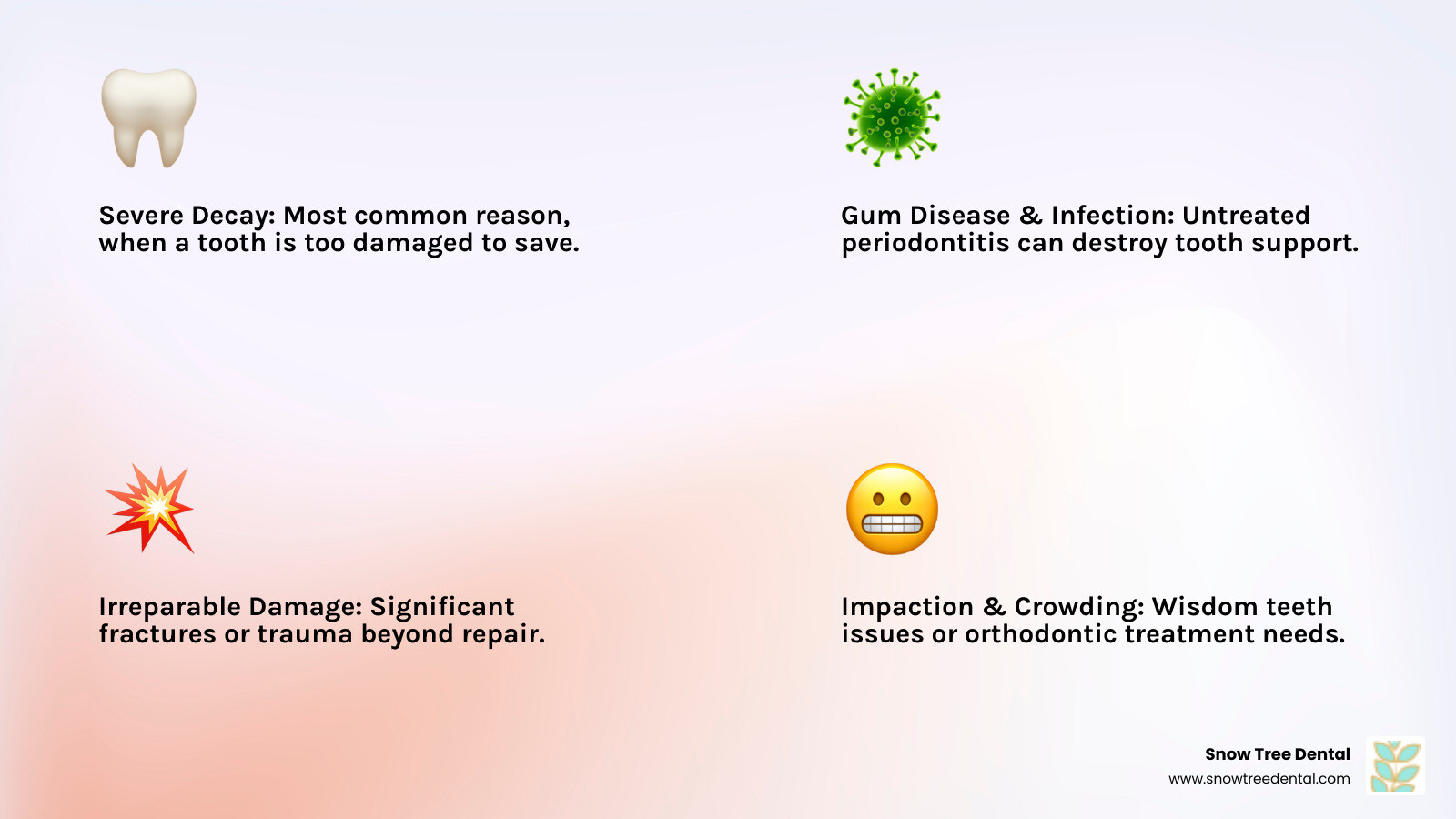
At Snow Tree Dental, we always try to save a tooth. However, sometimes an extraction is the best way to prevent bigger problems and protect your oral health. Dental extractions Houston procedures are a necessary last resort when a tooth threatens your overall oral health.
Severe tooth decay is a top reason. When decay is too extensive for restorative efforts, extraction prevents the infection from spreading to other teeth.
Advanced gum disease (periodontitis) is another cause. This condition destroys the bone supporting your teeth. When a tooth becomes too loose, extraction is often needed to protect the remaining teeth and gums.
Irreparable tooth damage from accidents or injuries can crack a tooth beyond repair, especially below the gum line. Extraction is then the best path to pain relief.
Orthodontic treatment occasionally requires removing a tooth to create space for proper alignment, helping the rest find their perfect positions for a healthier smile.
Impacted wisdom teeth are one of the most common reasons for surgical extractions.
Many extractions are preventable with good oral hygiene and regular dental visits. Our preventative care focuses on catching problems early.
Signs You Might Need a Dental Extraction in Houston
Recognizing the warning signs can help you get care before a small problem becomes an emergency.
Persistent severe pain that doesn’t respond to pain relievers often signals deep trouble. This is pain that might keep you awake at night.
Swelling in your gums, especially around one tooth, often indicates an infection under the surface.
An abscess or visible infection requires immediate attention. These pus-filled bumps on your gums signal an infection that may require more than just antibiotics.
Difficulty chewing or sharp pain when you bite down suggests a structural problem with your tooth.
A visibly broken or damaged tooth, especially one cracked below the gum line, often can’t be restored.
Don’t wait with these symptoms. Discomfort can escalate into a more complicated and expensive emergency.
The Special Case of Wisdom Teeth
Wisdom teeth, or third molars, typically emerge in your late teens or early twenties. By the time they appear, your jaw is often full, leaving no room for them.
Impaction issues occur when there isn’t enough room. They can grow in sideways, at an angle, or get stuck (impacted) under the gum, creating a domino effect of problems.
The risk of infection or damage to adjacent teeth is high with impacted wisdom teeth. Partially erupted wisdom teeth are hard to clean, creating a haven for bacteria that can lead to infection, pain, and bad breath. They can also push against adjacent molars, potentially causing decay, damage, or shifting.
Prophylactic removal—taking them out before they cause problems—often makes sense. Removal is easier in younger patients because the roots are not fully formed, leading to faster, more comfortable healing.
At Snow Tree Dental, we specialize in wisdom tooth extractions. Learn more about extractions at Snow Tree Dental to see how our modern techniques make even surgical procedures surprisingly comfortable.
The Process for Dental Extractions in Houston: What to Expect
Thinking about a tooth removal can be overwhelming. At Snow Tree Dental, we want you to know what to expect so you can feel confident and prepared for your dental extractions Houston procedure.

Consultation and Examination
Your journey starts with a consultation where we’ll discuss your symptoms, medical history, and any concerns. This is your chance to ask questions.
Digital X-rays are our next step. These detailed images show us the tooth’s roots, surrounding bone, and nearby nerves, acting as our roadmap for a precise extraction.
We’ll also perform a direct oral exam to check the tooth and your gums. This helps us choose the best extraction method for you. Patient comfort is woven into every step, and we want you to feel heard, understood, and at ease.
Simple vs. Surgical Extractions
Not all extractions are the same. The type you need depends on your tooth’s condition and position.
| Feature | Simple Extraction | Surgical Extraction |
|---|---|---|
| Tooth Visibility | Visible above the gum line | Not fully erupted, broken below the gum line, or impacted |
| Anesthesia | Typically local anesthetic | Local anesthetic often combined with IV sedation or general anesthesia |
| Procedure | Tooth loosened with an elevator, then removed with forceps | Incision made in the gum, sometimes bone removed, tooth may be sectioned, then removed; stitches often required |
| Complexity | Less complex, quicker procedure | More complex, requires more time and specialized instruments |
| Recovery | Generally quicker (3-5 days) | Potentially longer (1-2 weeks), higher risk of dry socket (up to 30% for wisdom teeth) |
| Examples | Severely decayed tooth, loose tooth, some orthodontic extractions | Impacted wisdom teeth, fractured tooth below gum line, teeth with unusual root anatomy |
Simple extractions are for teeth we can see and access easily. We numb the area, gently loosen the tooth, and remove it. Most patients are surprised by how quick this process is.
Surgical extractions are needed when a tooth is below the gum line or impacted. This requires a small incision in the gum. Sometimes we remove a bit of bone or section the tooth for easier removal. You won’t feel any of this.
Preparing for Your Procedure
Good preparation makes a difference in your recovery. We’ll provide specific instructions, but here’s what’s typically involved.
Your medical history review is crucial. We need to know about all medications you’re taking, especially blood thinners, as we may need to coordinate with your physician.
If you have an active infection, we might prescribe antibiotics beforehand. While these calm the infection, removing the tooth is the permanent solution.
Arranging a ride home is essential if you choose sedation. You’ll be drowsy afterward, so driving isn’t safe. Please arrange for a friend or family member to drive you home.
We’ll also give you pre-procedure instructions about eating and drinking, especially for sedation. Following these guidelines ensures a smooth procedure. Financial concerns shouldn’t add stress; we offer various payment options. Check out more information on financing your procedure.
Anesthesia and Sedation Options
We have several options to ensure you are relaxed and pain-free during your extraction.
Local anesthetic is our standard. We numb the area completely, so you won’t feel pain, only some pressure or movement.
For anxious patients or complex extractions, IV sedation can be a game-changer. This puts you in a deeply relaxed, sleep-like state. Many patients barely remember the procedure afterward.
Nitrous oxide, or laughing gas, is a gentle option that helps you relax while staying fully conscious. It’s ideal for patients who need help with anxiety.
We’ll discuss which option is best for you, tailoring the approach to your needs.
Aftercare: Recovery and Tooth Replacement
Proper aftercare is key to a smooth recovery. Following post-op instructions directly impacts how quickly you heal. Here’s what to expect for the best possible healing.

Immediate Post-Op Care
After your dental extractions Houston procedure, bite down firmly on the provided gauze for at least 30 minutes. This pressure is essential to form a blood clot, which acts as nature’s bandage for healing.
Slight bleeding or pinkish saliva is normal for 24-48 hours. If you experience heavy bleeding after a few hours, call us immediately.
Managing swelling is your next priority. Apply an ice pack to your cheek (20 minutes on, 20 minutes off) for the first day or two to minimize swelling and improve comfort.
For pain management, we will prescribe or recommend pain medication. Pain is typically worst in the first 24-48 hours and then improves.
Your Recovery Timeline and Best Practices
Recovery varies, but the first 24-48 hours are critical for healing.
During this time, stick to a soft food diet like yogurt, lukewarm soup, and smoothies. Avoid hard, crunchy, spicy, or hot foods for the first few days.
I cannot stress this enough: avoid using straws for at least 48 hours. The sucking motion can dislodge the blood clot, leading to a painful condition called “dry socket.”
For oral hygiene care, gently brush your teeth but avoid the extraction site. Don’t rinse vigorously for 24 hours. Afterward, gentle salt water rinses can help keep the area clean. Avoid commercial mouthwashes for at least 48 hours, as they can cause irritation.
Dry socket prevention is crucial. This complication occurs in about 0.5-5.6% of simple extractions and up to 30% of surgical wisdom tooth removals. It’s painful because the protective blood clot is lost, exposing the bone. Following our instructions, especially avoiding straws and smoking, is your best defense.
Most patients find that complete healing of the gums after a tooth extraction takes about 2-6 weeks for the surface tissue. The underlying bone takes several months to heal.
Replacing Your Tooth After a Dental Extraction in Houston
After healing, we must discuss replacing the tooth. A gap isn’t just cosmetic; it can cause adjacent teeth to shift, affecting your bite and making cleaning difficult.
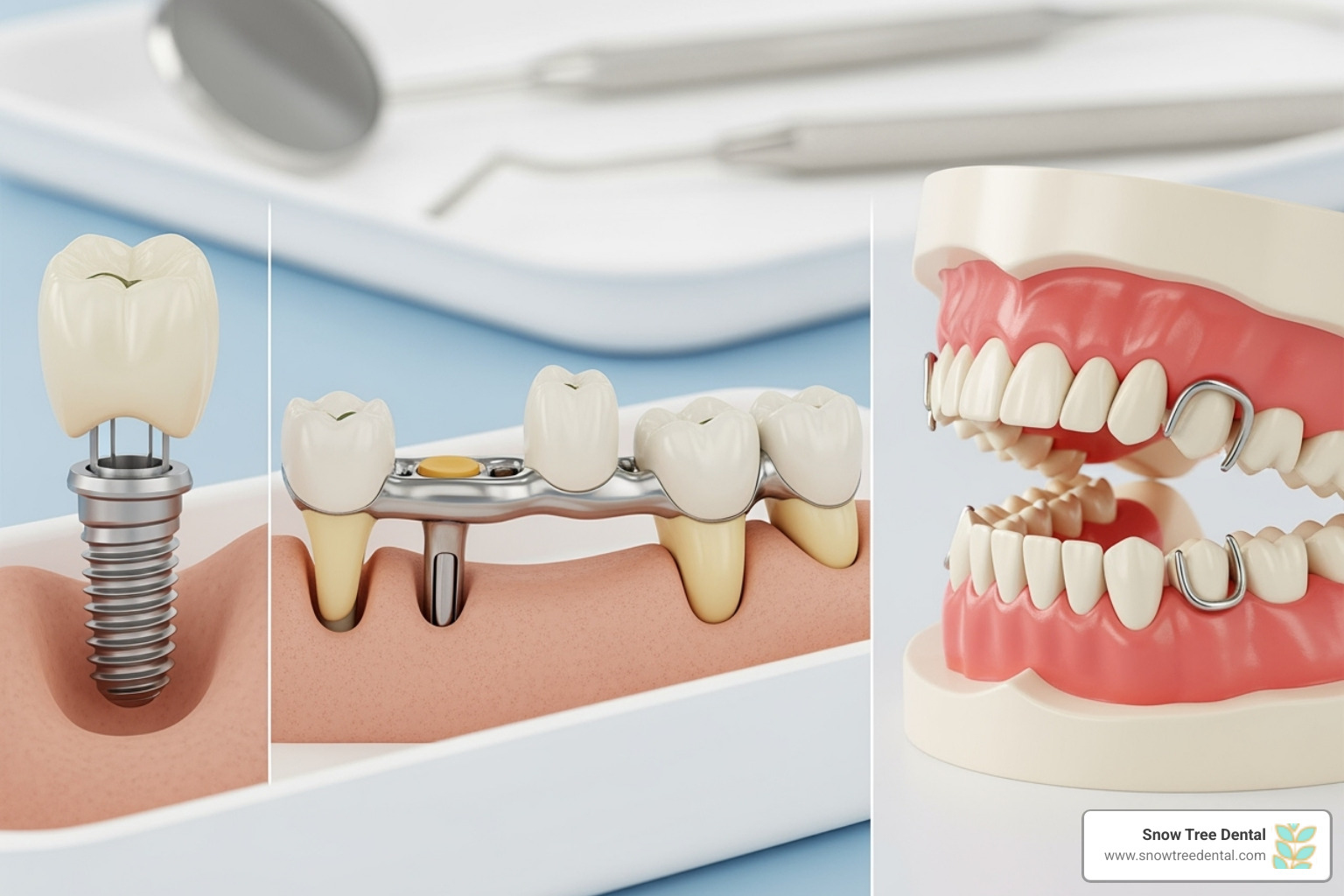
Dental implants are the gold standard. We place a titanium post into the jawbone. After it integrates with the bone (3-6 months), we attach a crown that looks and functions like a natural tooth. Implants also help prevent bone loss that occurs after an extraction.
Dental bridges are another excellent option. A bridge uses an artificial tooth supported by crowns on adjacent teeth. It’s a fixed solution that restores chewing function and prevents shifting.
For patients missing multiple teeth, partial dentures can be a cost-effective solution. Modern partials are comfortable, natural-looking, and removable for easy cleaning.
The importance of replacing missing teeth is crucial for long-term oral health. We’ll discuss all options to find the best solution for your needs and budget.
Explore our Cosmetic Dentistry Services to see how we can help you achieve a complete, beautiful smile.
Frequently Asked Questions about Tooth Extractions
Having a tooth pulled brings up many questions. I’ve helped countless Houston patients and have heard them all. Let me address the most common ones to put your mind at ease.
Is a tooth extraction painful?
This is the most common question. The answer is no; dental extractions Houston procedures shouldn’t be painful with proper anesthesia. You might feel some pressure or a wiggling sensation, but not pain. The nerves that sense pressure aren’t blocked, which helps us work effectively while you remain comfortable.
For patients who feel anxious, we offer sedation dentistry. Nitrous oxide (laughing gas) helps you relax, while IV sedation can make you feel like you slept through it. Many patients barely remember the procedure.
Afterward, you’ll likely experience some manageable discomfort. We provide detailed instructions for post-procedure discomfort management. Most significant pain subsides within a day or two. Your comfort is my top priority. More about our general dentistry services and how we prioritize your comfort.
How much does a tooth extraction cost in Houston?
Cost is a common concern. The good news is that extractions are affordable, especially considering they prevent more expensive problems later. Cost depends on several factors. Simple extractions cost less than surgical extractions. The anesthesia type also affects the price; IV sedation adds to the total cost.
In Houston, you can expect to pay between $100 and $350 for simple extractions. Surgical extractions, like impacted wisdom teeth removal, typically range from $200 to $650. Prices vary based on the tooth’s location and complexity.
Most dental insurance plans cover 50% to 80% of the cost. If you have a PPO plan, your out-of-pocket expense will likely be just $100 to $200.
We believe in transparent pricing and will provide a clear cost estimate. We also offer flexible payment options and an in-house dental plan to make care accessible. Check out our insurance information to learn more.
Is it dangerous to have a tooth pulled?
It’s understandable to be concerned about risks. The truth is that tooth extraction is a minor surgery we perform routinely with an excellent safety record. Serious complications are extremely rare.
The most common issues are manageable: bleeding (controlled with gauze), swelling (managed with ice), and temporary pain (controlled with medication). Dry socket can occur but is preventable and treatable. Infection is uncommon but possible, which is why we provide detailed cleaning guidance.
Very rarely, there’s a small risk of nerve damage. This is why we take detailed X-rays to plan your extraction precisely and avoid complications.
Regarding sedation safety, risks are minimal when administered by trained professionals. Research shows that severe complications during dental sedation occur in fewer than 1 in 365,000 cases—making it statistically safer than driving to our office! I always discuss potential risks specific to your case, ensuring you feel informed and confident. You can read more about the low risk of injury during sedation.
Your Partner for a Healthy Smile in Houston
While no one looks forward to it, a dental extractions Houston procedure is sometimes exactly what your smile needs. Think of it as a health-restoring step; once it’s done, relief and healing can begin.
At Snow Tree Dental, we understand that dental anxiety is real. Dr. Mohammad and our team have helped countless Houston patients, always putting your comfort and well-being first.
What sets us apart is our genuine care. Our flexible scheduling includes evenings, Saturdays, and same-day emergency appointments, because pain doesn’t keep business hours.
We believe quality dental care should be affordable. We offer transparent pricing and an in-house dental plan to make care accessible, especially for those without traditional insurance. We want to remove barriers to the care you need.
The journey doesn’t end with the extraction. We’re here to help you explore replacement options that fit your lifestyle and budget. From implants to bridges, we’ll help restore your smile’s function and confidence. Restore your smile with our cosmetic dentistry options.
Don’t let pain or anxiety keep you from the care you deserve. We’re your partners in maintaining a healthy, happy smile. Ready to take the next step? We’re here when you need us.