

Dental care without insurance: 5 Ways to Save in 2025
Navigating Dental Care Without Insurance
If you need dental care without insurance, you have options. Many people face high dental costs, with one in three American adults lacking dental insurance. This means finding affordable care can feel overwhelming.
Here’s a quick overview of places to find dental care without insurance:
| Option | What it Offers |
|---|---|
| Dental Schools | Reduced-cost care by students under supervision. |
| Public/Community Clinics | Low fixed prices or fees based on your income. |
| Charities/Non-profits | Free or very low-cost services, often with eligibility. |
| Government Programs | Coverage for low-income individuals or families (e.g., Medicaid). |
| Dental Savings Plans | Discounts on services for a yearly membership fee. |
Cost is the number one reason Americans don’t get regular dental care. But you don’t have to skip necessary treatment. This guide will help you understand the options available. We’ll show you how to access quality dental services without traditional insurance.
As a dentist, I often see patients struggling with these very concerns. Dr. Muna Mohammad, a dentist in Houston, TX, works to help patients receive the dental care without insurance they need by customizing treatment plans and staying updated on the latest research.
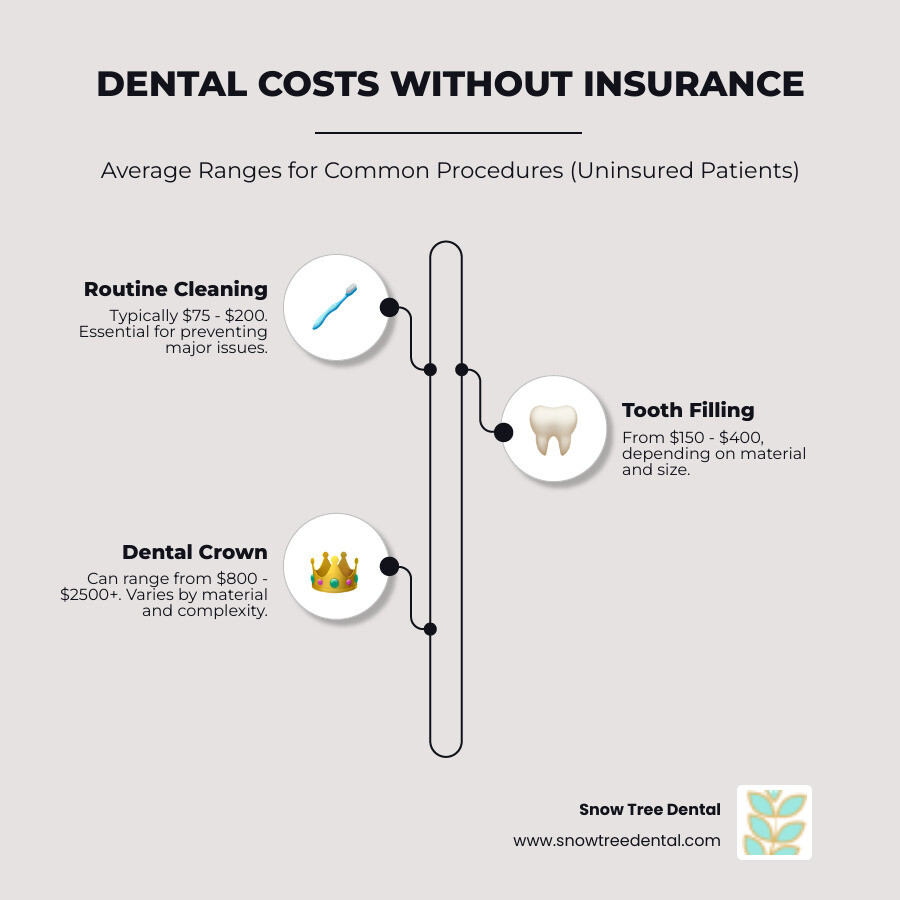
Community and Public Resources for Dental Care Without Insurance
When you’re looking for dental care without insurance, your local community often holds the key to affordable solutions. It’s heartening to know that countless organizations, clinics, and volunteers are working hard to make sure everyone has access to essential dental services, regardless of their insurance status.
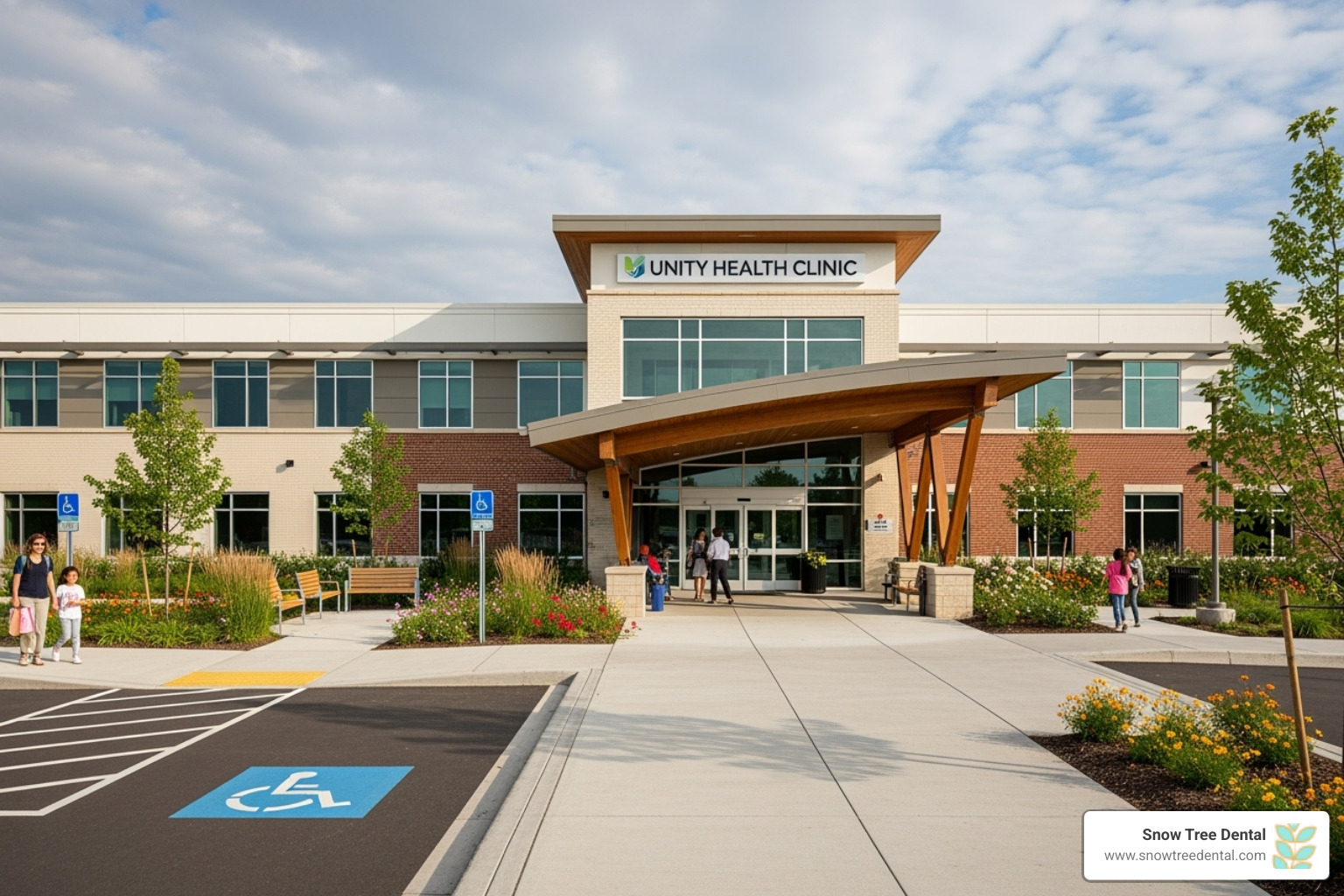
These community resources come in many forms. You’ll find public health clinics funded by taxpayers, non-profit organizations driven by mission rather than profit, and volunteer-led programs where dental professionals donate their time and expertise. While each program has its own eligibility requirements and application process, they all share one important goal: helping people get the dental care they need without breaking the bank.
The beauty of these programs is that they’re designed with real people in mind. They understand that dental emergencies don’t wait for your next paycheck, and that preventive care shouldn’t be a luxury. Let’s explore the different types of community resources available to you.
Find Affordable Care at Dental Schools
Here’s something many people don’t realize: some of the best dental care without insurance happens right on college campuses. Dental schools need patients for their students to practice on, and you need affordable care. It’s actually a perfect match.
These aren’t beginners working on their own, though. Every single procedure is carefully supervised by experienced, licensed dentists who guide students through each step. Think of it as getting two dentists for the price of one – the student doing the work and the professor making sure everything is done correctly.
The savings can be impressive. You might pay half or even less than what you’d pay at a regular dental office for services like fillings and root canals. The trade-off? Your appointment will likely take longer. Students are learning, so they work more slowly and check with their supervisors frequently. But that extra time often means extra attention to detail.
Most dental schools offer a full range of services. You can get routine cleanings, fillings, crowns, and even complex procedures like root canals. The quality is excellent because everything is double-checked by faculty members who want their students to succeed.
To find a dental school near you, Find an accredited dental program near you through the official directory. It’s worth calling even if the school seems far away – the savings might make the drive worthwhile.
Use Public and Community Dental Clinics
Public and community dental clinics are true community heroes when it comes to providing dental care without insurance. These clinics are often run by health departments or community health centers, and they’re specifically designed to serve people who might otherwise go without care.
What makes these clinics special is their flexible approach to pricing. Many use something called sliding-scale fees, which means they adjust your cost based on what you can actually afford to pay. If you’re unemployed or working part-time, you’ll pay less than someone with a full-time job. Some clinics even offer fixed low prices for common procedures, so you know exactly what to expect.
The services at these clinics cover most of what you’d need for basic dental health: comprehensive exams and consultations, X-rays to spot problems early, routine cleanings and deeper cleanings for gum health, fillings to fix cavities, simple tooth extractions when necessary, and sometimes more advanced treatments like root canals or crowns at reduced rates.
These clinics understand that dental problems don’t discriminate based on income. They’re staffed by caring professionals who chose to work in community health because they believe everyone deserves quality dental care.
Finding these clinics is easier than you might think. United Way’s 211 service is an excellent starting point. They maintain comprehensive directories of local assistance programs, including dental clinics in your area. You can Find local assistance through United Way’s 211 service or simply dial 2-1-1 from any phone.
Explore Charitable and Community-Based Dental Programs
Sometimes the most heartwarming examples of dental care without insurance come from charitable programs and community initiatives. These programs are powered by volunteers – dentists, hygienists, and support staff who donate their time because they believe oral health is a basic human right.
These charitable programs take many different forms. Some operate permanent free clinics in partnership with dental schools or community organizations. Others coordinate donated services, connecting eligible patients with volunteer dentists in private practices. You’ll also find mobile clinics and large-scale community dental events that might set up at fairgrounds or schools for a weekend, treating hundreds of patients at no cost.
Faith-based groups and professional dental organizations often spearhead these efforts. They might focus on specific populations – seniors over 65, people with permanent disabilities, or individuals with serious medical conditions. The eligibility requirements exist not to exclude people, but to help programs serve those with the greatest need when resources are limited.
It’s important to know that these programs are incredibly popular, which means waitlists can be long and spots fill up quickly. Some programs have income requirements or other eligibility criteria. But for those who qualify, the care provided is often comprehensive and can be truly life-changing.
Community dental events are particularly exciting because they can treat large numbers of people in a short time. These events often don’t require extensive paperwork or proof of income – they’re designed to help anyone who shows up and needs care.
To learn more about how these programs work and find opportunities in your area, Learn about donated dental services and similar charitable initiatives. Even if you don’t qualify for one program, they often know about other resources that might be a better fit.
Government Programs and Insurance Alternatives
Navigating the landscape of dental care without insurance can feel like a complex puzzle, but understanding government programs and various insurance alternatives is key to finding affordable solutions. These options can provide a safety net or a cost-effective pathway to maintaining your oral health, often offering a different structure than traditional dental insurance.

Whether it’s federal and state aid or membership-based savings plans, knowing your options empowers you to make informed financial decisions about your dental care. We’ll dig into what government support might be available and how alternative plans can offer significant savings.
Check Your Eligibility for Government Dental Programs
For many low-income individuals and families, government programs offer crucial access to dental care without insurance. The two primary federal-state programs in the U.S. that provide dental benefits are Medicaid and the Children’s Health Insurance Program (CHIP).
- Medicaid: This program, designed for low-income Americans, typically covers comprehensive dental care for children. For adults, however, dental coverage varies significantly by state. Some states offer extensive adult dental benefits, while others provide very limited or only emergency services. It’s essential to check your state’s specific Medicaid guidelines to understand what dental services are covered for adults.
- Children’s Health Insurance Program (CHIP): CHIP provides low-cost health coverage, including dental, to children in families who earn too much money to qualify for Medicaid but cannot afford private insurance. Like Medicaid, the specifics of CHIP dental benefits can vary by state, but generally, they are quite comprehensive for children’s oral health needs.
Beyond these, some states might have specific programs for certain populations or conditions. For example, some government programs might specifically target the oral health needs of older adults. According to the U.S. Centers for Disease Control and Prevention (CDC), nearly one in five Americans over age 65 have untreated tooth decay, and 66% have gum disease. The importance of dental care for seniors is paramount for overall health. To find More info about oral health for older adults from the CDC, you can visit their website.
It’s worth noting that some countries, like Canada, have introduced broader government dental care plans, such as the Canadian Dental Care Plan (CDCP). While this is a Canadian initiative, it highlights a global trend towards government-supported dental care to reduce financial barriers. Such plans often have staggered rollouts and income-based co-payments, but they aim to make quality dental care more accessible to a wider population.
Understanding Dental Savings Plans vs. Traditional Insurance
When exploring options for dental care without insurance, you’ll often encounter “dental savings plans.” It’s crucial to understand how these differ from traditional dental insurance, as they operate on fundamentally different principles.
Traditional Dental Insurance
Dental insurance works much like health insurance. You pay a monthly premium, and in return, the insurance company covers a percentage of your dental costs, typically after you’ve met a deductible. Most plans cover preventive care (cleanings, exams) at 100%, basic procedures (fillings) at 70-80%, and major procedures (crowns, root canals) at 50%. However, most dental insurance plans also have:
- Waiting Periods: You might have to wait months before coverage for major procedures kicks in.
- Annual Maximums: There’s usually a cap on how much the insurance company will pay out in a year, often around $1,000 to $2,000.
- Deductibles: An amount you must pay out-of-pocket before your insurance starts covering costs.
Dental Savings Plans
These are not insurance. Instead, they are membership programs where you pay an annual fee (often less than $150 for a family). In exchange, you gain access to a network of dentists who agree to provide services at a discounted rate, typically 10% to 60% off their usual fees. Think of it like a wholesale club membership for dental care.
Here’s a quick comparison:
| Feature | Dental Savings Plan | Traditional Dental Insurance |
|---|