
Bleeding Gums in Houston: Causes, Home Care, and When to See a Dentist
What Does It Mean If Your Gums Are Bleeding?
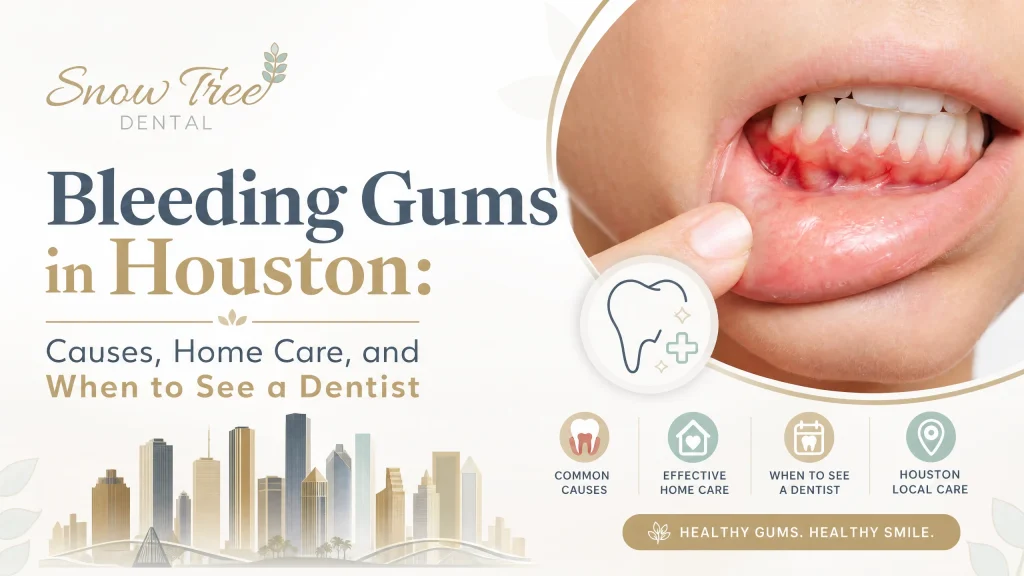
If you’re noticing bleeding gums in Houston, your mouth is telling you something needs attention. The most common reason is gingivitis—early, reversible inflammation caused by plaque along the gumline. Light, occasional bleeding can also happen if you just started flossing again, switched to a stiffer brush, or brushed a little too hard. But when bleeding keeps coming back, it may signal gum disease and is worth a professional exam and cleaning with a trusted dentist in Houston (https://snowtreedental.com/).
Bleeding Gums in Houston: What’s Normal vs. Not
- Normal: A day or two of light bleeding after you resume flossing or if you pressed too hard while brushing.
- Not normal: Bleeding that lasts more than a week, gums that look shiny and swollen, bleeding that happens even when you’re not brushing, or bleeding paired with pain, pus, or loose teeth.
Common signs that point to gingivitis or early gum disease
- Gums that bleed when brushing or flossing
- Red, puffy, or tender gum tissue
- Bad breath that doesn’t improve with brushing
- Mild gum soreness or sensitivity around the gumline
Most Common Causes of Bleeding Gums
Plaque buildup and gingivitis
Plaque is a sticky film of bacteria. When it sits on your teeth and along the gums, it irritates the tissue and triggers bleeding. If not removed with daily brushing and flossing, plaque can harden into tartar (calculus), which requires a professional cleaning to remove.
Brushing or flossing technique (too hard or too little)
Scrubbing with a hard-bristled brush or snapping floss can irritate gums. On the flip side, infrequent flossing leaves the gumline inflamed and more likely to bleed. Aim for the sweet spot: a soft brush, gentle circular motions, and daily flossing with light pressure.
Swollen gums from illness, medications, or dry mouth
Colds, allergies, and many common medications (including some that reduce saliva) can leave your gums dry and irritated. With less saliva, there’s less natural cleansing, more plaque buildup, and more bleeding. Staying hydrated and using saliva-supporting rinses can help.
Hormonal changes (pregnancy, puberty) and systemic factors (diabetes, smoking)
Hormonal shifts can make gums more reactive to plaque—pregnancy gingivitis is especially common. Diabetes can affect healing and increase gum inflammation. Smoking and vaping reduce blood flow to gum tissue and make bleeding and gum disease more likely.
Dental restorations or appliances irritating the gums
A rough edge on a filling, an overhanging crown, or an ill-fitting retainer can trap plaque or rub the gumline. If the same spot bleeds again and again, ask us to check for mechanical irritation.
Safe Home Care for Bleeding or Swollen Gums
Gentle brushing, flossing, and technique tips
- Use a soft-bristled manual or electric brush.
- Angle at 45 degrees toward the gumline; use short, light circles for two minutes twice daily.
- Floss once a day. Glide gently under the gumline and hug the side of each tooth in a “C” shape.
- Try interdental brushes or water flossers if string floss is tricky.
Antimicrobial or fluoride mouthrinses: what to look for
- Choose alcohol-free rinses to avoid drying your gums.
- Antimicrobial rinses can help reduce bacteria around the gums.
- Fluoride rinses strengthen enamel if you’re also managing sensitivity or early decay.
Warm saltwater rinses and hydration
A warm saltwater rinse (½ teaspoon salt in a cup of warm water) a couple of times a day can calm irritated gums. Sip water regularly to support saliva and natural cleansing—especially helpful in Houston’s heat.
Nutrition and lifestyle habits that support periodontal health
- Focus on produce, lean proteins, and high-fiber foods that help disrupt plaque.
- Limit frequent sugary snacks and acidic drinks that feed bacteria.
- If you smoke or vape, consider a quit plan—your gums and overall health will thank you.
When to pause harsh whitening or abrasive products
If your gums are already tender, hit pause on strong whitening gels or gritty pastes that can worsen irritation. Once bleeding resolves and your dentist gives the okay, reintroduce these products slowly and with careful technique. For a deeper look at whitening options, see Teeth Whitening in Houston: In-Office vs. Take-Home Trays and How to Keep Results Bright: https://www.snowtreedental.com/?p=3360
Myth vs. fact: A quick note on bleeding gums
- Myth: “If my gums bleed, I should stop flossing.”
Fact: Gentle daily flossing helps bleeding improve in most early cases. - Myth: “A hard brush cleans better.”
Fact: A soft brush with light pressure cleans effectively and is safer for gums.
Gum Disease Symptoms You Shouldn’t Ignore
Persistent bleeding, tenderness, bad breath, and gum recession
If bleeding continues despite careful home care, or you notice gum tenderness, a bad taste, or gums that look like they’re pulling back from the teeth, it’s time to schedule a visit.
Loose teeth or changes in your bite
Movement in teeth, new spaces opening, or a bite that feels different can point to more advanced periodontal issues that need prompt evaluation.
Puffy, red, or shiny gums vs. healthy pink, firm gums
Healthy gums are firm and coral pink (or darker brown/gray, depending on natural pigmentation). Gums that look puffy, fiery red, or shiny are inflamed and more likely to bleed.
Gingivitis Treatment in Houston: What to Expect at Snow Tree Dental
Gentle exam, periodontal charting, and low-radiation digital X-rays
We start with a kind, thorough exam to understand what’s causing your bleeding gums. Periodontal charting measures the health of your gum pockets, and low-radiation digital X-rays help us check for tartar below the gumline and bone levels. Intraoral cameras let you see what we see, so every step makes sense.
Professional cleaning vs. deep cleaning (scaling and root planing)
- Professional cleaning: For gingivitis and routine maintenance, we remove plaque and tartar above the gumline and polish your teeth—often enough to calm early bleeding when paired with great home care.
- Deep cleaning: If pockets are deeper or there’s tartar below the gumline, scaling and root planing thoroughly cleans these areas and smooths root surfaces to help gums reattach and inflammation subside.
Personalized home-care plan and follow-ups
You’ll leave with technique coaching, product recommendations that fit your needs, and a practical schedule for follow-up care. Many patients benefit from a short-term recheck to confirm bleeding has resolved.
When to See a Dentist for Bleeding Gums
Red flags that need prompt care (pain, swelling, fever, pus, loose teeth)
If bleeding is paired with facial swelling, significant pain, fever, or pus, contact us right away for same-day emergency guidance. You can also learn immediate steps in our post Emergency Dentist in Houston Near the Galleria: What To Do Right Now for a Broken or Knocked-Out Tooth: https://www.snowtreedental.com/?p=3355
If bleeding gums come with a severe toothache, see Toothache in Houston: When to See an Emergency Dentist and What You Can Do Now: https://www.snowtreedental.com/?p=3352
If bleeding lasts more than a week despite good home care
Seven to ten days of careful brushing and flossing should reduce mild bleeding. If it doesn’t, a professional cleaning and targeted plan are the next best steps.
Pregnancy, diabetes, or a new medication and gum changes
If you’re pregnant, managing diabetes, or notice new bleeding after starting a medication, schedule an exam. We’ll coordinate a safe, tailored approach to protect your periodontal health.
Real care from a Houston team
A short note from our team: We often meet patients who are worried after seeing pink in the sink for weeks. In many cases, a gentle cleaning, small technique adjustments (lighter pressure, flossing with a “C” shape), and a two- to four-week check-in make a noticeable difference. It’s rewarding to show photos from our intraoral camera and hear patients say, “Oh—that’s what I was missing,” then watch the tissue look calmer visit by visit.
Prevention: Small Daily Habits That Protect Your Gums
Brushing and flossing rhythm (and how to make it stick)
- Tie brushing to routines you never skip—after breakfast and before bed.
- Keep floss or interdental brushes where you’ll see them (next to your phone charger or TV remote).
- Use a 2-minute timer or a brush with a built-in pacer to cover every area.
Scheduling regular checkups and cleanings
Professional cleanings remove hardened tartar and catch concerns early—often before you feel symptoms. If you’re due, our evening and Saturday appointments make it easier to fit care into your week. For a deeper dive on timing and what happens at visits, see Family Dental Checkups in Houston: Evenings, Saturdays, and How Often You Really Need to Go: https://www.snowtreedental.com/?p=3362
Mouthguards if you clench/grind
Clenching and grinding can inflame gums and wear enamel. A custom nightguard cushions your bite and protects teeth and supporting tissues.
A Houston-friendly care plan that fits real life
- Near the Galleria at 2400 Augusta Dr for easy access after work or errands
- Most PPO insurance accepted; we file claims for you
- In-house membership from $225/year includes exams, cleanings, X-rays, fluoride, and up to 20% off other services
- Trilingual team (English, Spanish, Arabic) led by Dr. Muna Mohammed
- Calm, family-friendly environment with modern technology
Featured takeaways you can use today
What bleeding gums usually mean
Bleeding gums are most often a sign of gingivitis—early, reversible inflammation from plaque along the gumline. Light bleeding may happen if you just started flossing or brushed too hard, but persistent bleeding, tenderness, or swollen gums are gum disease symptoms that should be checked by a dentist.
Common causes and safe home care
- Common causes: plaque/tartar buildup, aggressive brushing, infrequent flossing, hormonal changes (pregnancy), medications, smoking, dry mouth, and ill-fitting dental work.
- Safe home care: brush gently with a soft brush twice daily, floss daily with a light touch, use an alcohol-free antimicrobial or fluoride rinse, warm saltwater rinses, hydrate, limit sugary snacks, avoid abrasive whitening pastes, and book a professional cleaning if bleeding lasts more than a week.
Quick decision guide: When to call
See a dentist promptly if bleeding lasts beyond 7–10 days despite careful home care; if your gums look red, puffy, or receding; if bad breath persists; or if you notice loose teeth, pus, fever, or facial swelling. In Houston, we’re close by near the Galleria with evening and Saturday availability.
Bleeding Gums in Houston: Gentle, Modern, and Clear Treatment
Our approach is friendly and transparent. We explain what we see with intraoral photos, use low-radiation digital X-rays only when helpful, and outline simple, step-by-step options. Whether you need a routine cleaning or a deeper gum therapy, we’ll make a plan that fits your schedule and goals, and we’ll check in to be sure bleeding gums are improving.
Resources if symptoms worsen
- For injuries, severe pain, or swelling, see: https://www.snowtreedental.com/?p=3355
- If bleeding gums come with tooth pain, review: https://www.snowtreedental.com/?p=3352
Frequently Asked Questions
1) Why are my gums bleeding when I brush or floss?
Short answer: Most often, bleeding gums mean gingivitis from plaque along the gumline.
Expanded: Light bleeding can also happen if you just started flossing again or brushed too hard. If bleeding keeps coming back or lasts more than a week, it may be early gum disease and you should schedule a professional exam and cleaning with a trusted dentist in Houston: https://snowtreedental.com/
2) How long should bleeding gums last before I see a dentist?
Short answer: If bleeding lasts more than 7–10 days despite gentle home care, book a visit.
Expanded: With soft brushing, daily flossing, and alcohol-free rinses, mild bleeding typically improves within a week. If it doesn’t—or if you notice pain, swelling, pus, fever, or a loose tooth—call for prompt care. Same-day emergency help is available at Snow Tree Dental.
3) Can bleeding gums go away on their own?
Short answer: Early gingivitis can improve with consistent daily care.
Expanded: Use a soft brush, gentle circular motions, and daily flossing with light pressure. Warm saltwater rinses and staying hydrated (especially in Houston heat) help, too. If bleeding gums persist, a professional cleaning is often needed to remove tartar.
4) What’s the best home care for bleeding or swollen gums?
Short answer: Gentle brushing, daily flossing, alcohol-free antimicrobial or fluoride rinse, and saltwater rinses.
Expanded: Angle your soft brush 45° at the gumline for two minutes, twice daily. Floss with a light “C” shape under the gumline. Consider interdental brushes or a water flosser. Pause harsh whitening or gritty pastes until gums calm; see the whitening guide at https://www.snowtreedental.com/?p=3360
5) Are bleeding gums a sign of gum disease symptoms?
Short answer: Yes—persistent bleeding, red or puffy gums, and chronic bad breath can signal gum disease.
Expanded: Gingivitis is the earliest stage and is usually reversible. If you notice gum recession, tooth mobility, new spaces, or bite changes, those are advanced gum disease symptoms that need prompt evaluation.
6) Is it normal to have bleeding gums during pregnancy?
Short answer: Pregnancy gingivitis is common due to hormonal changes.
Expanded: Hormones can make gums more reactive to plaque, leading to swollen or bleeding gums. Gentle home care and professional cleanings help protect periodontal health. Let us know you’re pregnant so we can tailor your visit safely and comfortably.
7) Can mouthwash help with bleeding gums? What kind should I use?
Short answer: Yes—use an alcohol-free antimicrobial or fluoride rinse.
Expanded: Alcohol-free formulas reduce bacteria without drying your mouth. If you also have sensitivity or early decay risk, a fluoride rinse supports enamel. Mouthwash works best alongside proper brushing and flossing, not as a replacement.
8) When do I need a deep cleaning instead of a regular cleaning?
Short answer: Deep cleaning (scaling and root planing) is for deeper pockets or tartar below the gumline.
Expanded: If you have gingivitis, a regular cleaning above the gums is often enough when paired with good home care. For pockets and subgum tartar, deep cleaning smooths roots so gums can calm and reattach—common in gingivitis treatment in Houston at Snow Tree Dental.
9) What if only one spot keeps bleeding?
Short answer: It may be plaque trapped by a rough edge, crown overhang, or an appliance.
Expanded: When the same area bleeds repeatedly, ask us to check for a mechanical irritant that collects plaque. A small adjustment, targeted cleaning, or switching to an interdental brush for that space can make a big difference.
10) Can medications, dry mouth, smoking, or vaping cause bleeding gums?
Short answer: Yes—these can dry or inflame gums and increase plaque buildup.
Expanded: Many common medications reduce saliva, and smoking/vaping decreases blood flow to gum tissue. Hydration, saliva-supporting rinses, and a quit plan can improve gum health. We’ll tailor recommendations around your health history.
11) What is a visit for bleeding gums like at Snow Tree Dental?
Short answer: Gentle exam, clear photos, modern X-rays as needed, and a simple, step-by-step plan.
Expanded: We start with a kind exam, periodontal charting, and low-radiation digital X-rays if helpful. Then we recommend a regular or deep cleaning and coach your home technique. Real practice note: We often see “pink in the sink” improve within a few weeks after a gentle cleaning and small tweaks like lighter brushing and a “C”-shape floss—patients appreciate seeing before-and-after photos from our intraoral camera. Near the Galleria, we offer evenings/Saturdays, accept most PPOs, and have an in-house membership from $225/year. Book at https://snowtreedental.com/ or call (832) 464-3368. For emergencies with pain or swelling, see https://www.snowtreedental.com/?p=3355
Ready to Address Bleeding Gums in Houston?
If you’re noticing bleeding gums, we’re here to help with kind, expert care. Book an exam and cleaning with a dentist in Houston at Snow Tree Dental—near the Galleria with evenings and Saturdays to fit your life (https://snowtreedental.com/). We accept most PPOs and offer an in-house membership from $225/year for preventive visits and savings on treatment. Same-day emergency appointments are available for severe symptoms. Call (832) 464-3368, schedule online at https://snowtreedental.com/, and let’s get your gums calm, comfortable, and healthy again. For staying on track between visits, see our guide to family dental checkups in Houston: https://www.snowtreedental.com/?p=3362