
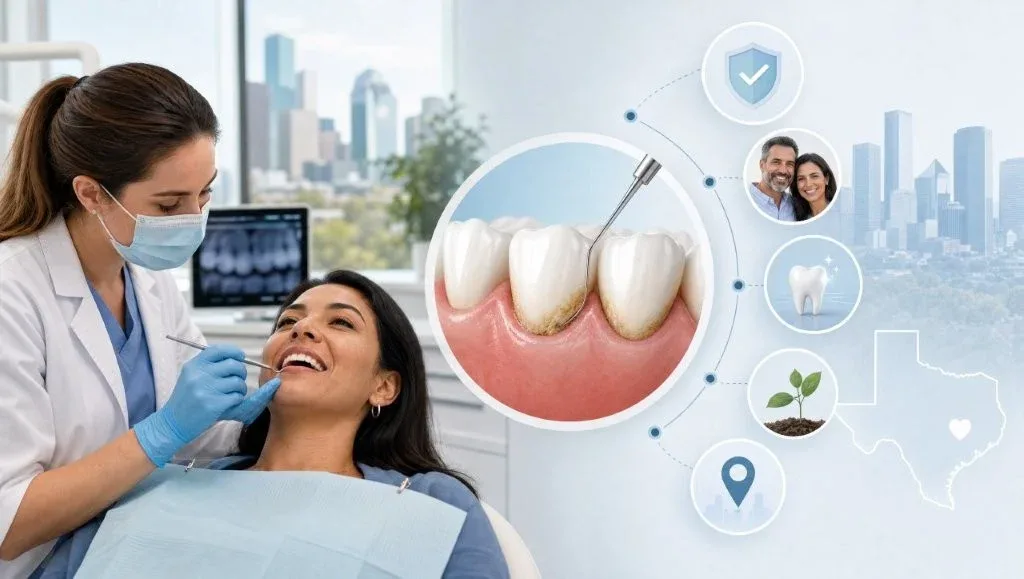
Deep cleaning in Houston can be an important step toward healthier gums and a stronger, more confident smile. While gum health is truly the foundation of a healthy smile, not all dental cleanings are the same.
If you’ve heard the term “deep cleaning” and wondered if it’s for you, we understand any nerves or curiosity you might feel. For many Houstonians, deep cleaning can sound a little daunting, but it’s one of the gentlest and most effective ways to stop gum problems in their tracks, protect your teeth, and give your mouth a clean slate. At Snow Tree Dental, deep cleanings are part of our everyday dental care—so let us walk you through what deep cleaning means, why you might need one, and how our Houston team makes the process as reassuring as possible.
What Is Dental Deep Cleaning?
Dental deep cleaning—known medically as scaling and root planing—is a special treatment we recommend when routine cleanings just aren’t enough to keep your gums healthy. If your Houston dentist recommends a deep cleaning, we want you to understand the reasons and how it benefits your long-term oral health.
How Deep Cleaning Differs From a Regular Cleaning
A typical cleaning, the kind most people get twice a year, focuses on removing soft plaque and hard tartar from the visible parts of your teeth—right at and above the gumline—followed by a thorough polish.
Deep cleaning is a two-step process that goes further:
- Scaling: We gently remove tough tartar and the sticky bacterial film from beneath the gumline, concentrating on the tiny pockets that can form between your teeth and gums.
- Root Planing: After scaling, we smooth the root surfaces of your teeth, making it easier for irritated gums to heal and reattach.
The real difference? Regular cleaning primarily prevents new problems. Deep cleaning is both a preventive and a therapeutic treatment—one we use to control active gum disease or stop inflammation before it can cause lasting harm.
Why Might Your Houston Dentist Recommend Deep Cleaning?
Most often, dentists suggest a deep cleaning when they spot signs of gum disease—like gingivitis or the more advanced periodontitis. According to the American Dental Association, gum disease is extremely common, and catching it early can often prevent more serious issues down the line.
At Snow Tree Dental, you might hear us recommend deep cleaning if:
- Your gums bleed easily, look swollen or red, or feel tender
- Bad breath won’t go away—even after brushing
- Dental X-rays or a gentle probing exam show deep gum pockets
- Tartar is visible beneath the gumline
Addressing these warning signs as soon as they appear helps us save teeth, prevent bone loss, and help you avoid pain or more complex treatments in the future.
When Do You Need a Deep Cleaning?
Only a dental professional can truly diagnose your gum health, but there are clues you can watch for—and even help loved ones catch early signs. Deep cleaning isn’t just for serious issues; spotting changes sooner means keeping your treatment easier and simpler.
Signs and Symptoms to Look For
You may need a deep cleaning if you have noticed:
- Bleeding when you brush or floss, even only sometimes
- Swollen, tender, or noticeably receding gums
- Persistent bad breath that doesn’t clear up
- Teeth feeling loose or shifting position, or your bite suddenly changes
- Tough or dark deposits that seem stuck near the gums
These changes might feel easy to ignore at first, but they’re often early warnings that your gums need more attention to stay healthy.
Risk Factors and Why Early Detection Matters
Certain habits or health factors can raise your risk for gum disease:
- Missing regular dental appointments
- Tobacco use in any form
- Uncontrolled diabetes
- Oral hygiene that’s less than ideal, such as brushing or flossing lapses
- A family history of gum disease
Our philosophy at Snow Tree Dental is to keep an eye out for early changes. When we spot gum disease soon, treatments are less involved, more comfortable, and much more successful long term.
The Deep Cleaning Process: What to Expect
One of the most common questions we answer for Houston patients is, “What exactly happens during a deep cleaning?” We believe sharing all the details can help replace anxiety with confidence, so let’s walk you through what to expect with us from start to finish.
Step-by-Step Look at Your Deep Cleaning Experience
- Gentle Exam & X-rays:
Your experience begins with a careful evaluation, often paired with modern digital X-rays, so we can identify any problem areas with precision and explain exactly what we see. - Ensuring Your Comfort (Numbing as Needed):
If you have sensitive gums or the pocketing is deep, we’ll place a small amount of local anesthetic to make sure the cleaning is as comfortable as possible. Comfort is always our priority. - Scaling Beneath the Gumline:
With fine instruments—sometimes using gentle ultrasonic vibration—we thoroughly clean away plaque and tartar where a toothbrush can’t reach, removing irritants from under the gums. - Smoothing Root Surfaces:
Your dentist or hygienist will then carefully smooth the root surfaces. Smoother roots encourage the gums to reattach neatly and help keep bacteria from clinging in the future. - Personal Guidance and Next Steps:
Depending on how many areas need cleaning, we might schedule your treatment over two visits—usually one side of the mouth at a time, so you’re not numb everywhere. Before you leave, we’ll share easy-to-follow tips for home care and answer any questions you have about the healing process.
Aftercare and Recovery—What Should You Expect?
- Some tenderness, minor swelling, or light bleeding is possible, especially that evening or the day after.
- Keep up your brushing and flossing routine—your dentist might prescribe a special antibacterial rinse to soothe healing gums.
- Soft, mild foods are easiest for the first day or so; avoid piping hot or spicy options if spots feel sensitive.
- We’ll often schedule a check-in visit to see how your gums are healing and offer further updates.
Most of our Houston patients are able to jump right back into their routines by the next day, feeling a newfound freshness and relief.
Deep Cleaning at Snow Tree Dental

We understand that a recommendation for “deep cleaning Houston” can raise a lot of questions, and maybe even some nerves. At Snow Tree Dental, we know our job is to put your mind—and your mouth—at ease with clarity, compassion, and gentle care.
Our Approach: Gentle, Honest, and Patient-Focused
- Personalize Every Treatment: We tailor all deep cleanings to your specific needs, never a “one size fits all.”
- Prioritize Comfort: Before each step, we explain what we’re doing, pause for questions, and check on your comfort throughout the visit.
- Support Anxious Patients: Dental visits make many people nervous—and that’s okay. Let us know how you’re feeling, and we’ll slow down, explain more, or adapt our process to help you feel safe and relaxed.
Real Stories from Our Houston Office
We frequently see patients who, for one reason or another, have put off regular dental visits—sometimes for years. Busy schedules, anxiety, or a little discomfort can get in the way. Often, these same patients come in worried about bleeding or sore gums. We never judge; our team simply walks you through the process, step by step, always aiming for your comfort. After their first deep cleaning, we often hear how relieved and encouraged our patients feel, grateful for fresher gums and the reassurance that things are moving in the right direction. We focus on guiding, supporting, and celebrating your progress—not judging or blaming.
Myth vs. Fact: Setting the Record Straight on Deep Cleaning
| Myth | Fact |
|---|---|
| Deep cleanings are only needed for severe dental issues. | Fact: Early-stage gum problems are often stopped in their tracks with deep cleaning—it’s a proactive approach, not just for advanced cases. |
| Deep cleaning is always painful. | Fact: Most people experience only mild discomfort at most, and we provide numbing and a calming approach for your peace of mind. |
| You can resume everything immediately after deep cleaning. | Fact: While most patients are back to normal within a day, simple aftercare—like gentle brushing and avoiding crunchy foods—helps ensure your gums heal completely. |
Frequently Asked Questions About Deep Cleaning
Will a Deep Cleaning Hurt?
Most patients are surprised by how manageable it feels. You may feel pressure or vibration while we clean below the gumline, but it should not feel sharp or intense. We can numb sensitive areas and check in with you throughout the visit. Mild soreness afterward is normal and usually settles down quickly with simple home care.
How Long Does Each Deep Cleaning Appointment Take?
It depends on how much buildup needs to be removed and how many areas of the mouth need treatment. Many patients have deep cleaning completed in two visits, one side of the mouth at a time, so the appointment feels easier and more comfortable. Most visits take about 45 to 90 minutes.
Do I Need to Do Anything Special Afterward?
Keep brushing and flossing, but be gentle around tender areas. We may recommend an antibacterial rinse or specific home-care steps while your gums heal. For the first day, soft foods are usually more comfortable, and it is best to avoid very hot, spicy, crunchy, or hard foods.
Will Insurance Cover Deep Cleaning?
Many dental insurance plans cover deep cleaning when it is medically necessary for gum disease. Coverage can vary by plan, so our team can help check your benefits and explain the estimated cost before treatment begins.
Do I Have to Get Numb for Deep Cleaning?
Not always. If your gum pockets are shallow or sensitivity is minimal, you may not need numbing. If your gums are tender or the cleaning needs to go deeper, local anesthetic can make the visit much more comfortable. We will talk through your options before starting.
Choosing a Deep Cleaning Dentist in Houston
With so many options for dental care in Houston, selecting the right office for deep cleaning can feel overwhelming. Here’s what we suggest you look for:
- Open, honest discussion about your health and all options available
- A gentle, tailored approach that considers your comfort and concerns
- An emphasis on education—clear explanations at every step
- A team that encourages you to ask questions and supports your ongoing care
Our years serving Houston families mean you’ll always be heard, cared for, and treated with genuine follow-up after each visit.
Ready to Take the Best Step for Your Smile?
If you’ve noticed changes like bleeding gums, lingering bad breath, or just haven’t had a cleaning in a while, scheduling a deep cleaning can help secure your long-term oral health. Snow Tree Dental welcomes every question, addresses every concern, and is committed to providing the most gentle, positive deep cleaning in Houston—from your first call to your follow-up visit.
Book an appointment with our compassionate Houston dental team today, or give us a call to learn more about deep cleaning and all the ways we help you and your family enjoy brighter, healthier smiles.
Additional Resources & Links
If sudden gum pain or unusual swelling crops up, don’t wait—our emergency dentist in Houston is always ready to help.
Curious about gum disease basics? See the American Dental Association for trustworthy information.
Need other dental services? Explore our resources on gentle root canal therapy for complete smile care.
FAQ – Deep Cleaning in Houston
What is a dental deep cleaning?
A dental deep cleaning, also called scaling and root planing, is a gum treatment that removes tartar, plaque, and bacteria from below the gumline.
It goes deeper than a regular cleaning because it cleans the areas where gum disease can start or get worse. The roots are also smoothed so your gums have a better chance to heal and fit more snugly around your teeth again.
How is deep cleaning different from a regular teeth cleaning?
A regular cleaning focuses on the visible parts of your teeth, while deep cleaning reaches below the gumline to treat gum disease.
Routine cleanings are mainly preventive. Deep cleaning is recommended when bacteria and tartar have collected in gum pockets and your gums need more targeted care to reduce inflammation and protect the bone that supports your teeth.
Does deep cleaning hurt?
Most patients feel pressure or mild discomfort, not sharp pain. Numbing is available when needed.
If your gums are sensitive or the pockets are deeper, your dentist can use local anesthetic to keep you comfortable. Some tenderness afterward is normal, but it is usually mild and short-lived.
Will I need to be numb for a deep cleaning?
Not every patient needs numbing for deep cleaning.
For smaller or early gum issues, treatment may feel comfortable without anesthetic. For deeper cleaning or tender gums, numbing can make the appointment easier. Your dentist will recommend the best comfort option based on your gum health.
How long does a deep cleaning appointment take?
Most deep cleaning visits take about 45 to 90 minutes.
The exact time depends on how much buildup is present and how many areas need treatment. Many patients complete deep cleaning over two visits, usually one side of the mouth at a time, so the process feels more manageable.
When is deep cleaning recommended?
Deep cleaning is recommended when there are signs of gum disease, such as bleeding gums, swelling, deep pockets, or tartar below the gumline.
Your dentist may also recommend it if X-rays or a gum exam show that bacteria are affecting the tissue or bone around your teeth. Treating the problem early can help prevent more serious damage later.
What should I expect after a deep cleaning?
You may have mild soreness, gum tenderness, light bleeding, or tooth sensitivity for a short time.
These symptoms usually improve within a few days. Gentle brushing, careful flossing, any recommended rinse, and softer foods can help your gums heal more comfortably.
Will insurance cover deep cleaning?
Many dental insurance plans cover deep cleaning when it is recommended for gum disease, but coverage depends on your specific plan.
Before treatment, the dental office can review your benefits and give you a clearer estimate, so you understand the expected cost before care begins.
How often do I need deep cleaning?
Deep cleaning is usually done only when there is active gum disease or significant buildup below the gumline.
After treatment, your dentist may recommend periodontal maintenance visits more often than regular cleanings to help keep your gums stable and prevent the infection from returning.
Can deep cleaning prevent tooth loss?
Yes, deep cleaning can help prevent tooth loss when gum disease is found and treated early.
By removing bacteria and tartar from below the gums, deep cleaning helps reduce infection, supports healing, and protects the bone and tissue that hold your teeth in place.
How soon can I eat after deep cleaning?
You can usually eat after the numbness wears off.
Soft, mild foods are best for the first day if your gums feel tender. Avoid very hot, spicy, crunchy, or hard foods right after treatment so your mouth has time to settle down.
How do I maintain my gums after deep cleaning?
Brush twice a day, floss daily, keep your follow-up visits, and follow your dentist’s home-care instructions.
Your dentist may recommend special rinses, periodontal maintenance cleanings, or small changes to your brushing and flossing routine to help your gums stay healthy long term.